Online Reporter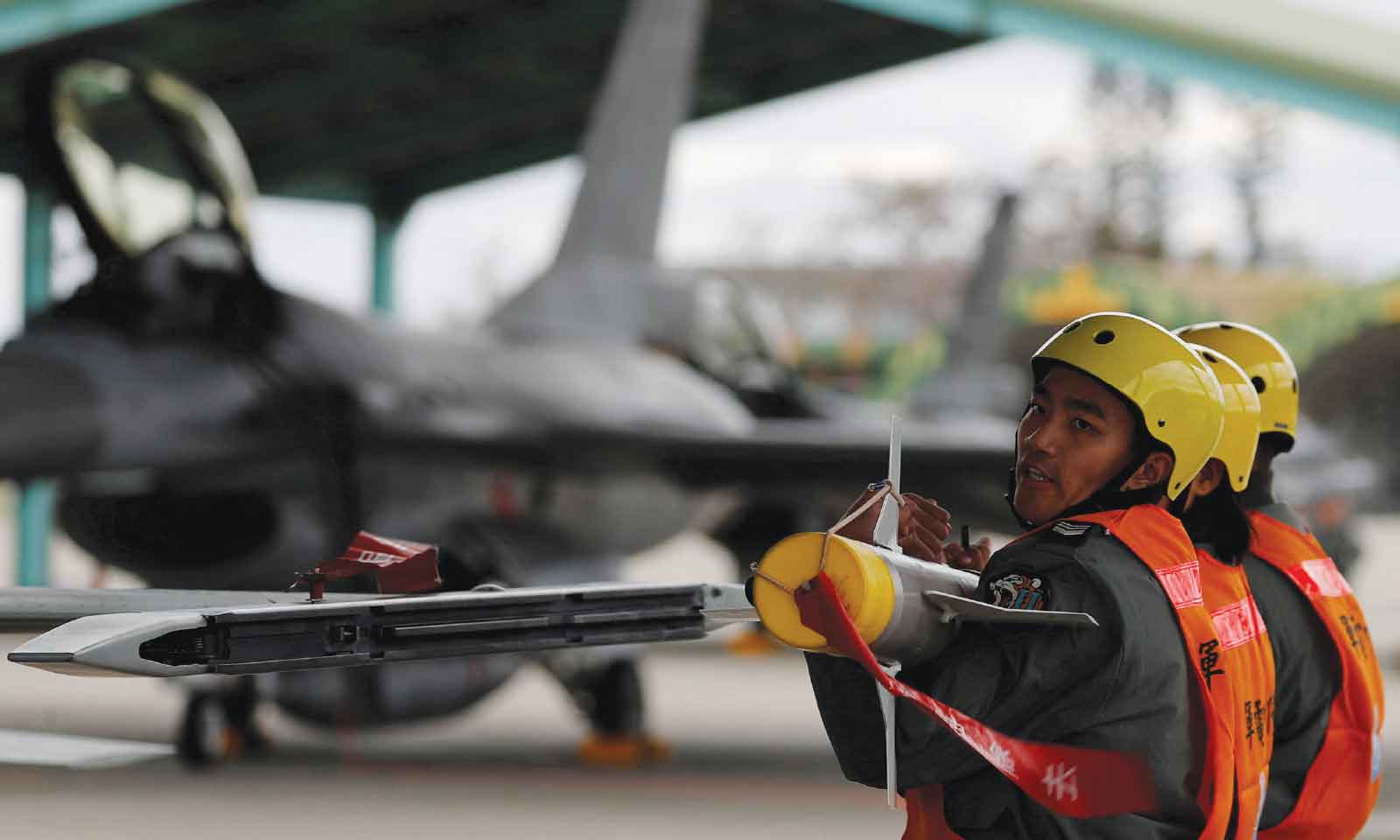
Mafa Kwanisai Mafa
In late December 2025, the United States announced a record arms package to Taiwan, one of the largest in history, effectively funnelling billions of dollars of advanced weapons into a region that Beijing views as an inseparable part of China.
This act was not a neutral gesture of support for “defence” it was a deliberate provocation that directly contravenes the One-China principle and the three historic China-US Joint Communiqué that have long formed the basis of diplomatic relations.
The reckless actions of the United States in escalating tensions over the Taiwan question exemplify how the US prioritises self-interest and geopolitical gain over justice.
This matter goes to the heart of China’s territorial integrity and national dignity. From an African perspective, shaped by centuries of colonial exploitation, foreign interference, and struggles for sovereignty, we see China’s principled stance for what it truly is: a firm defence of national sovereignty against imperialist meddling.
China has consistently reminded the world that the Taiwan question lies at the very core of its core interests, a red line that must not be crossed.
This is not bravado or empty rhetoric; it is the unyielding assertion of a nation’s right to unity and self-determination. Beijing’s foreign ministry made it clear that any entity seeking to undermine this principle by selling weapons or fuelling separatism will pay a price, and this is precisely what has unfolded.
Africa, still facing neo-colonial influence, recognises the pattern. The US uses its military-industrial complex to spread instability and secure strategic footholds.
Arming Taiwan doesn’t promote peace; it inflames tensions, emboldens separatists, and risks confrontation with China.
Yet even analysts from within Taiwan’s own economy warn that record US arms sales are hollowing out Taiwan’s economy, sucking resources into an unsustainable arms build-up while draining productive investment from society.
This is a stark warning that the US strategy is not just destabilising, but self-defeating for the very communities it claims to help.
China’s response has been firm but measured. In defence of its sovereignty and territorial integrity, Beijing has taken countermeasures against 20 US defence companies and 10 senior executives who played direct roles in arming Taiwan. These actions include asset freezes and bans on cooperation with Chinese entities, a clear message that foreign interference will not be tolerated.
This principled stand resonates deeply with Africa, where colonial powers once drew borders, installed puppet governments, and sold weapons to fuel proxy wars. We remember too well how foreign powers justified their interventions as “defence” or “stability operations,” all the while extracting resources and sowing discord. Today, the United States repeats this familiar playbook in East Asia, cloaking geopolitical ambition in the language of support for “democracy” and “freedom.”
Let us be clear: from an African perspective shaped by anti-imperialist struggle and solidarity with nations defending their sovereignty, this crisis is not a remote conflict over distant islands. It is emblematic of the larger battle between two worldviews.
On one side stand imperial powers that view smaller nations and regions as expendable pawns in a grand chessboard of global dominance, comfortable with war profiteering, arms sales, and destabilising interventions that leave ordinary people to suffer the consequences. On the other side are people and nations like China asserting the inalienable right to territorial integrity, self-determination, and peaceful unification on their own terms, free from external coercion.
Africa’s own path to independence was forged through resistance to foreign domination. We remember the long years of struggle against colonial occupation, the countless sacrifices made to defend our homelands, and the bitter lessons learned when foreign powers chose profit over peace. It is natural, therefore, that we stand in solidarity with any nation that resolutely defends its sovereignty and resists outside interference, including China.
The United States’ continued insistence on arming Taiwan only serves to undermine global peace, destabilise a critical region, and send dangerous signals to separatist movements. This is not the behaviour of a responsible global leader, but of an empire clinging to influence through militarisation. It is no wonder that China has responded with both diplomatic pressure and concrete countermeasures.
Africa’s future lies in sovereign cooperation, mutual respect, and equitable partnerships, not subservience to powers redrawing maps. China’s stance on Taiwan reflects this, underscoring that no power can trample self-determination without consequences.
In this defining moment, Africa must raise its voice in support of a just and peaceful resolution that respects the One-China principle and rejects any form of external meddling. We must stand with nations that refuse to be bullied, that protect their sovereignty, and that seek genuine peace rather than profit from conflict.
The world cannot afford another century of war and division under the guise of “security.” Africa stands with China not out of blind loyalty, but out of shared experience, common cause, and an unshakeable belief in sovereign dignity. Sovereignty is not negotiable. Peace is not bought with arms. Africa sees through the games of empires and stands resolutely for justice.