admin
admin
Zvamaida Murwira in Nairobi, Kenya
President Mnangagwa is expected in Kenya today for an African fertiliser and soil health summit that will bring together leaders and stakeholders in the continent and beyond to tackle challenges related to fertiliser and soil health, two crucial components in stimulating sustainable pro-poor agriculture productivity and food security.
The summit, which will draw Heads of State and Government from the continent, is being held as a result of a decision of the 37th ordinary session of the Assembly of the African Union held in Addis Ababa, Ethiopia, from February 17-18, which endorsed the convening of the African fertiliser and soil health summit this year.
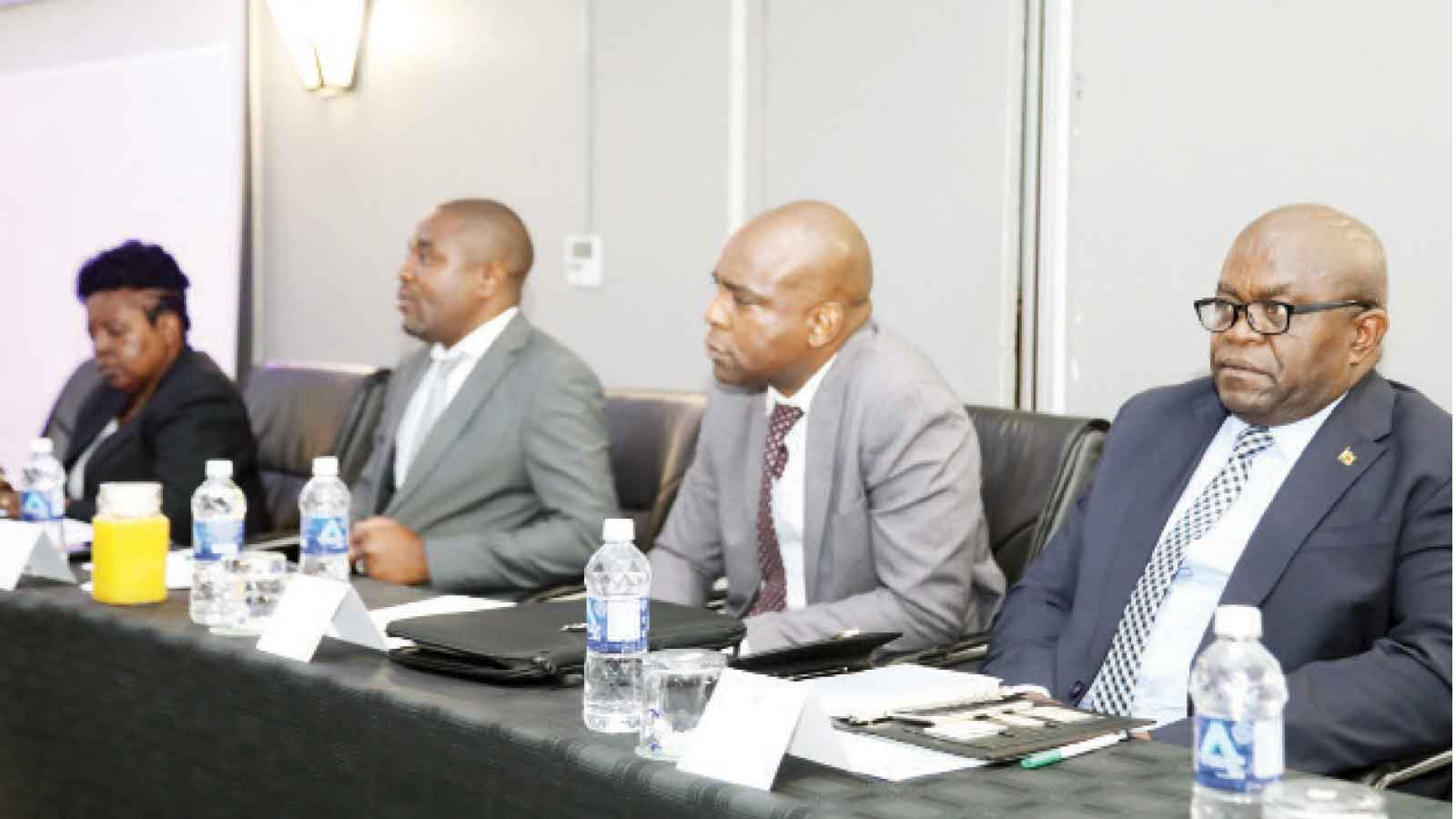
Lands, Agriculture, Fisheries, Water and Rural Development Minister Dr Anxious Masuka and Foreign Affairs and International Trade Minister Frederick Shava are already in Nairobi.
Yesterday they attended a meeting of Ministers, whose resolutions are expected to be tabled before Heads of State for consideration and adoption tomorrow.
In an interview with Zimbabwean journalists, Minister Masuka said the conference is the second after the first was held in Abuja, Nigeria in 2006.
“It is a soil and fertiliser conference being held 18 years after the first one was held in 2006 in Abuja, Nigeria” said Minister Masuka.
“Delayed but relevant in the context of Zimbabwe which wants to increase its production and productivity, we know that the biggest constraints to increasing productivity per unit area is the use of fertiliser and soil degradation. So this conference is very relevant,” said Minister Masuka.
“For Zimbabwe, we have adopted climate-intensive conservation agricultural model Pfumvudza/Intwasa, which aims to preserve soil build up organic matter and the Government is giving fertiliser, seed, and chemicals to households to increase fertiliser use and improve productivity. Consequently, we have seen increases under Pfumvudza.
“There is a financing of fertiliser mechanism within the context of this conference where Zimbabwe is going to articulate the localisation of the production of fertiliser to ensure that we can produce more of our ammonium nitrate. About 80 percent of the ammonium nitrate that we use is imported, 20 percent is locally produced. Although we have 1,4 million tonnes of local production capacity of basal fertiliser only about 50 to 60 percent is made locally, the rest we import and that subjects us to the supply chain shocks occasioned by conflict, Covid 19 and financial crisis.”
He said one of the declarations to be adopted is to integrate a fertiliser coordination mechanism to become one of the AU organs.
“You remember in 1981 (the then) Organisation of African Unity established a fertiliser coordination mechanism at the continental level, the Africa Centre for Fertiliser Development which Zimbabwe proudly hosted. Eight countries have ratified, 33 countries have signed for it but it is not functioning as a continental institution.
“We hope that one of the declarations coming out of this conference is the full integration of this Pan African institution into the main AU body so that it can deliver the necessary research and development, plus the capacitation that is required to ensure sustainable increase in the use of organic and inorganic fertilisers.
“Soil health is so critical, but less often do we think of soil as a living entity with physical, chemical, and biological properties. The attendance by the Heads of State and Governments gives it the stature that it deserves,” he said.
Although Africa had had so many declarations, including the Maputo and Malawi Declarations which were all aimed at improving production and productivity and improving the livelihoods of communities, not much benefit had been derived hence the decision to convene the conference.
“Sadly more than 270 million people are still classified as food insecure. Regarding the use of fertiliser, we had hoped that by now we would have 50 kg per hectare per year, but in Africa, it’s about 24 kg per hectare per year. In Zimbabwe it is 42kg/ha per year.
“It means there has to be urgency to increase production and productivity without necessarily increasing the area under cultivation,” he said.
The summit, which is expected to come up with an action plan, is being jointly organised by the African Union Commission and Kenya.
A 10-year action plan is expected to be tabled and endorsed and will deliver concrete recommendations for steps to be taken by African leaders and stakeholders.
The action plan will provide a focus for new policies and investments that will enable farmers to work towards re-building soil health and ultimately increase yield responses and profitability of fertilisers.
Some of the highlights at the summit include opening statements by African Union Heads of State and Government, the chairperson of the AU, the Chairperson of the AU Commission, and invited high-level dignitaries, among others.
It will also deliberate on Africa’s recent widespread decades-long decline in soil quality of farmland, a phenomenon that continues today and negatively impacts the agricultural production capacity and food security on the continent.
In June 2006, the Heads of State and Governments of the African Union endorsed the Abuja Declaration on Fertilizer for the Africa Green Revolution, a continental strategy to reverse the worrying trend of poor productivity of the African soils.
The declaration focused on key targets required for agricultural growth, food security, and rural development in Africa, with a focus on the role of fertilisers.
It recommended raising the use of fertilisers from 8 kg/ha to 50 kg/ha in 10 years and the establishment of an African fertilizer financing mechanism with the objective of improving agricultural productivity by providing financing required to boost fertiliser use in Africa to achieve the target of 50kg of nutrients per hectare, as mandated by the Abuja Declaration.



 Online Reporter