

 admin
admin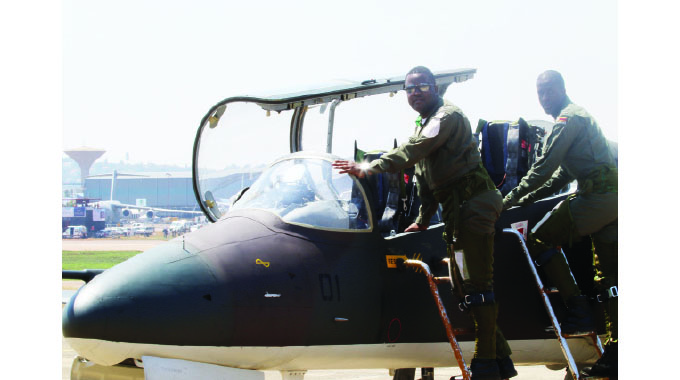
Air Marshal Elson Moyo-Commander Air Force of Zimbabwe
When one looks at terrorism, the first question that comes to mind is why would an individual or a group of people resort to the unlawful use of violence to kill innocent civilians and destroy property?
The truth is that there is no one satisfactory answer to the causes and motivation for terrorism.
Some of the widely acknowledged causes include lack of social cohesion manifesting in religious or ethnic differences, weak institutions, corruption, poor governance, and malfunctioning economies resulting in poverty and rising unemployment among other factors.
A close look at all these factors shows that they are present in most of the countries in Africa, which means there is fertile ground for the rise and growth of terrorism in Africa.
This view is supported by the Institute of Economics and Peace, in their Global Terrorism Index for 2022 which reveals that Sub-Saharan Africa is the global epicentre of terrorism.
The report highlights that deaths from terrorism have risen by more than 1 000 percent since 2007. Almost half of all deaths from terrorism globally in 2021 happened in sub-Saharan Africa.
For all of us here from all the regions of the continent, these statistics affirm the reality that we have experienced over the past years.
In addition to deaths, terrorism creates refugee flows which destabilise neighbouring states and they also spawn organised crime as rebels turn to smuggling to raise capital and acquire weaponry.
The evidence of these negative outcomes manifests in all the regions on the African continent and indeed across the globe.
Evident to note is that the nature of insurgency and terrorism as forms of low intensity conflict has continued to evolve from the traditional Maoist People’s Wars, to modern day conflicts often waged by a few individuals in urban areas.
As a result of these changes and the ambiguous nature of terrorism, the employment of air power in counterterrorism operations continues to raise several questions on its efficacy after varying degrees of success were registered in different missions and operations.
To this end, one scholar, after observing the divided opinions noted that, “never before has airpower’s participation in war had the potential for such contradictory effects”, (Smyth (2011).
In exploring the challenges faced by African air forces, it is pertinent to point out that there are three broad categories under which these challenges can be discussed and these are; operational, cost and mindset.
A distinguishing feature of terrorist groups is that they are well- financed, and they move freely across lightly patrolled borders which makes it challenging for any single African state to effectively address this threat.
One of the major challenges in this regard is lack of co-ordination and sharing of intelligence for air forces in neighbouring countries to effectively perform their expected roles in reconnaissance, intelligence, surveillance, and target acquisition (RISTA).
It has been noted that no African country has the resources to build the air force capacity and develop the capabilities to meet these challenges on its own.
Regional co-operation is therefore, required for African air forces to provide the air capabilities needed to support effective joint military operations against terrorist groups.
Commendably, efforts have been made to enhance regional co-operation with the establishment of regional brigades for the African Standby Force but progress has been slow on the air force side.
African air forces operate different equipment and use different doctrines, and this poses a challenge when there is a need for a co-ordinated response to security threats such as that posed by terrorism.
To this end, the African Union or regional blocs could develop a corporate body to identify regional requirements and recommend acquisition strategies that seek to improve interoperability across the region.
Military experts have observed that, several nations working together to develop common equipment and capabilities will create much greater overall capability, through interoperability, than the same countries can create working individually.
In addition to common equipment, regional air forces can develop one doctrine and conduct joint training exercises to enhance interoperability and effectively respond to threats posed by terrorism.
Worthy to note is that while these approaches are effective, they however, require a significant amount of trust between nations and a funding commitment by all the countries.
Air power has over the years proven to be decisive in shifting the tide in military campaigns, but the unique nature of terrorism and low intensity conflict demands that the employment of air power be in support of political objectives.
Success in such operations requires an integrated approach that aims to eliminate the military threat while efforts are also made by the political actors to address the grievances of the insurgents and their sympathisers.
The question then is what are the envisaged roles of air power in such an approach?
One of the critical success factors in counterterrorism and counterinsurgency operations is to win the support of the local population.
In pursuit of this objective, air power can be employed in the ‘building’ phase of a counter insurgency campaign. In this phase air assets can be employed in humanitarian assistance initiatives such as food relief and disaster mitigation operations in the conflict areas.
Air power key attributes such as speed, height, ubiquity and flexibility allow for swift and effective responses to the needs of the population.
Conflicts accelerate poverty and air assets can be employed in support of political programmes aimed at distributing food and non-food items to the local population. Such operations have the potential to win the hearts and minds of the local population while other efforts are made to comprehensively respond to the socio-economic and political grievances at the root of the insurgency.
The modern-day terrorists have embraced new technologies to launch attacks aimed at key infrastructure.
Some of the new technologies include, drone swarms, cyber-attacks and laser attacks among other new strategies.
For instance, in 2019, the Houthi rebels in Yemen launched drone attacks on two key oil installations inside Saudi Arabia.
In response to these new terrorist approaches, technological developments have the potential to enhance the capabilities of air power so that it can effectively respond to the emerging low intensity threats and at the same time minimising casualties on non-combatants and civilian infrastructure.
One such technological advancement is the use of drones armed with high precision weapons. While the question of ‘precision’ remains highly debatable, recent operations have shown that where there are clearly identified targets precision can be achieved.
The challenge that is before African air forces is therefore to embrace these new technologies and review our training programmes to equip the officers and men with the knowledge and skills to effectively use new technologies in the fight against terrorism and other threats to security.
Related to the need for African air forces to embrace new technologies is the need for ownership of these new technologies.
Over dependence on foreign owned technologies and equipment has been used in the past as a weapon to undermine the capabilities of African militaries to respond to security threats.
The imposition of sanctions on Zimbabwe by some western countries had the intended effect of grounding the Air Force of Zimbabwe and indeed the Zimbabwe Defence Forces.
The painful lesson from this experience is that African air forces need to embrace research and development so that they develop the capacity to invent local systems and technologies that will not leave them vulnerable to the influence of foreign owners of equipment and technologies.
In conducting Joint Operations to counter low intensity threats such as terrorism and insurgency, the Zimbabwe Defence Forces developed the Fire Force Concept.
The Fire Force Concept is a counterinsurgency attack plan that combines the use of airpower and ground forces on known insurgency bases or objectives.
The Fire Force concept is a variant of the military tactic of vertical envelopment of a target by helicopter-borne and parachute infantry.
Worthy to note is that the approach demands joint operations between the air and ground forces in the planning and successful execution.
Furthermore, intelligence is a critical success factor especially in the identification of insurgent locations and bases to ensure that the attacking forces retain the element of surprise.
As the Air Force of Zimbabwe and Zimbabwe Defence Force, we are always ready to share this concept and our experiences as well as to learn from our counterparts in Africa.



 leeroy
 Online Reporter