peter
peterVincent Gono, Features Editor
WEDNESDAY 25 May was Africa Day.
The day is commemorated continentally as it marks an important historical epoch that defines the political philosophy of Africa as one continent populated by blacks and divided by the Berlin West Africa Conference of 1884 that partitioned the continent among European countries.

On 25 May in 1963 in Addis Ababa, Ethiopia history recorded that the pan-African spirit and continental interest took precedence over interests of smaller miniature states.
The philosophy was of unity as guided by the “I am because we are, and since we are, I am” and the political dictum was shaped around a collective common denominator that Africa is not completely free until freedom reached Harare, Luanda, Maputo, Windhoek and Pretoria that remained bastions of foreign control.
And the march to Africa’s new era begun where the continent was exorcising the ghosts of slavery, imperial and colonial subjugation and neo-colonial economic exploitation.

Zanu-PF spokesperson Ambassador Christopher Mutsvangwa said it was at this stage that President Julius Nyerere of Tanzania offered his country as the host of the Liberation Committee leading to Zambia and Tanzania assuming a frontline role and establishing military training camps that were to host young men and women fleeing foreign rule at home in the quest for modern weaponry and training.
Today most of Africa is independent except for a few pockets that are still labouring violence and instability sponsored by the same imperialistic West that continues to use the divide and rule tactic that was only subdued by the pan-African fathers of the continent.
Several African regimes and opposition parties now kowtow to the West’s pressure where ideology, leaders and socio-economical policies are defined from the West and divorced from the challenges of African people.
African philosophy scholar and lecturer Mr Jowere Mukusha posits that the philosophy of Africa is premised on the concept of ubuntu which enshrines values such as humility, togetherness, solidarity, co-operation, oneness and the respect of human kind, the respect of Africans, the concept of one family.

“These are critical in the philosophy of ubuntu as defined by Nelson Madiba Mandela, Desmond Tutu, Professor Ramose and a number of others including Mr Mukusha.
Ubuntu is an all-embracing entity.
So, in Africa we cannot tolerate issues like Afro-phobia, xenophobia, tribalism, regionalism; all these are against the spirit of ubuntu because under the spirit of ubuntu we are one, we express our oneness through the spirit of ubuntu, in the way we treat each other.
“That’s why you hear singers like Brenda Fassie managing to say umuntu, ngumuntu ngabantu.
And not only Brenda Fassie but a lot of other scholars have said that in Africa “you are because of others.”
To make it very clear, philosopher John Mbiti noted that in Africa when we look at each driven by the spirit of ‘I am because we are, since we are therefore, I am’,” said Mr Mukusha.

He added that commemoration of our Africa Day, should conjure memories of the important values and virtues that tie Africa together “our Sankofa in Africa”.
Mr Mukusha said it was important that Africans gather against and run away from the such disgusting manoeuvres of the former colonialists, such as fronting fellow Africans as puppets in order to cause disharmony in the continent of Africa.
He noted that Afrophobia and all other -isms that were haunting the continent were a reminisce of flavoury neo-colonial and imperial politics.
“The issue of xenophobia for instance in South Africa is totally against the philosophy of ubuntu.
We are not outsiders when we are in Africa, when African people are in South Africa, they are not outsiders. Africans are one.
So, xenophobia is something that is propelled by people with a hidden agenda.
“Such groupings as Dudula in South Africa are not African. It is actually a xeno-matter a foreign matter.
It is not endogenous it is something that is exogenous.
It is using people inside Africa by simply giving them money to push a certain divisive agenda.
Because of that it is destroying our Africanness, it is destroying our togetherness, it is destroying our African human dignity where people are tortured and killed.”
He said those were part of the important issues that are supposed to be raised by leaders during Africa Day commemorations.
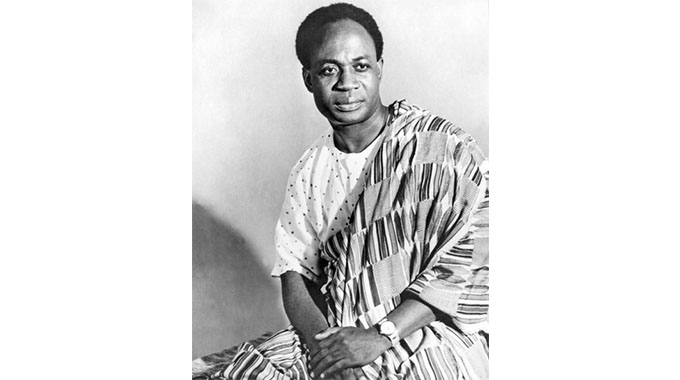
“We should go back to our African sankofa and look at pan-Africanist — Kwame Nkrumah saying we want the United States of Africa.
We want African people to understand their selves, not just understanding, but understanding of their understanding, what infects the consciousness of consciousness what he refers to in his philosophy as African Conscientism.
So, when we are driven by this African conscientism we will work together as one family.
This is what has been said by Nyerere of Tanzania saying that we need to work as one through the concept of Umoja, the spirit of Ujama of familyhood,” said Mr Mukusha.
He said Africa people should also borrow from Mandela who said Africa provided the human face in the global world meaning from hospitable point of view.
Africans, he said, are highly hospitable.
“If you see Africans failing to respect the principle of hospitality it means there is a foreign element, another fifth hand or sixth hand coming in to destabilise Africa.”
He said the continent should stick to principle and not just be manipulated.
“If people are in the opposition they should work for the interest of the people of Africa for the integrity, unity, co-operation, oneness, solidarity from an African perspective rather than going against those principles that stood are not in line with our African-ness.”
He added that the idea where African philosophy of ubuntu that had always been the glue that bound Africa together should not be allowed to die on the altar of imperial expedience but should be taken up and sanctified by the new generation of African leaders.
He also posited that African leaders should not be too comfortable in their little nation states but should continuously be reminded to look back where they have come from and remember that their states were concertedly fought for and belong to the African bosom.



 Online Reporter