Londile Moyo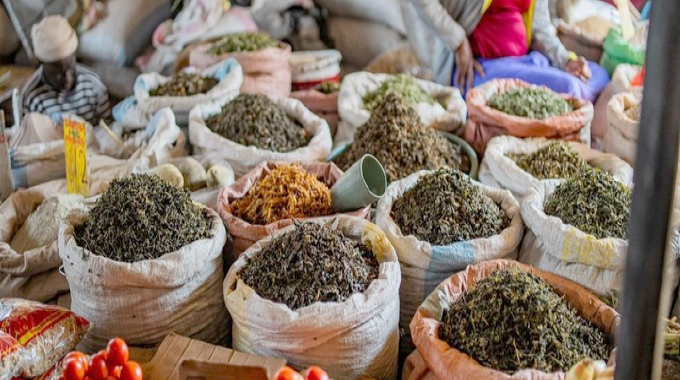
Charles Dhewa. [email protected]
IF there were no territorial markets, many food ingredients and the recipes built around them would have quietly disappeared. Beyond linking rural producers with urban consumers, African territorial markets stand at the frontline of protecting food cultures. When Africans now living in cities yearn for the meals they grew up eating in rural areas, they instinctively turn to the nearest territorial market. Just as knowledge fades when it is no longer practised, cuisines also risk extinction when their raw materials are unavailable for long periods. Territorial markets keep these ingredients in circulation and, in doing so, keep food traditions alive.
Every mother is a chef
While modern food systems and the hospitality industry tend to elevate professional chefs as the main drivers of consumption patterns, African mothers remain the true custodians of local food culture. Through carefully selecting seasonal ingredients from territorial markets for home cooking, they sustain culinary knowledge that is rarely written down. By offering diverse ingredients aligned with particular seasons, territorial markets quietly reinforce home cooking and everyday food wisdom. In this way, they act as a buffer against cultural erosion and the growing dominance of fast-food culture.
Urban girls and young mothers, who wish to learn how certain yams or vegetables are prepared using traditional methods often acquire this practical knowledge from elders who have worked in territorial markets for decades. This intergenerational exchange is one of the most powerful ways indigenous food cultures are preserved. The absence of formal research and development on indigenous foods does not mean such practices do not exist. Yet there is far more data on Western food systems than on local cuisines. Indigenous food continues to suffer discrimination in policy support, reflected in the abundance of studies on imported diets and the neglect of local ones. The absence of data is itself a form of violence against indigenous food, cultures and identities — a gap that territorial markets quietly correct through daily practice.
Much of the investment flowing into modern irrigation technologies continues to support imported food systems at the expense of indigenous fruits. In the horticulture sector across many African countries, indigenous fruits rarely receive the same backing afforded to citrus and other Western varieties. Territorial markets are pushing back against this imbalance by creating trading spaces for indigenous fruits, some of which are now being incorporated into beverages and value-added products.
While cabbage, carrots and imported vegetable hybrids increasingly dominate rural communities, territorial markets provide a platform where indigenous vegetables can compete for the same consumers. Similarly, policy focus on broiler chickens and layers has not eliminated demand for indigenous poultry, which many urban consumers now favour for health and wellness reasons. Territorial markets strive to ensure that consumers seeking indigenous food can access it consistently, reducing dependence on exotic alternatives.
Remembering forgotten indigenous ingredients through territorial markets
African grandmothers who were born in rural areas but spent much of their lives in cities are returning to territorial markets to rediscover ingredients once taught to them by their mothers and grandmothers. A renewed pride in reconnecting with the culinary past is emerging as Africans seek to rediscover their roots through indigenous food. Encountering indigenous fruits, vegetables and herbs in territorial markets often feels like reuniting with a lost family member.
Protecting indigenous food is increasingly viewed as preserving a core element of culture and identity, much like safeguarding a totem. Conservation of natural wonders and heritage sites should be matched by efforts to protect traditional foods that sustained communities around those sites. For example, the people who built Great Zimbabwe had distinct food systems that deserve research, documentation and preservation.
Food as part of local language
Territorial markets demonstrate that food is far more than a combination of carbohydrates, proteins, fats and sugars. Food is language and culture, a system of communication passed from one generation to the next. This is why food deserves protection in the same way languages do. Cameroon, with its 265 local languages, reflects this richness through an equally diverse range of food systems and cuisines found in both rural communities and urban territorial markets. With a population of approximately 50 million people, Cameroonians consume multiple food groups, many centred on cassava and cassava leaves, Tchu leaves, Ndole leaves, okra and others. Couscous gombo, made from fufu or cassava paired with okra soup and fish, is among the country’s iconic meals. The Okok vegetable alone illustrates linguistic diversity: known as Okok among the Ewondo, Beti and Bassa in the central region; Kok kok in the eastern region; Eru in the North West and South West; and Ekoke in the Littoral or Duala region. In Yaoundé, the capital city, more than ten major territorial markets — including Nsam, Ekounou and Mokolo — continue to promote and preserve indigenous food culture.
Handing food cultures to future generations
Many urban African mothers want their children to move away from fast food and embrace indigenous cuisine, yet availability remains a challenge, with some ingredients accessible only during specific seasons. Now that many countries control their natural resources such as land, it is worth asking what prevents stronger support for indigenous food production to ensure year-round availability.
The same levels of investment directed towards promoting tobacco, Irish potatoes and other exotic crops could be redirected towards preserving indigenous food systems.
Food plays a vital role in sustaining cultural identity and social cohesion. It allows communities to appreciate themselves daily and reaffirm bonds with one another and with their territorial markets.
The most important conversations in African territorial markets revolve around food — its sources, varieties, recipes and flavours. Establishing a culture of documentation would ensure that these conversations are preserved for today’s youth and future generations, enabling them to build livelihoods and careers rooted in local food heritage.



 Online Reporter