Londile Moyo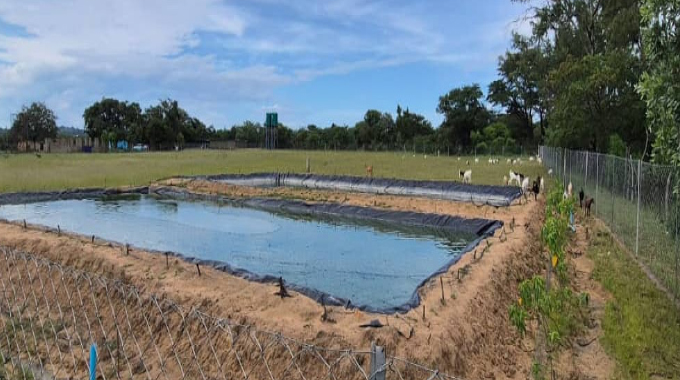
Sukulwenkosi Dube-Matutu, [email protected]
THE Government, working with World Vision, has rolled out goat and fisheries projects in Umzingwane District targeting the youth.
The project, which started at the end of last year, has seven ponds and 50 Matabele and Kalahari goats. A solar-powered garden is set to be established under the project.
Harvesting of fish is expected to begin in June. Under the Second Republic, the Government has adopted policies to attract the young to farming in line with the National Development Strategy 2 (NDS2) and Vision 2030, aimed at transforming the country into an upper-middle-income economy.
The Government is promoting fish farming among youth through programmes like the Presidential Fisheries Programme. The effort seeks to mainstream youths in the agricultural sector.
Over the years, the Government has focused on developing the fisheries sector by expanding tilapia and fish production through dam-stocking initiatives and the development of village-based and school fishponds under the Rural Development 8.0 programme.
One of the beneficiaries, Ms Precious Moyo, described the opportunity as a great boost for the young people.
“We are grateful to have such a project being implemented in our area with a focus on empowering us as youth. Goat and fish farming are agricultural ventures that have a good market, and if we run these projects well,” she said.
“We can realise significant income. We are daring to make this project a success.”
Ms Moyo said they were trained in goat and fish farming and running their project as a business enterprise, which will boost production.
World Vision Umzingwane area manager, Mr Hillary Mushai, said so far 18 youths have benefitted from the project and its reach is expected to increase with time.
“We have rolled out an integrated project, which has the component of livestock production through goats and a fisheries component. We are yet to establish a vegetable garden, and under the project, seven ponds have been established with harvesting set to be conducted once every month,” he said.
“This is an economic cycle that will ensure fish supply throughout the year for both selling and household consumption. This will safeguard income at the household level and ensure nutrition for communities and, in the process, address malnutrition among children.”
Umzingwane District agricultural extension officer, Mr Bhekilizwe Ncube, said the integrated farming project aligns with Vision 2030.
“This project is important firstly because it’s targeting the youth, which we are trying to harness into the mainstream agricultural activities. Secondly, it’s in line with the Government programme, the Presidential Fisheries, where we are saying we want to utilise all the resources at our disposal, especially water resources and be able to economically empower ourselves from the resources that can be produced through the availability of water,” he said.
Mr Ncube said the project will benefit the youth and community in the provision of the important proteins needed for an improved diet.
He said the project is also targeting the growth of small stock that are ideal under the prevailing climatic conditions.
Mr Ncube said the growth of the small stock is also important in the economy of households. He said farmers are now being encouraged to venture into goat production as it is cost-effective and ideal for Matabeleland South.—@DubeMatutu



 Online Reporter