Moffat Mungazi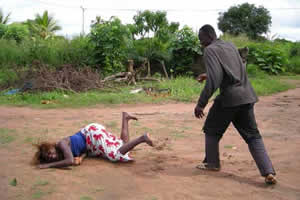
Rodgers Irimayi
Cultural Perspectives
THE issue of Gender-Based Violence (GBV) is a global issue which has an emotional impact and affects individuals regardless of geographical boundaries, but the cultural context in which the violence occurs varies significantly.
The difference in cultural perspectives shape even the understanding, perception, and responses to GBV according to every society’s traditional system.
It is imperative to note that traditional beliefs and practices play a critical role in shaping attitudes towards gender, power dynamics, and ultimately, violence.
Let us explore the intersections of African tradition and GBV, cognisant of the cultural factors entrenched in societies.
Types of GBV in Zimbabwe
Gender-Based Violence (GBV) is explained as the harmful actions done to persons because of their gender.
The abusive action may affect individuals physically, sexually, or psychologically.
GBV includes domestic violence, sexual assault, human trafficking, female genital mutilation, forced marriage, and sexual harassment.
Domestic violence is common when there is abuse within intimate relationships.
In most cases women, children, the elderly and disabled persons are the victims.
In most families where GBV has been witnessed, most perpetrators are men as women and children suffer the most.
In the case of sexual violence, rape, sexual assault, and other forms of sexual harassment the main culprits are the males who force themselves on women just to satisfy uncontrolled sexual appetite.
Forced child marriages of girls under the age of 18 is another form of GBV and usually occurs following traditional and religious customs.
Another form of violence is the female genital mutilation which is a harmful traditional practice involving the removal or alteration of female genitalia.
This system has been condemned in modern societies but there are some that continue performing it as part of their rites of passage.
Patriarchal norms and values
Local tradition follows the patriarchal system just like many African societies where men have primary authority in almost all circles of life which include the family, community, and the political landscape.
The patriarchal systems values male dominance and female subordination as the norms justify violence against women as a means of asserting control.
Women are expected to be submissive and obedient, a tradition that places masculinity at the forefront and equates manhood with power and aggression.
Socialisation and gender roles
The dominance of the males is established in the early stages of life when rigid gender roles are dictated, prescribing male control over women.
This then instils the impression that violence is acceptable and is a means of power.
Traditional gender roles teach boys to be assertive and aggressive, while girls are expected to be sociable, obedient and submissive.
Such traditional processes normalise violence and create environments where GBV is tolerated or excused.
Cultural traditions and practices
While it is a good thing to marry, the tradition of paying a bride price (or dowry) brings in a perception that a woman is bought and is a man’s property.
Such a view of placing women as financial assets, leads to husbands drawing the conclusion that they own their wives.
The perception propagates men’s arrogances toward women and girls.
Any practices that place women as objects, reduce their autonomy, and position them as property, leading to increased vulnerability to violence.
Religious beliefs and interpretations
Almost everyone belongs to a particular religion of some sort.
Let it be known here that religion can play a twofold role in the context of GBV.
As some religious instructions encourage respect and equality, others vindicate violence and the subordination of women.
For instance, some church leaders may use Biblical or religious texts to interpret and justify domestic violence and reduce women’s rights which reinforces harmful gender standards.
It can also be observed that certain cultural rituals and beliefs may contribute to GBV.
There are still some societies which perform rites of passage involving the initiation of boys as a practice for graduating into manhood.
Some of these practices include violent fights and humiliations which in can reinforce aggressive behaviours and attitudes toward women.
Economic inequality
It has been established that there is correlation between cultural gender roles with economic dependency.
Women lack financial independence and may feel compelled to remain in abusive relationships due to economic vulnerability.
A man may not feel comfortable marrying a woman with higher academic qualification, professional or political post than himself.
It is a common belief that men should have a higher position and salary than his wife.
Such situations can lead to cultural stigmas that end in divorce or separation and further catch individuals in cycles of violence.
Social stigma and silence
The notion that discussions on violence, sexuality, and gender roles are taboo can result in victims being discouraged to speak out and seek help.
Many victims of GBV face stigmatisation and ostracism from their families and communities.
If the perpetrator of a rape is a close relative, other family members sweep the issue under the carpet and close the case without reporting for justice sake.
Family reputation is regarded as paramount but such covering up fosters a culture of impunity and allows violence to persist unchallenged.
Access to education and awareness
Empowerment and educational programmes that educate both men and women about their rights and promote gender equality are crucial.
Through such programmes, girls are educated and economically empowered to be independent changing the dynamics of power and reducing vulnerability to violence.
It is imperative for societies to realise that prioritising education for boys over girls perpetuates gender inequalities and limit women’s empowerment.
There is need for establishing community programs that increase awareness on GBV and challenge harmful traditional norms.
Open dialogue about gender equality need to be encouraged through initiatives such as workshops, community discussions, and even educational campaigns.
Collaboration with religious leaders
Another avenue towards addressing GBV is through engaging traditional and religious leaders in discussions around GBV.
The approach can play a transformative role, as these leaders often hold significant influence within their communities.
It is also important for religious leaders to promote interpretations of religious texts that encourage equality and discourage harmful beliefs.
Family members that suffer GBV can report to their traditional and religious leaders for redress.
Legal framework and cultural attitudes
Just like in other African countries, Zimbabwe’s legal frameworks are being revisited to safeguard women and reduce GBV.
There are advocacy and awareness programs directed at enforcing laws against domestic violence and harmful traditional systems that entrench GBV.
The Zimbabwe Republic Police has got the Victim Friendly Unit which handles GBV cases.
The Department of Social Development in association with many development partners such as Musasa Project and Childline provide avenues for dealing with GBV victims.
Safe houses for victims have been established throughout the country.
The country’s laws and cultural beliefs have an impact on how GBV can be addressed.
If the legal systems reflect patriarchal values that do not provide adequate protection for victims, perpetrators of GBV may go scot-free and this may continue to reinforce a cycle of violence.
Rodgers Irimayi is the Ministry of Information, Publicity and Broadcasting Services Masvingo Provincial Information Officer. He writes in his personal capacity and can be contacted on +263778246098 or [email protected].



 Online Reporter