admin
admin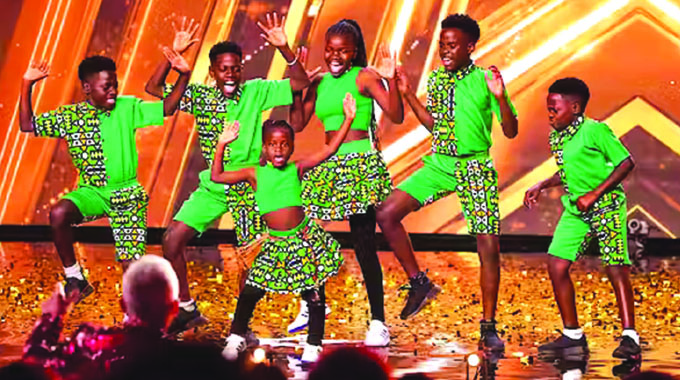
Ruth Butaumocho
African Agenda
April 22, 2023 will for a long time linger in the minds of millions in Africa and Ugandans in particular, when one of their own, a dance group from Kampala, Ghetto Kids, made an epic performance at one of the prestigious reality shows, “Britain’s Got Talent”.
Having been trending on several social platforms such as Tiktok and YouTube, the group made up of children from an orphanage in Kampala, got the feel of the global stage when they threw the audience in a frenzy with their well-choreographed dances.
Even the judges, among them the British hardliner judge, Simon Cowell, could not help but jump around in ecstasy to Shakira’s song, This Time for Africa, watching the nimble-footed members of the group exhibiting their prowess in various dances.
The performance was purely electric as the group showcased their artwork at such an art fete which was being beamed live to millions of viewers across the globe.
Who would have missed such a lifetime chance to be considered for the second round, more so for a group from Africa that was making its debut appearance at such a highly revered art fete known for nurturing individuals into big names?
Never had both the audience and the judges been so mesmerised and wowed with a little known African group that Italian judge Bruno Tonioli got so carried away and did the unusual.
Like any other person who was watching the show, Tonioli was beyond himself with excitement that he impulsively hit the golden buzzer halfway through the performance, giving the children a straight pass to the semi-finals.
It was a moment to cherish, an acknowledgement that Africa is not only home to abundance of natural resources, but it is also a cradle of robust and vibrant artwork.
What the Ghetto Kids showcased at the recent episode of the “Britain’s Got Talent” gives an insight into the abundance of natural talent that can be found in between cities from Cape to Cairo.
However, such a performance could have been done a stone throw away from their home, had the continent collectively invested in such consistent and fully sponsored initiatives to discover and nurture budding talent.
Surely, this would have been regular performances if different regions had existing infrastructure and probably a revolving fund to sustain such activities.
Africa has over the years been producing artists of extraordinary ability who have gone global, showcasing their different artworks, earning themselves both fame and fortune.
The contemporary art scene of Africa, which boasts of different genres, is characterised by a dynamic list of creators, who interpret and capture socio-economic realities, political narratives, rich traditions and diverse beauty.
All these are ably captured in various forms, making the art industries one of the biggest money spinners, running into millions of dollars.
According to statistics released by the United Nations Educational, Scientific and Cultural Organisation (UNESCO) in 2022, the creative industry in Africa employs half a million people and generates about US$4,2 billion as the Gross Domestic Product (GDP).
Because the formal creative sector often struggles to obtain funds, much of this comes from the informal economy.
Banks and investors are often not keen to sponsor artistes and other cultural producers owing to lack of collateral and other associated costs.
This has been a blow to the artistes and somehow failed to sustain an otherwise promising sector.
The continent through different nations has been churning out international content across genres for centuries, a development that has earned the continent a place among the greatest artists of all times.
Several notable musicians have emerged from the continent, whose rhythms still reverberate in different spaces, decades after they died.
Names that easily come to mind include the late Oliver Mtukudzi, the late Fela Kuti, Youssou N’Dour, the late legendary Miriam Makeba, Salif Keita, Lady Smith Black Mambazo, Angelique Kidjo, and Biggie Tembo, who fronted the Bhundu Boys.
The Bhundu Boys was recognised as one of Africa’s best musical outfits, which travelled the breadth and width of the globe playing music, putting Zimbabwe on the global map.
Many will remember with nostalgia how the Bhundu Boys were part of the spectacle galaxy of musicians that entertained music lovers at Wembley Stadium in London, for the “Who is that Girl Tour” in 1987.
These and many unheralded artists have influenced generations of listeners with their unique sounds and styles.
African music has been around for centuries and has influenced many different genres of music, and so has been other genres that have generated millions of dollars for the continent.
The strategic position that Africa finds itself on in the robust and creative industry calls for a systematic way of making performance arts and the whole creative industry a billion dollar industry, as is the current position with other sectors.
Its success can be achieved overnight through coordinated efforts, professionalising art, Government investment, curriculum incorporation of art as a major, nurturing raw talent, and creating a platform to showcase raw talent, like the London’s much revered “Britain’s Got Talent” platform.
Several players, including the private sector and governments, have over the years capacitated artistes and culture workers through training, workshops, and seminars, conducted research to enhance various areas within the industry.
In addition, the same players have also facilitated platforms for African artists and stakeholders to dialogue and present their works.
In the case of Zimbabwe, such platforms as the annual Venice Biennale, where the country has a pavilion that showcases art from the country is among the many exciting initiatives that has helped local artists market their art.
Several other countries have such platforms sprouted around the globe that marketed the African art in a big way.
These platforms are quite progressive, but a lot more would need to be done to bolster the sector.
What the continent requires are more diverse skills that include analysts, business administrators, developers, artist managers, grant applications, as well as those in digital culture, and other fields to attain industry-wide professionalism.
The already existing efforts such as education, training and development of entrepreneurial and business service skills, modernisation of production, strengthening of distribution networks, and promoting consumption and branding need to be improved so that they do not collapse, as has been the case with many promising artworks.
Once such initiatives have been strengthened the creative industry can be a cash cow the continent needs to bolster its several streams of income outside natural resources, robust farming activities and its youthful and hardworking young population.
Africa should be getting billions more than what it is currently getting, once the sector has been professionalised.
In a report published in 2021, UNESCO believes that there is huge potential in the sector, but it needs to be well funded and be developed for it to spawn more billions for the continent.
The recent sound performance by the little known Ghetto Kids clearly shows the abundant talent Africa boasts of, which needs to be nurtured and developed into something bigger than its current position.
Such efforts should be developed at a continental level so that member countries can embrace the initiatives.
It is heartening to note that in the last few years, the African Union Commission’s Division of Culture has been harmonising and coordinating activities and policies across the continent as part of its efforts to create more structure and opportunities for harnessing arts.
The success of the AU’s efforts rely on the artists themselves following up on country commitments on funding of the sector, creation of enabling environments towards professionalism in the creative sector and its long-term working modalities.
Since art is an area where talent normally sprouts in the absence of funding from anywhere else except from the artiste’s pocket, there is need for arts bodies to continue to lobby through dialogue for investment and financing opportunities for the creative sector by the private sector and governments.
The future of Ghetto Kids looks promising.
However, in the absence of proper structures to professionalise their art and funding, theirs will be a case of many others, who were talented but never went far.
Feedback: [email protected]


 Online Reporter