Online Reporter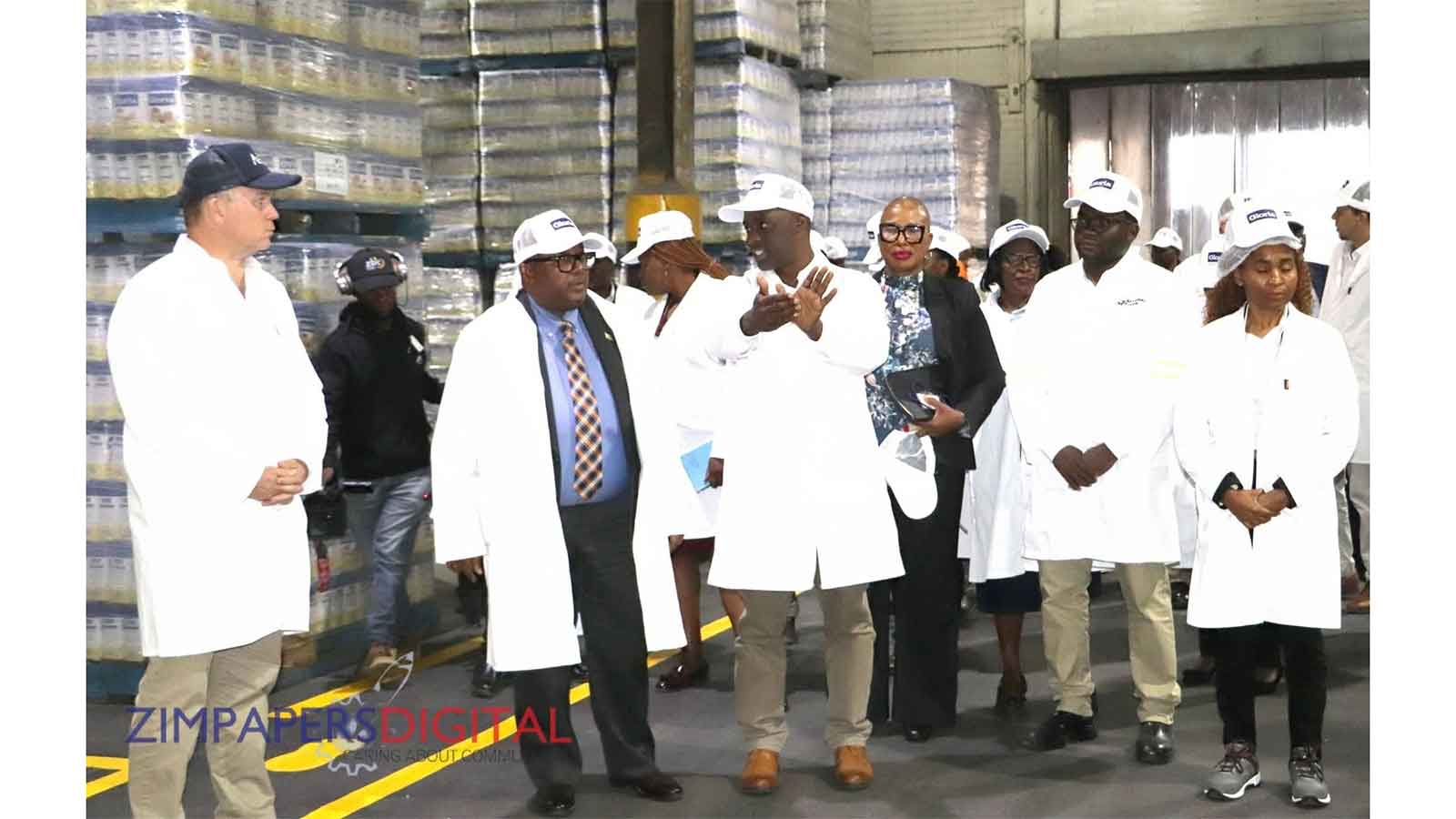
Herald Reporter
ZIMBABWE’S manufacturing sector is showing renewed momentum, with major firms expanding production capacity and investing millions of dollars in new projects as Government intensifies efforts to support industrial growth and competitiveness.
The positive outlook comes as manufacturing sector capacity utilisation rose to 57 percent in the first quarter of the year from 47,7 percent during the same period last year, reflecting improved production activity across the economy.
Speaking after touring National Foods Limited and ZimGold factories in Harare last Friday, Permanent Secretary in the Ministry of Industry and Commerce Ambassador Tadeous Chifamba said the Government was working closely with manufacturers to strengthen value chains and support local production.
He said the two companies were leading examples of companies demonstrating confidence in the economy through continued investment and expansion.
“This is a great show of confidence in our economy and in our country.
“We are particularly pleased that companies such as National Foods and ZimGold are championing industrialisation and employment creation,” he said.
The tour formed part of the efforts by the Ministry of Industry and Commerce to engage industry stakeholders, appreciate ongoing investments and production activities, and identify opportunities to enhance industrial competitiveness, value addition, local content development, job creation, and export growth
The manufacturing sector remains one of the key pillars of the economy, contributing about 16 percent to Gross Domestic Product.
In line with Vision 2030, the Government has launched the Zimbabwe National Industrial Development Policy 2 (ZNIDP 2) (2026-2030), a framework designed to transform the economy from one reliant on exporting raw materials and importing finished products into a competitive manufacturing and export-led economy.
The country’s industrialisation agenda is a national journey, which began with stabilisation under ZNIDP 1 (2019-2023), moved into reconstruction under the Zimbabwe Industrial Reconstruction and Growth Plan (2024-2025).
And through ZNIDP2 (2026-2030), the industrialisation journey has entered a transformative phase with authorities calling on the private sector to take the lead in driving production expansion and innovation
National Foods chief executive Mr Mike Lashbrooke said the company had invested US$22 million over the past three years in new pasta, biscuit and cereal production lines.
The company is now planning a second biscuit production line and a new 500-tonne-per-day flour mill valued at about US$25 million.
“We are very excited about those investments and many of them are operating close to capacity,” he said.
ZimGold chief operating officer Mr Rodreck Musiyiwa said his company was operating at full capacity and had started plans to establish a new oil expression and refining plant in Bulawayo.
“We are operating at peak right now and we are putting up a new plant in Bulawayo,” he said.
Both executives credited Government reforms, including anti-smuggling measures and efforts to reduce the cost of doing business, for improving operating conditions and supporting growth in local manufacturing.
Meanwhile, the Government is working closely with industry to strengthen value chains, improve competitiveness and unlock export opportunities in the US$3,5 trillion African Continental Free Trade Area (AfCFTA) market, one of the world’s largest single markets with a population of more than 1,5 billion.
The push comes as authorities implement a range of measures aimed at stimulating production in the manufacturing sector, satisfying domestic demand and increasing exports within the region and beyond.
The interventions include improving the ease of doing business, intensifying the anti-smuggling blitz and rolling out strategies to reduce Zimbabwe’s US$4,5 import bill, which continues to drain foreign currency and undermine local production and employment creation.
In addition, Finance, Economic Development and Investment Promotion Minister Professor Mthuli Ncube has established an Industrial Development Fund under the 2026 National Budget to support retooling, industrial expansion and recapitalisation of domestic industries.
As Zimbabwe advances the implementation of ZNIDP2 and scales up support through measures such as the Industrial Development Fund, growing investments by firms like National Foods and ZimGold are increasingly being viewed as early indicators of a manufacturing sector on the rebound.
With capacity utilisation improving, new production lines coming on stream and opportunities emerging under the AfCFTA, industry players and policymakers are optimistic that sustained collaboration between the Government and the private sector will accelerate industrialisation, reduce import dependence, create jobs and position Zimbabwe as a competitive manufacturing hub in the region.