malvernmugadzikwa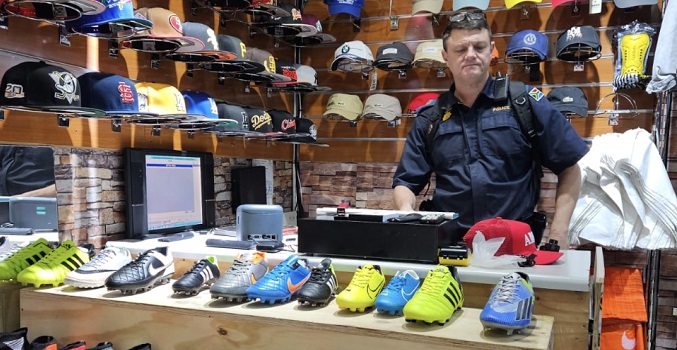
MANY well-known brands are losing out to counterfeit goods, and they may not even realise it.
According to Michael Lamont, a partner at Spoor & Fisher who specialises in combatting counterfeiting in Southern Africa, counterfeit goods are estimated to cost the South African economy billions of rands on an annual basis.
When considering the associated loss of tax revenue, the true cost of counterfeiting could be much higher, and the problem seems to be getting worse.
Given the current economic climate in South Africa and in many of our neighbouring countries, there is a steady increase in the demand for cheaper goods.
This demand is often satisfied through the purchase and consumption of counterfeit goods, causing the counterfeiting market to grow at a steady and unprecedented rate.
Counterfeit and fake goods are generally perceived to be limited to clothing, footwear and other luxury items, but in truth, no product, brand or industry is immune.
Counterfeits, in fact, include everyday goods such as spices, instant yeasts, sanitary pads and extend to technologically advanced products, including batteries, fire retardant suits and vehicle components.
Hardly a week goes by without counterfeit goods being thrust into the media.
Whether they be civil concern pieces pertaining to the deadly impact suspected counterfeit goods inflict on end consumers or the police or revenue services announcing another major fake goods bust, it is clear that counterfeiting is on the increase.
Whilst it is clear that both the police and revenue services are committed to combatting the importation and sale of counterfeit goods, law enforcement is limited in their capabilities and resources to effectively fight counterfeiting.
Due to capacity and manpower limitations, it is impossible for the South African Revenue Services to physically inspect each and every consignment imported into South Africa, a similar problem faced throughout Africa.
These limitations are further compounded by the sophisticated criminal networks responsible for the importation and sale of counterfeit goods, which rarely provide law enforcement with accurate information and seldom offer links to the main role players or suppliers.
Combating counterfeiting
Trademark and copyright owners, in conjunction with law firms, are primarily responsible for enforcement against counterfeit goods bearing and infringing upon their intellectual property rights.
Enforcement comprises proactive and reactive strategies. Proactive strategies are reliant on market surveys and monitoring, investigations and targeted operations.
The importance of market surveys and monitoring cannot be understated.
Due to the speed at which the counterfeit industry evolves, identifying counterfeit goods becomes difficult, and heavy reliance is placed on these alternative anti-counterfeiting strategies.
It is also imperative to have a holistic view of the counterfeit market, including neighbouring countries.
This is specifically relevant given the international nature of the criminal networks responsible for distributing and selling counterfeit goods.
Victims
Counterfeiting is a crime that directly affects its victims and has potentially deadly consequences.
There are various types of victims of counterfeiting, and that no sector is immune:
Consumers typically purchase counterfeit goods naively, deceived by their resemblance to genuine products or due to their desire to pay less.
While counterfeit products are often seen to be predominantly fashion and luxury goods, they also include fake pharmaceuticals and cosmetics.
Fast-moving consumer goods (FMCGs) are also on the list.
There is a risk to one’s health associated with taking medicines and consuming FMCGs of unknown quality.
The World Health Organisation estimates that approximately 100 000 people in Africa die every year due to counterfeit pharmaceuticals.
Legitimate businesses suffer substantial losses due to counterfeiting through loss of revenue and profits.
That translates into job losses and slower growth, not counting the potential reputational damage when counterfeiters pass off sub-par products as the original items.
It is important to note that in some African countries, it is not uncommon for counterfeit goods to be sold in established retail malls, often within close proximity to a legitimate retailer.
Intellectual property owners invest substantial resources in creating and maintaining their brands. When counterfeiters exploit these brands, it undermines the value and integrity of intellectual property.
A trademark at its most basic is a badge of origin, a badge consumers identify with and place their trust in.
Counterfeit goods take unfair advantage of the value placed in a specific brand by the consumer with little regard for the damage or harm these goods pose.
Lost tax revenue with the estimated losses associated with counterfeiting reach into billions each year.
The general non-compliance with tax regulations by counterfeiters, further compounded by the negative effect that counterfeiting has on legitimate business, makes it difficult to quantify the loss of revenue to any country.
However, it is clear that the loss is substantial.
Counterfeiting is a global issue with far-reaching consequences. It undermines international trade relations, impacts investor confidence and is even associated with the funding of criminal and terrorist organisations.
Despite the challenges faced with combating counterfeiting in Africa, such as porous borders, non-specific legislation and limited resources, there is renewed commitment at national levels throughout Africa to combat the importation and sale of counterfeit goods, specifically to protect intellectual property rights, encourage foreign investment and curtail the loss in tax revenue. — Wires



 Online Reporter