

 Online Reporter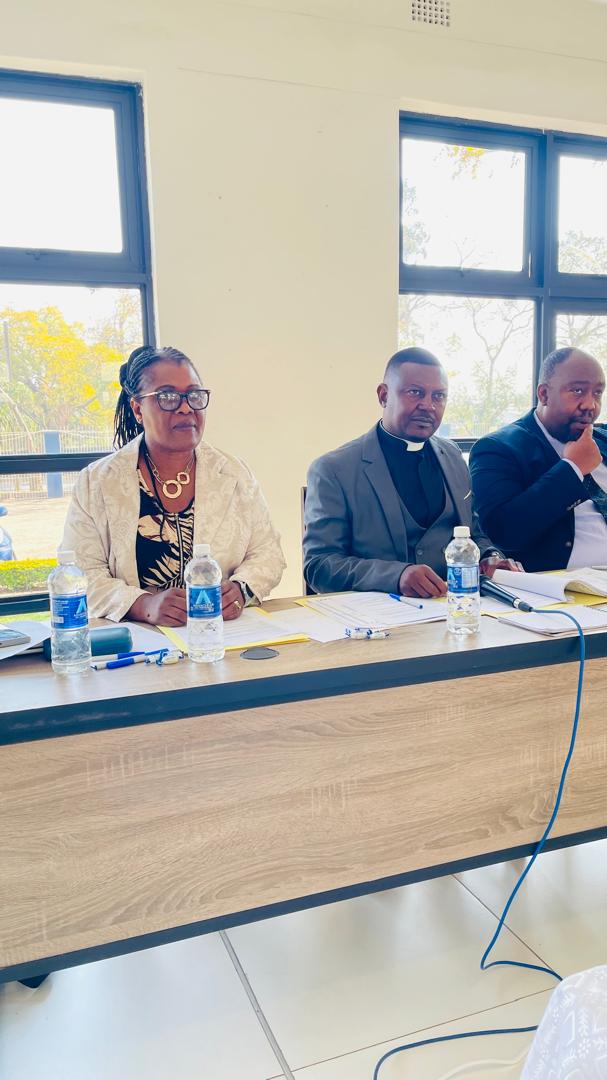
News Hub Reporter
Christian Care has taken a major step towards restoring its historic relationship with the Zimbabwe Council of Churches (ZCC), with its Annual General Meeting (AGM) resolving that the humanitarian organisation should formally normalise relations with its founding body and align its constitution with that of the ecumenical organisation.
The resolution was adopted at the Christian Care AGM held in Harare on Saturday, a day after the organisation participated in the 48th Zimbabwe Council of Churches Biennial General Assembly, marking its first attendance at the gathering in 13 years.
Addressing delegates drawn from across the country, National Chairperson Rev Dr Prosper Muzambi described the invitation to the ZCC General Assembly as a historic milestone that signalled the beginning of a new chapter for Christian Care.
He said the organisation deeply appreciated the opportunity to reconnect with the Zimbabwe Council of Churches after years of operating independently.
“The Board and Secretariat of Christian Care deeply appreciate the opportunity to participate in this General Assembly and to continue discussions concerning Christian Care’s relationship with the Zimbabwe Council of Churches,” Rev Dr Muzambi told the ZCC General Assembly on Friday.
“As some of you may have realised, it has been more than 10 years since Christian Care sat on one of the chairs in this Assembly. History tells us that Christian Care was established as the humanitarian and development service arm of the Zimbabwe Council of Churches. This remains in the opening paragraph of our organisation’s constitution.
“However, the organisation unintentionally drifted from the level of oversight, accountability and institutional connection originally intended by its founders. The current process therefore provides an important opportunity to restore and formalise that historic relationship, clarify the respective governance roles and bring Christian Carefully back within the ZCC family.”
The following day, delegates at the AGM unanimously endorsed the need to rebuild and formalise the relationship, with the organisation resolving to engage the Zimbabwe Council of Churches and align its constitution to reflect its founding mandate.
Speaking during deliberations, Bishop Sikhalo Cele of the United Congregational Church of Southern Africa (UCCSA) explained that the separation had not been deliberate but had developed over time. He said at one stage Christian Care had been led by individuals from churches that were not members of the Zimbabwe Council of Churches.
“Those leaders naturally felt they had no obligation to operate under the supervision of the Zimbabwe Council of Churches, despite the fact that Christian Care was established by the ZCC as its humanitarian and development arm,” he said.
He said reconnecting with the Zimbabwe Council of Churches would restore accountability, strengthen governance and reinforce the organisation’s ecumenical identity.
Rev Dr Muzambi also challenged Christian Care to become increasingly self-reliant as international humanitarian funding continues to decline. He urged member churches, partners and local communities to play a greater role in mobilising resources to sustain the organisation’s mission.
“We must continue seeking to improve the lives of our people despite dwindling donor funding. The time has come for us to look inward and mobilise resources locally through our member churches, local partners and communities,” he said.
The National Chairperson welcomed the auditors’ report, which gave the organisation a clean bill of financial health.
“I am encouraged that the auditors have confirmed that the organisation’s financial affairs remain sound. This strengthens confidence among our member churches, development partners and other stakeholders.”
Chief of Party Mrs Sefeliphelo Bhebhe said Christian Care continued to operate in an increasingly difficult humanitarian environment characterised by shrinking donor support, changing development priorities and growing humanitarian needs.
“Despite these constraints, the organisation remained committed to serving vulnerable communities and successfully adapted by improving operational efficiency, strengthening partnerships and pursuing innovative approaches to programme delivery,” she said.
She said during 2025, Christian Care implemented programmes focusing on water access, food and nutrition security, climate-smart agriculture, environmental stewardship, sustainable livelihoods and community resilience, positively impacting vulnerable communities across Zimbabwe.
Mrs Bhebhe said the organisation maintained strong relationships with long-standing development partners, including Act for Peace, The Charitable Foundation, Global Mission Partners and
Global Ministries, while also forging new partnerships with the Embassy of Japan and the Cooperation for the Development of Emerging Countries, enabling Christian Care to sustain and expand its humanitarian work. The organisation had three humanitarian running projects in Zaka, Chiredzi and Bikita districts.
Founded in 1967 by the Zimbabwe Council of Churches, Christian Care was established as the Council’s humanitarian and development service arm to respond to poverty, emergencies and social injustice.
Over the decades, the organisation has evolved into one of Zimbabwe’s leading faith-based humanitarian agencies, implementing programmes in disaster risk reduction, food security, water, sanitation and hygiene (WASH), climate resilience, education, health and sustainable livelihoods.
The AGM was attended by bishops from member churches of the Zimbabwe Council of Churches, regional chairpersons, councillors, board members and representatives from Christian Care’s regions across the country.


