admin
admin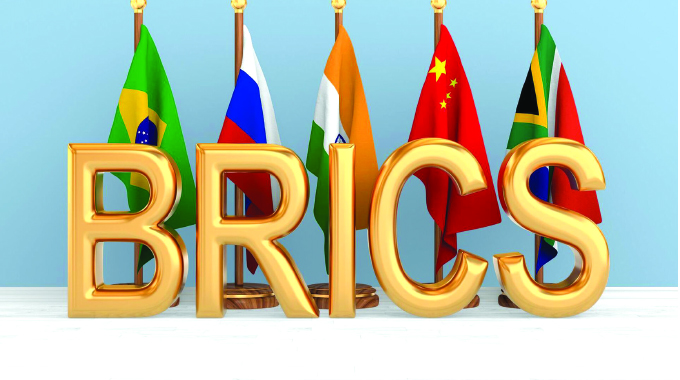
The 16th BRICS Summit, taking place under Russia’s chairmanship in Kazan from October 22–24, marks a historic moment with the inclusion of five new members: Saudi Arabia, Egypt, the United Arab Emirates, Iran and Ethiopia.
Notably, African countries now represent almost one-third of the bloc’s membership, strengthening the platform for Africa’s voices on the global stage.
As Egypt and Ethiopia join South Africa in the BRICS alliance, the summit offers an important opportunity for the continent to advocate for its economic development, global governance reform, and greater South-South cooperation.
To unravel more on the summit and Africa’s role in the expanded BRICS, China Africa Talk speaks with Dr Emmanuel Matambo, Director of the Centre for China-Africa Studies at the University of Johannesburg in South Africa, Mr Khaled Moussa, managing editor and business development director for Muscat Media Group Sultanate of Oman and Dr Berhanu Alemu, senior economist and researcher at the Ethiopian Policy Studies Institute.
China Africa Talk: The 2024 BRICS Summit has grabbed so much attention this time around. What makes the summit different from previous BRICS gatherings?
Emmanuel Matambo: When we look at the 16th BRICS Summit that will be held in Kazan from the 22nd to the 24th of October this year, there are a number of things that set it apart from previous summits. And the most obvious is the venue itself. The fact that the summit is being held in Russia and Russia is the chairman of the BRICS for 2024. At the time when Russia is still embroiled in its conflict with Ukraine, that would be three years old if it continues up to next year February.
So that is just one outstanding aspect to the BRICS Summit.
The second important element to BRICS 2024 is that the number of participants was doubled. Because at the 15th BRICS Summit in South Africa, the number expanded to include the United Arab Emirates, Egypt, Ethiopia, Saudi Arabia, and Iran. That will be another defining element setting the 16th BRICS apart from the previous summit. So how will the expanded membership interact? What sort of community are we going to expect to emerge from BRICS 2024? Obviously, there is also the war in Gaza which clocked one year in October 7th, 2024. So these are just some of the elements that are going to set apart the 16th Summit from those preceding it.
China Africa Talk: What common development interests do BRICS African member countries have, or is it one country for itself formation?
Emmanuel Matambo: At an economic level, it has worked quite easily for African countries whenever they talked at a bilateral level to individual BRICS members. So that has worked quite easily in terms of negotiating, because then you are negotiating with only one. So the most ideal situation at the moment would be that Egypt, South Africa, and Ethiopia come up with a concerted plan of action. This could be probably more representation in terms of Africa trade, and also of the coming up with ways through which the BRICS be used to enhance intra-African trade amongst African countries themselves, because Africa signed the African Continental Free Trade Area. So how could the three African representatives and the BRICS enhance trade between and among African countries? So that would be the most ideal situation. It would be disappointing obviously if they went to the BRICS and then started negotiating as in each African country for itself. South Africa has done that in the past. Whenever it hosted the BRICS summit, it would say this is the BRICS plus African countries. And then we saw countries such as Nigeria, Zambia and Zimbabwe attending BRICS.
China Africa Talk: Ethiopia played a key role in founding the African Union and other institutions. What kind of benefits is Ethiopia looking to gain from the summit in Kazan? And what role can its membership in the BRICS play on behalf of the continent?
Berhanu Alemu: BRICS is a coalition of emerging economies. Fundamentally, BRICS is aiming for economic cooperation through fascinating trade and investment. Moreover, it has an aim for development goals. As you may know, the BRICS has established New Development Bank, aiming to provide assistance, grant loans, guarantee provisions, and financial support for member countries. Then the BRICS is calling for multilateralism, a common stance on global issues, like climate change, sustainable development, culture, as well as social exchange. As you say, Ethiopia has played a fundamental role in establishing the African Union. So this regard, Ethiopia has benefited by joining the BRICS. So we expect Ethiopia to gain from this big membership and economic partnership by networking with business leaders, government officials, as well as countries in Africa, in Asia, and Latin America. Also, knowledge exchange, I expect Ethiopia to learn practices of successful countries. Fundamentally, Ethiopia is rich in natural resources, like renewable energy, agricultural sector, water, energy, as well as mining. Rich resources are there.
Ethiopia is known with export of coffee, livestock, and mining products. So Ethiopia can access and expand market share, being a member of the BRICS. So engaging with international stakeholders can help the country and its business gain access to new market and expand to reach there. Then, we can expect tourism promotion. Ethiopia is an old country, having various kinds of heritage. Showcasing Ethiopia’s cultural heritage and natural attractions at the summit can boost tourism, contributing to economic development.
China Africa Talk: What is there for Egypt to get excited about it? And does its participation represent the interests of North Africa?
Khaled Moussa: Yeah, absolutely. First of all, if we talk about the African countries in the BRICS, it is an important chance and a bigger chance for the African countries, which are part of the BRICS, because it gives them opportunity to exchange experience, and also to communicate and exchange trade together. As we know that in the beginning of this year, January 2024, BRICS added more countries. Egypt is one of the countries that took the opportunity to be part of the BRICS. So there will be more exchange and more cooperation for Egypt. As we know, Egypt has an amazing location. It is in the middle. It can be a hub to enter Africa, and to many areas. At the same time, it is good for Egypt to exchange experience, to export its products to the BRICS group. BRICS has an important role in the international economic landscape. If we look at BRICS, as we see, China is one of the important countries in the world. It is the second largest economy in the world. And also there are other big economies such as India, Brazil and Russia. So it is a greater chance for African countries. I see in the future, and in the coming years, as we see that technology is important and the industrial technology is doing great. And the BRICS member countries, especially China, have so much experience and they are doing a great job and they bring important rules in that area. So, it is another opportunity for African countries to get benefit from, not only for Egypt, but also for all African countries. One of the important things which we have to think in it, you know for a long time, the main currency the world uses is the US dollar. We can say the US benefits a lot from dollar as international currency. But it is a big opportunity between BRICS countries and between African countries. That is they can use their currencies or their local currencies to exchange, import and export products and things between each other.
China Africa Talk: What is your interpretation of this year’s theme of strengthening multilateralism for equitable global development and security? And why is it relevant to Egypt?
Khaled Moussa: Absolutely. It is important to Egypt, because, as we know, the Egyptian government does a lot of effort for the development of the country, for the development of its economy. We know that after 2010, because of the “revolution”, issues like Covid and also issues like the war in the area and this region, all these issues restricted Egyptian economy. But the Egyptian government is trying to do a lot to develop its economy and industry. It is working to attract more international investors. And it worked, step by step, it needs time. But it works. So again, it is important to conduct cooperation within the BRICS. It helps Egypt. It is very important, as I said, to export or import goods between Egypt and other BRICS countries.
Berhanu Alemu: When we say security, it is not only the political security, but it may involve peace security, economic development security, natural resource security, or addressing the climate change security. So the implication for Ethiopia and Egypt, as you all know, these two countries are new members of the BRICS, it will facilitate a stage to establish dialogue, especially the issue of Nile River. So it has an implication to cooperate together, to create sustainable peace and security in the Horn of Africa. So multilateralism for equitable global development holds for equal and fair share. This implication is much broader, much important for Ethiopia and Egypt.
China Africa Talk: What are some possible outcomes from the 16th edition of the summit? Are we likely to see more expansion from more African countries? What is your take?
Khaled Moussa: We hope so. I can see that the BRICS group, they are not in a hurry to add or accept more countries. They will allow or add more countries, but not necessary to be a lot of countries. They take step by step and look for the countries which have more added value for the cooperation between all those countries and between the BRICS countries. I expect there will be some more countries, but maybe not a big figure. But as it’s going on, years by years, there will be many country added. And we hope to see the BRICS to be one of the biggest most effective group in the world. — China Africa Talk


 Online Reporter