admin
admin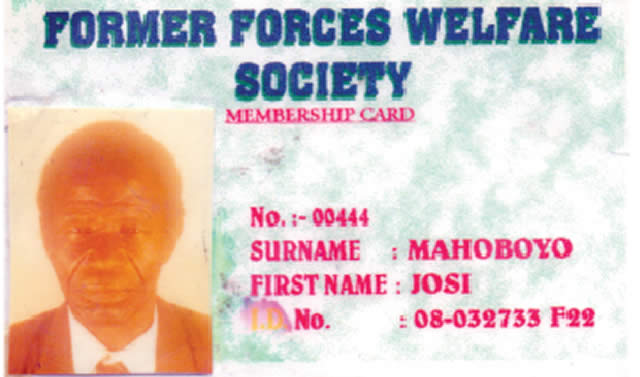
Cuthbert Mavheko
WHEN President Robert Mugabe visited Russia not so long ago to attend victory celebrations marking the defeat of Nazi Germany during the Second World War, he highlighted the role of black African soldiers who fought alongside Allied forces against German aggression. “It’s our victory together as Africans also fought fascism, albeit under imperial countries,” President Mugabe told his Russian counterpart, President Vladimir Putin.
The key point to note here is that we (Africans) have been fighting for recognition in virtually every area of human activity since time immemorial and there is an element of disillusionment in noting that, even today, we still have to fight for that recognition even as we celebrate our achievements.
One of the historical cases of our contributions being undermined through neglect is that mentioned by President Mugabe: the role of black African soldiers in the Allied forces’ victory over Nazi Germany during the Second World War.
To this day, the massive sacrifices that they (black Africans) made during the First and Second World Wars remain etched in obscurity.
It is like blacks never participated in these wars. The heart-rending reality is that thousands of black Africans were conscripted into the British army and multitudes of them sacrificed their precious lives to stem the tide of fascism that threatened to engulf the entire world then.
Historians agree, almost unanimously, that the Second World War was the bloodiest military conflict in human history in terms of the number of those killed.
World War Two fatality statistics vary with estimates of total dead ranging from 50 million to over 80 million. Looking back at the events of that war, the focus is usually on the military might of the Allied Nations and their defeat of Herr Adolf Hitler. Painfully neglected in that narrative are the tens of thousands of African soldiers who contributed to the Allied victory.
Their contributions to the war effort have been omitted from the history books or relegated to the margins of official records and today very few survivors remain, so most of their stories have gone with them to their graves.
Ironically, the British Empire’s military successes in, for instance, the Burma Campaign and the East African Campaign would not have been achieved without the participation of African soldiers.
It should be noted that black African soldiers fought and sustained heavy casualties in the Burma Campaign, in the Pacific Theatre against Japanese forces, in the East African Campaign against Italy and in the Battle of Madagascar against the French Vichy.
Africans made up about 100,000 of the total number of conscripted soldiers in the Burma Campaign alone. Most were from Nigeria and Ghana, Sierra Leone, Gambia and other nationals from British-controlled African lands.
The majority of African soldiers in the Burma Campaign were from the Royal West African Frontier Force (RWAFF).
In addition to Africans from British West Africa, the British Army also conscripted African soldiers from other parts of Africa for the East Africa Campaign and various other campaigns.
Conscripted soldiers from British East Africa were known as the Kings African Rifles (KAR). KAR regiments were from British East Africa (now Kenya), Sudan, British Somaliland (now part of Somalia), Southern Rhodesia (now Zimbabwe), Nyasaland (now Malawi) and South Africa.
Along with the KAR, British West African forces played pivotal roles in the East Africa Campaign. In fact, it was the motorised Nigerian Brigade of the 11th African Division from the RWAFF that captured and occupied Mogadishu, the then capital of Italian Somaliland.
In Southern Rhodesia (Zimbabwe) blacks who were conscripted into the British Army to defend the British Empire against the Germans and Italians were called the Rhodesian Native Regiment in the First World War and the Rhodesian African Rifles in the Second World War.
Josi Francisco Mahoboyo (now late) was one of the black African soldiers from the now defunct Rhodesian African Rifles (RAR) who fought for the British in Burma (now Myanmar), Malaya (now Malaysia), and Singapore.
This scribe had the opportunity to talk to Mahoboyo before he died and this is his story: “I was born in Fort Victoria (now Masvingo) in 1929 and was conscripted into the army in 1940. I did my initial military training at a Rhodesian African Rifles camp in Salisbury (now Harare). In 1942 we left for Kenya by road en route to the Far East. We underwent more training in Nairobi and then proceeded to Mombasa.
“We departed from Mombasa by sea and sailed for Ceylon (now Sri Lanka) under the escort of a British destroyer and submarine. From Ceylon we sailed for India, arriving there on Christmas eve in 1942.We were given more arms of war and then proceeded to Burma, where we saw action for the first time against Japanese forces. We had just crossed a flooded river when we ran into an ambush. Most of my colleagues were killed and I was captured and taken to a Prisoners of War Camp. I was a handsome young man and fell in love with a Japanese female medic who later facilitated my escape from the camp.”
Mahoboyo vividly recalled the time in August 1945 when the United States dropped atomic bombs on Hiroshima and Nagasaki.
“We were in Burma at the time and were told that the atomic bombs would end the war and we would be repatriated. Sure enough, the Japanese surrendered and we returned home at the end of 1945,” he said.
The end of the Second World War saw white Rhodesian war veterans being given vast tracts of land in this country for their war efforts. Blacks like Mahoboyo were given tokens of appreciation such as watches, ties and bicycles.
Mahoboyo resigned from the army in 1946, but later rejoined in 1952. He again went abroad, to Malaya this time to help the British against the Chinese. He returned home in 1958 and served in the Rhodesian African Rifles until his retirement in 1982.
Despite having distinguished himself among his contemporaries by being conscripted for military service abroad, all that Mahoboyo had to show for it were a litany of war medals which include The 1939-1945 Star, The Burma Star, The Defense Medal (1945), The Malaya Medal and The War Medal (1939-1945) among others.
Mahoboyo lies buried in a forlorn grave at Luveve Cemetery.


 Online Reporter