Tinaye Agere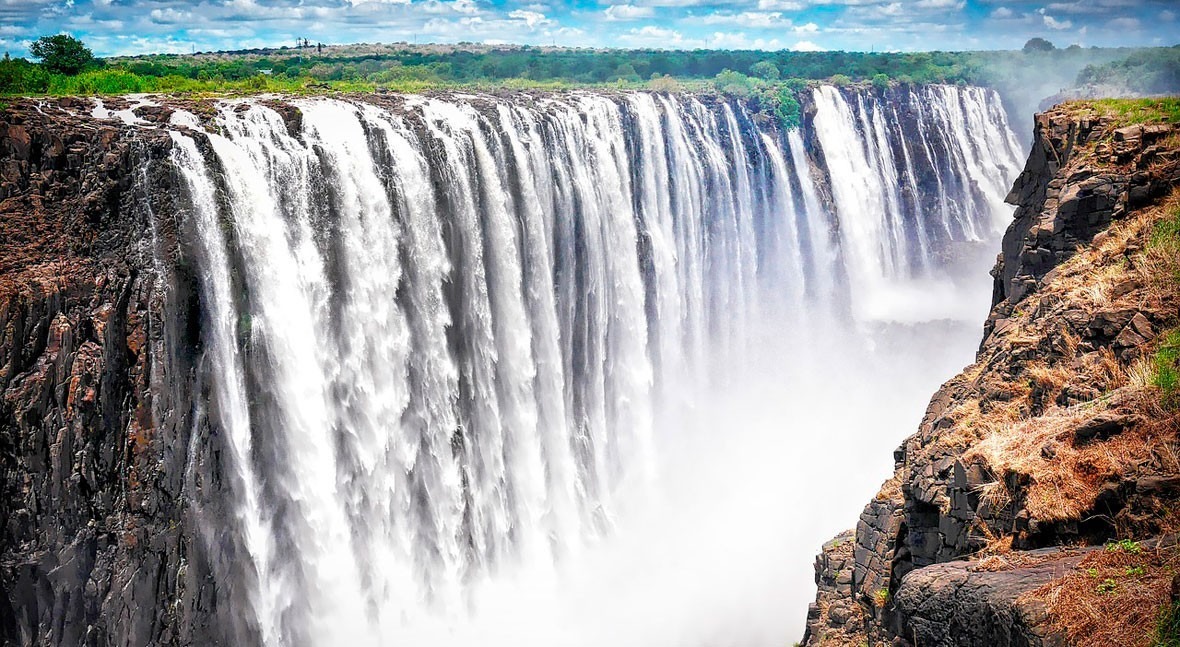
WELSH-AMERICAN explorer Henry Morton Stanley branded Africa “The Dark Continent” in his 1878 travelogue, remarking that it was hardly known.
Charles Mavhunga
This inspired leaders from 14 European countries and the United States to gather for the Berlin Conference in 1884 to discuss strategies to steal Africa’s resources.
At the conference, they agreed to partition the continent and parcel out its fortune to enrich Western countries.
The main participants were France, Germany, Britain and Portugal.
Africa’s brand was consequently lost as the continent was reduced to an object of Western countries.
So, the Berlin Conference effectively solemnised the branding of Africa as a dark continent.
However, the Pan-African think tank in Zimbabwe, the Institute of African Knowledge (INSTAK), came up with a brilliant idea to establish the Museum of African Liberation in Harare to crystallise the identity and integrity of Africa as a great continent.
INSTAK has also published the “African Factbook” and the “Book of African Records”, and initiated other far-reaching legacy projects.
Its public relations manager, Mr Joseph Nkani, says their mission is to research, gather and disseminate knowledge about Africa and its people.
The image of Africa, which has been distorted over decades, has to be recast and made global.
The colonial project was designed to distort the African brand and rob Africans of their identity and standing in the world.
It is against this background that INSTAK got the mandate from the African Union to generate and disseminate knowledge about the continent.
Establishment of the Museum of African Liberation in Zimbabwe is probably one of the greatest achievements in the history of country’s tourism industry.
According to Professor Simbi Mubako, the museum was conceived as a monument of the epic struggle to liberate African people from colonialism and apartheid.
Lord Macaulay laid the foundation of the colonisation project.
He did so when he proposed the blueprint for the colonisation strategy to the British Parliament on February 2, 1835.
It was premised on replacing the African cultural heritage with foreign values in order to make Africans lose their self-esteem and identity. The strategy was adopted and formed the basic foundation of colonisation and apartheid on the continent.
The imperialists tried to destroy the basic cultural values of Africans.
Many people lost their identity by changing their names to become French, British or German.
Not only did this destroy the confidence of African people, but it also undermined their capacity to be technologically innovative, hence Africa remains underdeveloped.
The establishment of the Museum of African Liberation, therefore, represents a turning point that will help Africans understand themselves better and mentally liberate themselves from the negative effects of colonisation and apartheid.
Ambassador Kwame Muzawazi, who is driving the project, believes Africa is the birthplace of civilisation, and, therefore, the African version of innovation must be correctly propagated to remove distortions created by foreign authors of African history.
The museum also creates a platform for African people to tell their own stories. For example, in Zimbabwe, the mighty Mosi-oa-Tunya (“the smoke that thunders”) was wrongly named Victoria Falls by David Livingstone in November 1855, yet Africans in Zimbabwe were the first to name the natural wonder. The breadth and depth of such distortions in the history of Africa demand new heroes to turn the tables to liberate Africans from the colonial bondage.
African diplomats have supported the establishment of the museum.
Today, Africa’s 55 flags are flying high in Harare to show solidarity and showcase collaborative thinking that Africa’s image must be correctly projected.
Museums have an important role in the tourism industry.
Unfortunately, some African journalists are paid to reinforce stereotypes of Africa as a dark continent.
In addition, some graduates from African universities struggle to create jobs for themselves through creative thinking and waste time in destructive politics that seek to pooh-pooh the role of liberation heroes who fought to restore the dignity of Africans. However, the development of the Museum of African Liberation is likely to restore the confidence of Africans to liberate their minds.
The AU commissioned Zimbabwe to host the project. This means Africa entrusted the leadership of Zimbabwe to host the noble project to rebrand the continent.
The leadership of Zimbabwe is known across the world for reclaiming the land that had been appropriated by colonialists. The museum unites Africa in its quest for development and prosperity.
◆ Charles Mavhunga co-authored textbooks in business enterprising skills and is currently studying for a PhD in Management at Bindura University of Science Education. He can be contacted at: [email protected] /Cell: 0772989816.



 Online Reporter