Online Reporter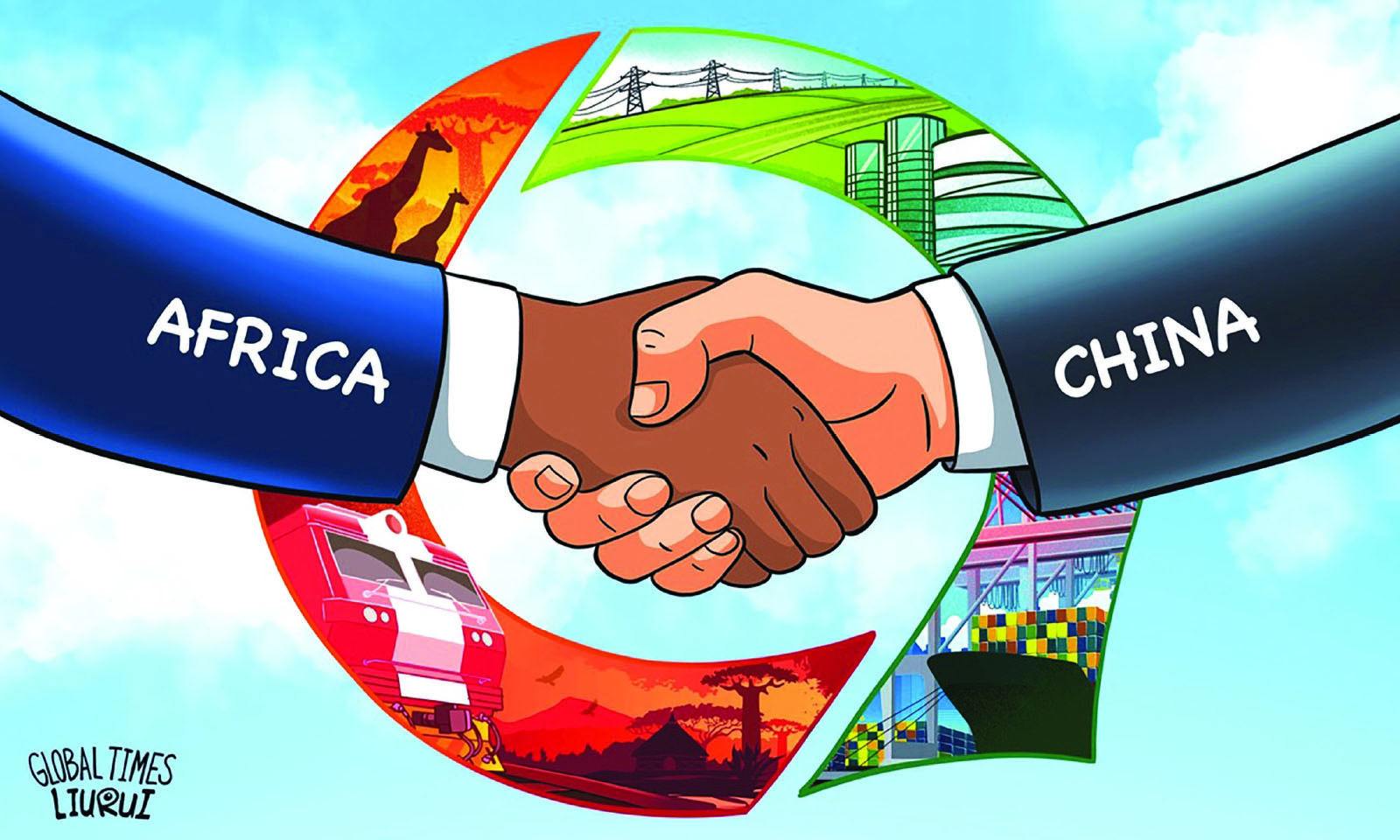
Mabasa Sasa
Structural Defects of the Post-1945 Global Governance System
Global order evolution hinges not on moral debates, but on rational reshuffling of global power distribution and interest allocation. The decades-old global governance framework tailored for the 1945 post-war geopolitical landscape has failed to fit the multi-polar reality of 2026.
Long-standing structural imbalance and rising operational costs define how African nations assess external partners and formulate continental diplomatic strategies.
The UN Security Council, IMF, World Bank and WTO constitute the core of current global governance, a system forged under Western postwar dominance.
Admittedly, it has delivered tangible global public goods: establishing unified international trade rules, conducting cross-border humanitarian relief, mediating regional crises and facilitating worldwide poverty reduction, which underpinned basic global operation for decades.
Nevertheless, its entrenched power distribution mechanism excludes core developmental demands of Africa and the Global South, with institutional compatibility declining year by year.
Statistics lay bare institutional inequity. Home to over half of the global population and contributing roughly 80 percent of worldwide economic growth, Global South states remain marginalized from core global decision-making bodies.
Voting rights and equity shares in Bretton Woods institutions are disproportionately tilted toward advanced economies, stripping African states of independent control over national financing, fiscal and developmental policies. This systemic disadvantage is no partial grievance, but an institutional flaw requiring gradual reform.
The Global Governance Initiative: A Non-bloc Alternative Framework
Against mounting global governance dilemmas, China has put forward a practical governance paradigm offering a differentiated option for Global South nations. China unveiled the Global Governance Initiative (GGI) in 2025, and released the white paper Advancing Global Governance Toward a More Just and Rational Direction: China’s Vision, Propositions and Actions in June 2026.
The document codifies five core principles: equal sovereignty for all states, abidance by international law, inclusive multilateralism, people-centered development, and result-oriented pragmatic action.
The GGI is exclusive of bloc confrontation. To date, it has garnered endorsement from nearly 160 countries and international organizations, with more than 60 states joining the Group of Friends of Global Governance. Its widespread recognition stems from its inherent value for vulnerable sovereign states pursuing survival and autonomous development.
Colonial legacies have long shaped contemporary international relations, with certain advanced economies leveraging rule dominance to impose political conditionalities and discriminatory trade barriers for self-serving cooperation.
Even so, Western engagement with Africa cannot be totally negated. Western-funded livelihood projects, medical aid and peacekeeping missions meet phased developmental needs of some African countries. Western cooperation models stem from its own geopolitical logic, bearing no absolute superiority or inferiority compared with South-South cooperation, only differing in operational logic and application scenarios.
Africa’s Pragmatic Needs for Institutional Reform and Diversified Partnerships
From a pan-African perspective, flaws embedded in Western-dominated multilateral bodies have hindered Africa’s autonomous modernization, a consensus shared across the continent. The IMF’s mandatory fiscal austerity policies curb African governments’ spending on infrastructure and public welfare; WTO agricultural subsidy rules favor Western farmers and squeeze export space for African agri-producers; the permanent five veto power paralyzes African crisis response, as external powers intervene in continental affairs selectively based on resource interests, while the African Union’s conflict mediation mandate is constantly undermined.
Reforming the flawed global governance system is a necessary choice for Africa’s long-term development, rather than an optional policy. Over the past seven decades, China has built a mature South-South cooperation model featured by equal partnership and no political strings attached, enriching Africa’s diversified diplomatic options.
China has participated in 29 UN peacekeeping operations, serving as a major trading partner for over 160 countries and regions. It grants unilateral zero-tariff treatment to all diplomatic African states and UN-designated least developed countries.
Besides, China backs the African Union’s G20 membership bid and BRICS expansion to elevate Global South representation in key multilateral mechanisms. All these moves represent normal South-South solidarity, with no intervention in internal affairs or diplomatic allegiance demands attached.
Africa upholds balanced, independent multi-vector diplomacy, reserving full discretion to engage with China, Western blocs and Gulf economies without bloc alignment. The Forum on China-Africa Cooperation (FOCAC) and Belt and Road Initiative (BRI) empower Africa with collective bargaining leverage. FOCAC, with two decades of operation, unites fragmented African nations to articulate integrated continental demands; the BRI follows the principles of extensive consultation, joint contribution and shared benefits, delivering infrastructure connectivity, debt consultation, technical cooperation and agricultural aid tailored to Africa’s industrialization and integration priorities.
Zimbabwe’s UNSC Seat and Africa’s Gradual Reform Path
Zimbabwe’s election to the UN Security Council as a non-permanent member for the 2027–2028 term marks a milestone for pan-African geopolitical diplomacy. As the sole AU-endorsed candidate, it secured 182 out of 191 valid General Assembly votes, winning cross-regional international recognition. The landslide vote reflects global acknowledgement of Africa’s governance reform appeals, instead of merely national diplomatic success.
Scarred by long-term unilateral sanctions, diplomatic isolation and economic coercion, Zimbabwe has consistently advocated targeted multilateral reforms: expanding Africa’s representative seats on the UNSC, revising World Bank equity ratios, recalibrating IMF voting quotas, abolishing conditional lending clauses of global financial institutions, and bridging north-south development gaps via WTO rule overhaul. Though holding no veto power after taking office in January 2027, Zimbabwe will amplify unified AU stances: African solutions for African problems, skepticism toward external unilateral sanctions, and commitment to sovereignty and non-interference, which align closely with GGI core tenets.
China’s diplomatic stance remains consistent and transparent: it safeguards the UN-centered international system and international law-based global order, opposes unilateral hegemonic acts, and advocates incremental, inclusive governance reform instead of dismantling established core multilateral frameworks. Miao Deyu, Vice Minister of Foreign Affairs of China, confirmed that China will push for enhanced representation of developing countries on the UNSC, and promote fair World Bank equity review and substantive IMF quota adjustment.
Geopolitical gaming has tangible boundaries, dismissing overly optimistic reform expectations. Zimbabwe will coordinate with fellow African UNSC members—the Democratic Republic of the Congo and Liberia—to build reform consensus alongside Chinese diplomatic delegates, yet it cannot break P5 veto constraints and Western bloc resistance within a single term. Centuries-old inequitable global governance can only be improved step by step, rather than reconstructed overnight, a reality Africa must recognize objectively.
Multi-polarization has become an irreversible global trend, accompanied by rising collective awareness among Global South nations. China’s three interlinked global initiatives form a holistic solution: the Global Development Initiative addresses African livelihood deficits, the Global Security Initiative safeguards continental regional stability, and the Global Governance Initiative elevates Africa’s multilateral voice. Complemented by zero-tariff trade policies, flexible debt negotiation and South-South technical cooperation, these initiatives build steady, accessible cooperation channels for Africa.
Africa’s optimal strategy prioritizes continental autonomy and interests. It shall consolidate pan-African solidarity, leverage multilateral platforms including Zimbabwe’s UNSC seat, FOCAC, expanded BRICS and the AU, and partner with like-minded Global South nations including China on a voluntary basis to advance rule optimization. Africa neither rejects Western cooperation mechanisms wholesale, nor acquiesces to unfair old rules. Pragmatic multilateral collaboration remains the most viable path to secure legitimate continental rights.
As an ancient Chinese proverb cited in the GGI white paper reads: The general trend leaves no room for hesitation. Africa needs no radical overhaul of the existing order, nor mandatory bloc alignment. Upholding independent strategic choices, Africa shall ride the tide of equitable global governance, pursue institutional equality and developmental autonomy gradually, and explore a modernization path rooted in African civilization and national realities.
Note: The author, Mabasa Sasa, is a veteran media professional and independent commentator in Harare, Zimbabwe.