Online Reporter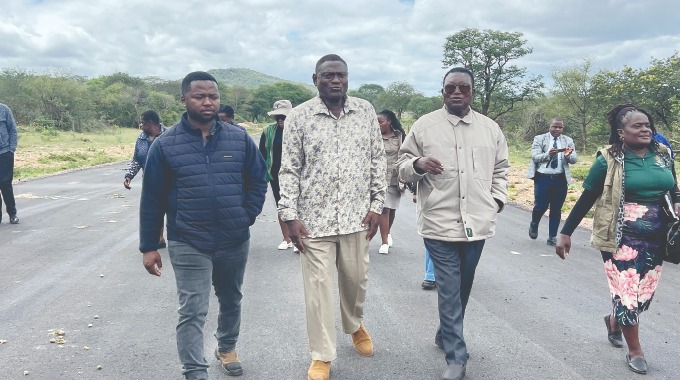
Sukulwenkosi Dube-Matutu, [email protected]
LONG after the final drumbeat of Zimbabwe’s 46th Independence Day celebrations faded across Matabeleland South, the moment did not simply pass. What has remained is something quieter but far more lasting — a feeling that change is slowly settling into the everyday lives of people in the province.
Across the region, the effects of Government’s legacy projects are now visible in ways that matter. In rural wards, new clinics are giving communities easier access to healthcare. Roads that were once difficult to travel have been tarred, making movement simpler and faster. Upgraded water systems are easing daily struggles, allowing families to focus on living rather than just getting by.
Earlier this year, hundreds of Zimbabweans gathered at Maphisa Stadium in Matabeleland South, where the national Independence Day celebrations were held under the leadership of President Mnangagwa. It was a day filled with pride and celebration, but also one that highlighted the development taking place behind the scenes.
In the lead-up to Uhuru Day, a number of projects were rolled out across the province, covering different sectors. These were part of the legacy projects linked to hosting the national celebrations — projects meant to leave something meaningful behind for the people.
Some of these initiatives were completed in time for the celebrations, while others are still ongoing and are expected to be finished by November this year. In total, at least 43 high-impact projects were implemented in Matabeleland South ahead of the event.
On Independence Day itself, President Mnangagwa officially commissioned several infrastructure and development projects aimed at improving both the local economy and life in rural areas.
Among them was the Mahetshe Primary School Business Unit. Here, a one-hectare garden has been established, supported by a 1.5 horsepower solar-powered borehole, drip irrigation, fishponds, and 10 000-litre water storage tanks. The project is designed to improve both agricultural learning and livelihoods.
At the same school, a computer laboratory was refurbished, and 200 laptops were provided by the Government, helping learners access modern technology.
Under the War Veterans Housing Scheme, housing units were also built for liberation war veterans through the Presidential Investment Advisor programme.
In the Mafuyane area, a water reticulation system was installed, while a 14.3-kilometre power line was set up to connect schools and nearby communities. Other developments included improvements to infrastructure at Mahetshe Primary and Secondary Schools, the construction of Maphisa Stadium, and work on major roads such as the Gwanda-Maphisa and Bulawayo-Kezi routes.
On the eve of Independence Day, attention turned to remembrance. Vice President Dr Kembo Mohadi unveiled a monument in Ratanyana in honour of four children and 10 ZIPRA cadres who were killed during the liberation struggle. At the same time, a new clinic was also commissioned in the area.
The Ratanyana memorial serves as a reminder of Zimbabwe’s history and the sacrifices made for freedom. It honours Nokuthula Ndlovu, Thandekile Moyo, Sixoliso Dube and Mqalisi Ndlovu — children who were caught in the conflict and killed — alongside 10 ZIPRA cadres who died during a fierce fight at the same site.
The ceremony formed part of wider efforts by the Government to preserve liberation war history and develop heritage sites across the country, while also promoting inclusive development.
The Independence celebrations are now being hosted on a rotational basis as part of the Government’s decentralisation strategy. Each province that hosts benefits from development projects linked to the event, helping to spread growth across the country.
This approach reflects President Mnangagwa’s message that no place and no person should be left behind.
During a recent tour of the projects, Special Advisor to the President on Monitoring Implementation of Government Programmes and Projects, Dr Joram Gumbo, spoke about their importance.
“The projects that are being implemented in Matabeleland South are very critical as they impact on people’s lives in various ways. From the projects I visited today we see development of the education sector, connectivity through roads and provision of essential documents through the Registry.
“When His Excellency talks about Vision 2030 which seeks to improve people’s lives to an upper middle income society these are some of the areas he is talking about. We have health, education, transport, infrastructure among others. The impact on the people of Matabeleland South, a region that amongst other regions might have been deemed to have been left behind shows that the Second Republic is cognisant of that fact and has come to address those misconceptions,” he said
He encouraged people in the province to appreciate and take pride in these developments, noting that they would benefit communities for many years to come.
The Minister of State for Matabeleland South Provincial Affairs and Devolution, Albert Nguluvhe, also urged residents to embrace the projects and move away from the idea that the province has been marginalised.
“This development which we are seeing in the province as well as the opportunity we have been given to host this year’s Independence Day Celebrations is in line with the Government’s mantra of leaving no one and no place behind.
“I want to take this opportunity to thank His Excellency, President Mnangagwa, for his mantra that no one and no place will be left behind. Indeed, here in Matabeleland South province, we have not been left behind,” said Minister Nguluvhe.
He said the success of the event showed what can be achieved when communities, businesses, leaders and Government agencies work together.
Across the province, more projects are still underway. These include the construction of 41 science laboratories in all seven districts, aimed at improving the teaching of STEM subjects.
At Maphisa District Hospital, the primary care nurse training school has been rehabilitated, with the first group of students expected to start in May. In Filabusi, a registry office that had not been completed for nearly 20 years is now close to being finished after being prioritised as a legacy project.
Road construction continues as well, particularly the Gwanda-Maphisa Road, which will improve connections between districts and support economic activity. The road links important areas such as ARDA Antelope, the Makwe irrigation scheme, border posts, and tourism sites in Matobo.
In addition, about 2 600 kilometres of roads across the province have been rehabilitated by local authorities and Government agencies.
Looking ahead, Masvingo has been selected to host the 2027 Independence Day celebrations, in line with the rotational system approved by Cabinet. Since 2021, the celebrations have been held in different provinces — Harare in 2021, Bulawayo in 2022, Mashonaland Central in 2023, Manicaland in 2024, and Midlands in 2025.
The aim is clear: to use these national events to bring development to different parts of the country.
As life in Matabeleland South returns to normal after the celebrations, what remains is not just a memory of the event, but real changes on the ground — roads, clinics, schools, and opportunities that will continue to shape the province for years to come.