admin
admin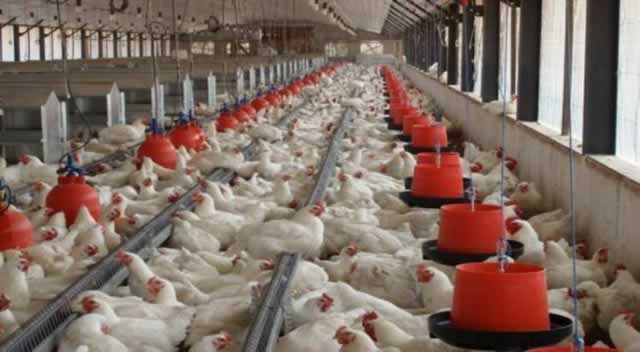
Thandeka Moyo
WHEN Sehlisiwe Ndlovu failed her O-Levels, all hope was gone and she was forced to wait for marriage like every other woman in her village.Born and bred in the west of Kezi, in Gohole Village where unemployment, teenage pregnancies, school dropouts and early marriage are the order of the day, she also found herself succumbing to the “norm” of the area, getting married early.
Now aged 33 with four children, in this difficult economy where even her husband’s monthly salary is not enough to cater for the family’s basic needs like food, shelter and clothes, she finally decided to turn to farming.
“I’m an upcoming young farmer who recently took up poultry as a means of empowering myself and nine other youths in my community. I’m happy I considered this project as it didn’t only create employment for me but it also delivered me from the stranglehold of poverty and laziness,” says Ndlovu.
She adds that she received training on skills, finance management and that her project will succeed in empowering her as a woman.
“It all started with Youth For Today and Tomorrow, a non-governmental organisation which encouraged us to start our projects last year in June. Since then I have never looked back and I have nine youths who work with me and we’re running a fowl run with 91 road runner chickens.”
Road runners, long despised as the preserve of poor people in the village, have in recent years found their place among delicacies on the table, particularly in restaurants that serve traditional food.
To Ndlovu, farming projects might be a solution to people in Kezi who rely on illegal mining activities for a living.
“Though I failed my O-Levels, I managed to pass one subject. After that I stayed at home for a few years before marriage. The problem we have these days is that we’ve mothers as young as 13 years who’ve no source of income or any direction in life,” she says.
“Women should rise especially us young ones and take hold of our future as no one can do that for us. Yes there’re no jobs but one can start their projects, be it poultry, farming or anything. I know women are capable and if we all realise the possible impact agriculture can have in our lives, we will put an end to poverty, gender based violence, hunger, crime and the alarming levels of unemployment.”
Ndlovu is one of the hundreds of women who have embraced agriculture and look forward to becoming farmers who will deliver quality services in Zimbabwe.
“Now that I’ve started this project, I’m sure I’ll be able to access data on what Zim-ACP was sharing with other farmers in Matabeleland so that I also aim high and become a world class farmer one day. The time for me to rise is now,” she says.
Launched four and half years ago, Zimbabwe Agricultural Competitiveness Programme (Zim-ACP) worked with farmers across the country and many programmes were conducted to empower them with knowledge and skills.
The USAID-funded programme began in September 2010 and provided support that facilitated evidence-based dialogue among farming, agri-business and public sectors on issues concerning competitiveness in the agricultural business environment.
Zim-ACP researcher and analyst Shamiso Nyikayaramba confirms that agriculture is a great opportunity for young women in need of empowerment, financial stability and employment.
She said: “It’s important for everyone to understand that when we talk farming, we should also consider world standards, financial literacy, quality products, ethics and social responsibility. One of our aims was to educate farmers on how they can ensure their products are of the best quality and that they run business, which according to ethics, would benefit the farmer, the customer and the community where one is operating from.”
She says each farmer must be in a position to assess their own businesses and ensure they are operating within set standards.
“We’re living in an era where women empowerment is being preached and supported everywhere. Young women must rise and take hold of this advantage now. The opportunities that are there now will not last forever and I urge every woman to stop complaining about the economy, gender inequality but to start thinking of a programme that she can do,” says Nyikayaramba.
In carrying out researches, she has found out that women do farm and do all the work but they do not benefit much though they provide most of the labour.
“The Constitution is now pro-women empowerment and that on its own should encourage women to become farmers or become informed farmers. Yes, agribusiness is a solution to many challenges facing women in Zimbabwe today but women also need a learning system, to know the trends, what the market wants and an understanding of the environment, climate and farming regions.”
Zim-ACP also helped women farmers understand how property law works.
“We’ve been working with some farmers’ unions who confirmed that about 80 percent of their farming community is made up of women. We’re happy because as I said the constitution and other legal instruments are pro-women empowerment. Gone are the days when women could not own land, farms,” she says.
Societal prejudices and the fact that most women like pulling each other down remain the major challenges to promoting and maintaining good farming standards in Zimbabwe.
“There’re some traditional crops that do well in certain climates like peas and it’s discouraging to see that women are reluctant to make use of those crops especially in low rainfall hard hit regions,” says Nyikayaramba.
According to Nyikayaramba, many young people are letting their small pieces of land lie idle.
“The doors are wide open for young people to farm or start other projects within agriculture. We’ve one of the youths from ZFU, a farmer organisation we’ve been supporting; Ruramiso Mashumba from Marondera aged 29 who has qualifications from England and is doing very well in farming in Zimbabwe for export. If all our young people can emulate and learn from her, I’m sure we will be able to fight poverty and gender inequalities.”
Nyikayaramba added that Mashumba was also training other youths around the country on standards and ethics.
“We helped our partner farmer organisations to draft a code of practice for horticulture according to Global Gap standards and we urge every farmer to be familiar with it. We conducted training programmes during the past five years and though our project ends today, we hope farmers in Zimbabwe will aim at producing quality products, being competitive in all they do, will follow and apply the code of practice and finally they will even maintain hygiene because this is important in food safety.”
Zimbabwe Farmers Union (ZFU) official Paul Zakariya says his union has a Young Farmers Club aimed at engaging young people to start farming projects.
“Farming can create employment and empower our youths in many different ways. We’ve Young Farmers Clubs around the country and we encourage every young person, especially women, to start projects,” said Zakariya.
He said so far programmes aimed at youth empowerment through farming had reached about 22, 000 youths around the country. “Our aim is to work with about 35,000 youths who are into farming so that we impart skills and help them become contributors to employment creation and reviving the economy. I’m sure that if all youths, especially school drop outs, can take it up, we can fight poverty and unemployment.”
Agriculture, Mechanisation and Irrigation Deputy Minister, Cde Davis Marapira says agriculture is the backbone of the Zimbabwean economy and youths must actively participate.
“Though we’ve resource and cash challenges that make it impossible for us to fund new and young farmers, farming can also be used in youth empowerment. We’ve policies around those issues and we’re trying to engage farming organisations to train more farmers so we’ve skilled and professional people in the farming,” says Marapira.
He added that farmers should not only focus on making money but prioritise ethics and quality too.



 Online Reporter