Online Reporter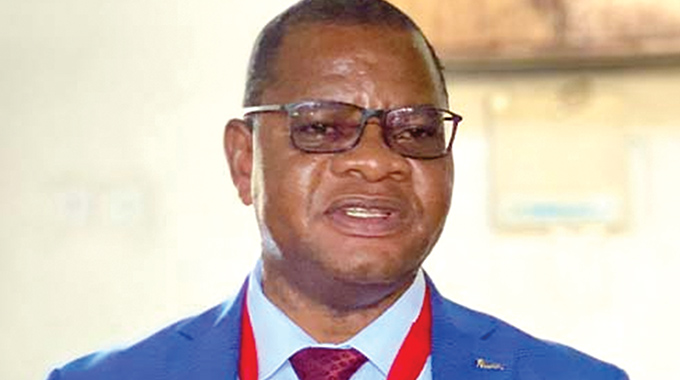
Nyasha Simbisai in Mutare
ZIMBABWE is recalibrating agricultural budgets, production targets and programmes to withstand the anticipated El Niño-induced drier-than-normal season, with every major intervention now being aligned to the Government’s six-pillar drought response strategy.
This comes as Zimpapers will next week (Monday 28) host a solution-based summit running under the theme “El Niño Is Not Drought: Planning, Preparing and Protecting Zimbabwe’s 2026/27 Agricultural Season.
The summit will bring together key agricultural stakeholders to improve understanding of El Niño’s implications for Zimbabwe, provide farmers with practical strategies for managing climate risks, promote climate-smart agriculture, water security and livestock resilience, explore and expand the role of agricultural finance and insurance and strengthen collaboration across
Government, private sector and farming communities.

Agricultural Development and Advisory Services (ADAS) officials from across the country, under the Ministry of Agriculture, Mechanisation and Water Resources Development, have since converged in Mutare to review the previous year’s performance and determine the resources, targets and interventions required to sustain agricultural production over the next 12 months.
Permanent Secretary for Agriculture, Mechanisation and Water Resources Development Professor Obert Jiri said the anticipated El Niño conditions would be a major determinant of how the sector plans and allocates resources.
The exercise covers crops, livestock, irrigation development and other agricultural programmes, with emphasis on translating climatic risks into measurable targets, financing requirements and early interventions.
“As we now go into another year where we know that it will be drier than normal, we must plan accordingly so that we look at what targets we are going to have, what indicators we are going to watch out for and, of course, how we budget for it,” Prof Jiri said.
He said adequate resource mobilisation would be critical to maintaining agricultural production despite the expected challenging conditions.
“We have to ensure that we can mobilise the resources that are commensurate with delivering a good season for the country,” he said.
Prof Jiri said the planning exercise follows a strong previous agricultural year, making it necessary to assess what worked before setting targets for the next cycle.
“It is that time of the year again when we must look back and then plan for the agricultural sector in Zimbabwe.
“We are looking at various programmes under the Ministry of Agriculture to ensure that we see how we have performed in the last year, which was a very good year, and then also plan,” he said.
At the heart of the new planning cycle is the Government’s six-pillar drought response strategy, under which every agricultural programme will be assessed and positioned.
The first pillar seeks to enhance the Strategic Grain Reserve to strengthen the country’s food security buffer, while the second focuses on climate-smart production to sustain output under reduced rainfall conditions.
Financing constitutes the third pillar, with agricultural programmes being divided into different segments to determine and track their funding requirements.
“How do we finance the upcoming summer? We have divided the programmes into various segments so that we can track those for financing,” Prof Jiri said.
The fourth pillar places livestock under the spotlight, with interventions being planned across cattle, sheep, goats, poultry and other livestock enterprises to ensure the different sub-sectors are catered for during the dry period.
Imports constitute the fifth pillar and are expected to provide a mechanism for bridging potential supply gaps, including requirements for millers and stock-feed manufacturers.
The sixth pillar brings together coordination, early warning systems and capacity building, ensuring agricultural officials and farmers receive information and support early enough to respond to emerging risks.
Prof Jiri said the emphasis was on preparedness rather than waiting for climatic challenges to disrupt production.
“How do we coordinate, how do we send out early warning information and resources, how do we capacity-build our staff, our country and our farmers to be able to respond to the coming months that are going to be challenging?” he said.
With the anticipated El Niño conditions expected to influence agricultural planning over the next 12 months, Prof Jiri said the critical task was matching programmes with sufficient resources
while protecting the gains achieved in the previous season.
“It is very critical for us to really look at it and say, as a country, how do we respond resource-wise to the coming El Niño season,” he said.