admin
admin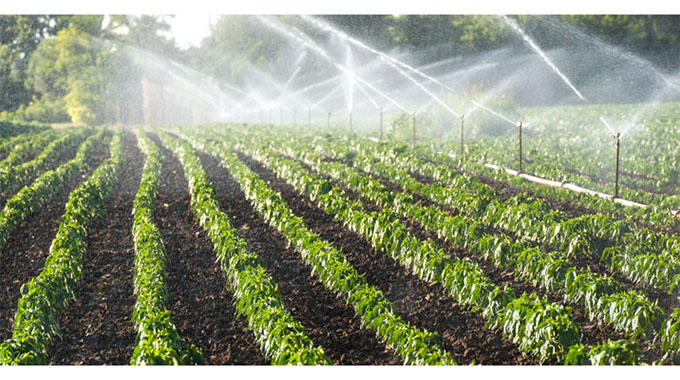
Since the advent of the Second Republic, President Mnangagwa’s Government has implemented a number of interventions to transform the country’s agriculture sector. The Herald has been serialising the Agriculture, Food Systems and Rural Transformation Strategy -2023-2025 every Thursday for the benefit of our readers.
Climate-Proofing Agriculture
Zimbabwe is predicted to become drier in the decades ahead due to climate change.
Climate Scenarios for maize to 2050 from Climate Change
Under wet/warm futures scenario production gains outweighed losses from soil erosion.
Under dry/hot scenarios, which are considered more in line with observed climate change in Zimbabwe, overall rain fed crop losses by the 2040s are expected to be up to -17 percent under the dry/hot mean.
For rain fed maize, specifically, the yield losses under the hot/dry mean are estimated to be -22 percent
However, there is considerable geographic variation with the southern Mzingwane catchment being the hardest hit with estimated maize yield losses of -34 percent by the 2040s under a hot/dry scenario.
An increase in the incidents of climate extremes such as heatwaves, droughts and floods, is expected to further disrupt crops, livestock and fisheries production. Climate change will continue to present one of the biggest challenges to the sustainable increase in crops, livestock and fisheries production, necessitating greater climate proofing of agriculture.
Under the AFSTS, climate-proofing of agriculture through the sustainable intensive conservation agriculture scheme (Pfumvudza/Intwasa) was adopted for all rural households.
Climate-proofing agriculture through water resources and irrigation development was also adopted. The irrigated area increased from 173 000ha in 2020 to 203 000 ha in 2022, with 350 000 ha planned by 2025.
Weather-indexed insurance and area-yield insurance, to cushion farmers, has been successfully trialled and is now being rolled out nationally.
A Government-facilitated institutional framework, including Africa Risk Insurance and AFC Insurance Company, has been created to complement private sector efforts. Government’s thrust is that insurance should be regarded as an input in crop and livestock production.
The agro-ecological tailoring of crops and varieties has been refined and aligned to the new agro-ecological zones for the country as revised in 2021.
Due to the revision of agro-ecological regions, the proportion of the country in Regions 4 and 5, has increased.
Maintenance and improvement of soil health (using a systems and ecosystem approach) have received special attention.
The comprehensive soils and pH map for country is now available to guide farmers.
Soil pH remains unacceptably low in most parts of the country. Liming to correct pH and organic matter addition to correct soil health, are important interventions under Pfumvudza/Intwasa.
Awareness among farmers of the importance of soil health (fertility PH and organic matter content) is being enhanced through tailored extension and advisory services and digital platforms.
It has been suggested that the biggest impediment to sustainable yield increase in all farming sectors is poor soil health.
Maize and sorghum yields increased three to five-fold under Pfumvudza/Intwasa compared to conventional production with the wholesale adoption of the Pfumvudza/Intwasa practice in the smallholder sector.
Pfumvudza production increased from 493 739 tonnes (27,4 percent of national human consumption) in 2021/2022 to 586 539 tonnes (32,6 percent of national requirement) in 2022/23. This trend is expected to continue with the wholesale adoption of this practice.
In addition to climate-proofing, resilience building measures under Rural Development 8.0 were initiated, to cushion and eventually insulate communities from the vagaries of climate-induced food shortages.
With the planned one borehole- per village, rural communities can be assured of safe portable water, and sustainable crop production throughout the year.
Some 50 000ha will be solar-powered boreholes and have drip-fed irrigation systems as village, youth, and school business units.
Agricultural Markets and Trade
The structured liberalisation of markets for maize, wheat, barley, soyabean, cotton, traditional grains was introduced in 2021 and 2022 to increase value chain financing, and improve farmer returns.
The Warehouse Receipt System (WRS) and the Zimbabwe Mercantile Exchange (ZMX) were also introduced in 2022.
The ZMX is expected to assist with price discovery and mobilisation of additional resources to enhance production. The Africa Continental Free Trade Area (AfCFTA), touted as the biggest intra-continental market, provides the potential to market Zimbabwe’s expected increasing surplus production of crops and livestock.
Already Zimbabwe has built capacity to produce 100 000 tonnes surplus wheat annually. It is estimated that Africa imports US$8 billion – US$10 billion worth of food annually.
Zimbabwe should, therefore, ready itself for increased horticulture, cereal, cotton, tobacco, beef and poultry market development, while enhancing exports of competitively-produced and appropriately priced value-added products. Market development efforts have led to the finalisation of the China Protocol to allow citrus export.
Export markets forays have been undertaken to Africa, the Middle East, United Kingdom and Europe through ZimTrade, the Ministry of Foreign Affairs and International Trade, Agricultural Marketing Authority and the Ministry of Lands, Agriculture, Fisheries, Water and Rural Development. These must continue.
Land for production and productivity enhancement
About 99,9 percent of land available for redistribution under the Land Reform Programme has been distributed.
This irreversible land reform programme has yielded over 23 500 A2 beneficiaries and over 360 000 A1 beneficiaries. The focus is now on increasing production and productivity on the land.
A range of legislative and regulatory reforms were undertaken to improve land administration and governance through the operationalisation of the Zimbabwe Land Commission Act (Chapter 20:29) in 2019.
The ZLC has worked to oversee fairness and transparency in land governance, worked to resolve conflicts, conducting periodic land audits land and proffering policy advice on land governance.
Among the major challenges in land distribution is the lack of a coherent Land Policy to guide development, perceived insecurity of tenure, perceived non-bankability of leases, challenges of inherited farm infrastructure maintenance, increasing cases of vandalism of farm infrastructure, indiscipline and theft on farms, the need for compensation of former farm owners and resolving former farm employees’ future on A1 farms.
However, much progress has been made since 2020.
The simplification of the 99-year leases acquisition process which commenced in 2021, the consummation of the Global Compensation Deed in 2020, the operationalisation of Joint Ventures on farms, the conversion of A2 offer letters to securitised permits and subsequent issuance of securitised A2 permits and accelerated issuance of tenure documents for A1 and A2 farmers, are among the notable achievements.
Confidence to invest on farms will be enhanced by the Agrarian Laws Amendment Bill, which draws from the proposed Land Policy Guidelines.
The establishment of a comprehensive, multi-user, land information management system; streamlined land administration and governance and better alignment of activities should result in improved service delivery to all stakeholders.
The Annual Production and Productivity Returns (APPR) introduced in 2021, which indicate plot-specific production provide additional information useful for policy formulation.
A statutory instrument to make APPR mandatory is planned. The APPR are now the basis for assessment and issuance of 99-year leases, free of charge.
Alongside that APPR by A1 and A2 farmers, communal and old resettlement farmers’ households will be assessed through the annual Vision 2030 Agricultural Livelihoods Tracker (VALT) introduced in 2023.
It should be possible to track production on Joint Ventures(JV) to unpack production and determine the extent of capacitation of lessees by joint venture partners as required by the approved JV framework.
The involvement of youth in agriculture is being encouraged through the policy of allocating 20 percent of new land to youth, who must go through requisite training first at the Provincial Integrated Youth Development Centres established in 2021.
When fully operational, these centres will have agro-ecological and area-specific value chains from farm to fork, and will operate as centres of excellence in training and production, and as viable businesses.



 Online Reporter