Online Reporter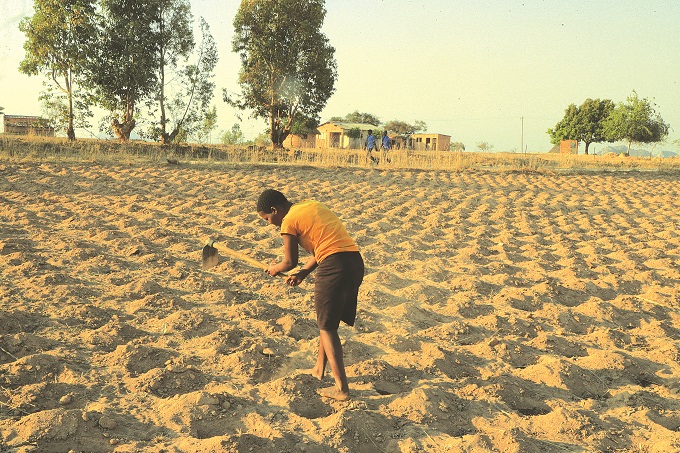
Elita Chikwati and Precious Manomano
ZIMBABWE’S agriculture sector has recorded remarkable progress under the National Development Strategy 1, turning the country into a food-secure nation and laying the foundation for long-term growth.
From wheat and tobacco to horticulture and livestock, the sector has registered milestones that were once thought unattainable.
When President Mnangagwa launched the Agriculture and Food Systems Transformation Strategy in 2020, the vision was to create a US$8,2 billion agricultural economy by 2025.
That target, meant to take five years, was reached within one — by 2021, the industry had grown by 36,2 percent to US$8,19 billion. This boom contributed to Zimbabwe’s record-breaking 7,8 percent economic growth in 2021, the highest in Africa that year.
As part of the NDS1 framework, the Ministry of Agriculture crafted the Agriculture Recovery Plan.
Its measures — ranging from early input distribution and pre-planting producer price announcements to contract farming, improved irrigation, uninterrupted electricity supply, combine harvester guarantees, and strengthened extension services — quickly paid off.
The clearest proof came in 2022 when Zimbabwe became wheat self-sufficient for the first time since 1966.
The country consumes 360 000 tonnes annually. Production surged from 95 000 tonnes in 2020 to 213 000 tonnes in 2021, then 375 000 tonnes in 2022.
In 2023, farmers harvested 467 905 tonnes, and by 2024 output had risen to 563 961 tonnes. This year, with 120 000 hectares under cultivation, the yield is projected at 600 000 tonnes.
Climate resilience
NDS1 has also emphasised climate change adaptation.
The Government scaled up climate-smart practices such as Pfumvudza/Intwasa, rehabilitated irrigation schemes, invested in new dams, and promoted research on improved seed and animal varieties.
The Pfumvudza/Intwasa programme, designed to fight rural poverty and ensure household food security, has reversed years of declining yields.
Farmers report that the model not only secures food for family consumption but also provides a surplus for sale. Crucially, it has enabled production even under drought conditions. Its success has attracted continental attention, with the programme being replicated across Africa.
At the same time, the Government is building 12 large dams to irrigate at least 350,000 hectares — an essential buffer against climate shocks.
Tobacco boom
The tobacco sector has emerged as one of NDS1’s biggest beneficiaries. Through the Tobacco Value Chain Transformation Plan, Zimbabwe aimed to increase production to 300 million kilogrammes and create a US$5 billion industry by 2025.
The country surpassed this benchmark, producing a record 355 million kilogrammes this year — over 60 percent of it from smallholder farmers.
The plan also targets value addition: raising cigarette exports from just two percent of raw tobacco output to 30 percent.
Currently, Zimbabwe produces about 4 billion sticks of cigarettes annually, below the national manufacturing capacity of 17 billion.
Looking ahead, the Tobacco Value Chain Transformation Plan II is pushing for 500 million kilogrammes of production by 2030 while promoting diversification through by-products such as nicotine extraction, biomass energy, and paper. Exporters are also eyeing premium markets in Asia, the Middle East, and Africa.
Livestock gains
Livestock farmers have benefited from the Government’s disease prevention drive. Free tick grease distribution and community awareness campaigns have reduced losses from tick-borne diseases. The Department of Veterinary Services is also producing vaccines locally, bolstering the health and resilience of the national herd.
Horticulture growth
Horticulture has not been left behind. Zimbabwe’s blueberries recently broke into the Chinese market, following the signing of a protocol in Beijing. Experts are urging greater investment and policy support to ensure production volumes meet international quality and phytosanitary standards.
Looking ahead
Taken together, these developments highlight how NDS1 has reshaped agriculture — boosting production, encouraging resilience, and opening global market opportunities. With NDS2 on the horizon, stakeholders are optimistic that unfinished recovery plans will be completed, consolidating agriculture’s role as the backbone of the economy.