Online Reporter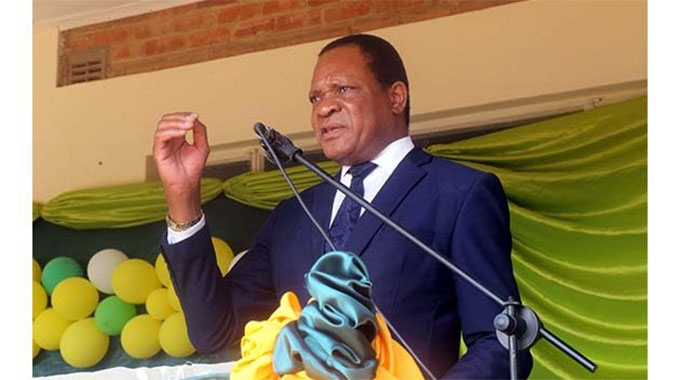
Lonster Mutata-Herald Correspondent
AGRICULTURE is more than just a means of livelihood in the country; it is the heartbeat of the nation’s economy.
As it stands, around 61 percent of Zimbabwe’s population resides in the rural areas, where agriculture deeply influences livelihoods, cultural practices and social structures.
Lands, Agriculture, Fisheries, Water and Rural Development Minister, Dr Anxious Masuka, recently emphasised the critical role of agriculture in fostering economic growth.
He said agriculture occupies a central and catalytic role in the economy, which is fundamentally agro-based.
“When agriculture grows, it triggers growth across the entire economic value chain,” said Dr Masuka.
He outlined the broader implications of this growth, highlighting that it creates a causative effect, a core factor effect, a collateral effect and a multiplier effect on all sectors of the economy.
The significance of agriculture extends well beyond the fields.
As Dr Masuka pointed out, the sector affects various aspects of life in Zimbabwe.
“It is agriculture that will catapult rural livelihoods and drive the attainment of Vision 2030,” he said.
This vision is a long-term development agenda aimed at transforming Zimbabwe into an upper-middle-income economy by 2030.
Since the beginning of the Second Republic, agriculture has transformed into a dynamic sector, becoming pivotal for economic recovery and growth. “Since the inception of the Second Republic, agriculture has firmly anchored the economy and is driving it forward, contributing significantly to gross domestic product,” he declared.
Dr Masuka highlighted the sector’s impressive economic contributions, stating that agriculture was the single largest contributor to GDP growth in 2025, accounting for 2,2 percentage points of the overall projected growth.
This represents a striking 33 percent of the total expected GDP expansion. He credited this performance to record-breaking outputs in key value chains like tobacco, wheat, cereals and blueberries, emphasising their role in supporting agricultural growth and boosting export earnings.
Further, he shed light on agriculture’s crucial linkages with other sectors.
“About 61 percent of raw materials used in manufacturing come from agriculture. What you see in tourism, accommodation, and the service industry is anchored by the food factor,” he explained.
The direct contribution of agriculture to the economy exceeds 24 percent, reinforcing the notion that investing in agriculture equates to investing in the entire economy.
Dr Masuka noted that agriculture accounts for 24 percent of formal jobs, with indirect employment in other sectors even higher.
“It is therefore a sector that is well worth investing in,” he affirmed, making a strong case for prioritising agricultural development as a means of economic upliftment.
For Dr Masuka, the impact of agriculture transcends statistics.
The attainment of Vision 2030, he argued, relies heavily on uplifting rural communities.
“As long as 61 percent of our people live in rural areas, Vision 2030 cannot be realised without transforming rural livelihoods,” he stressed.
Recognising this imperative, the Government launched the Rural Development 8.0 Programme, a comprehensive set of Presidential interventions designed to accelerate rural development.
Dr Masuka characterised the interventions as outcome-based and impact-oriented, aimed at uplifting rural livelihoods while ensuring that “no one and no place” is left behind.
Such a commitment recognises the interconnected nature of success and emphasises that the well-being of the rural populace is critical for national progress.
Agriculture stands as a beacon of hope for millions who have been suffering under illegal sanctions for 25 years, encapsulating the spirit of resilience and transformation.
By prioritising agricultural development, the Government seeks not only to enhance rural livelihoods, but also to stimulate broader economic growth and poverty reduction.
As the country pushes forward on its developmental agenda, the focus on agriculture promises a future where every farmer can thrive, every community can prosper, and every citizen can contribute to the growing narrative of a hopeful and sustainable Zimbabwe.
In this vision, agriculture is not merely a sector; it is the cornerstone of a developing nation poised for a brighter future.



 leeroy