Online Reporter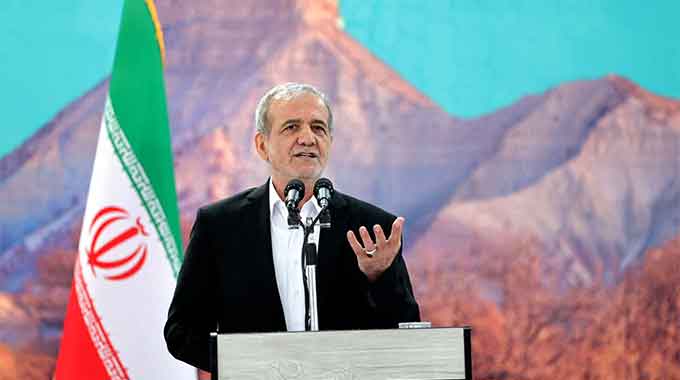
Tehran. — The government of the Islamic Republic of Iran has issued a comprehensive statement addressing the recent wave of protests across the country, stressing its commitment to peaceful assembly and economic dialogue while drawing a firm line between lawful demonstrations and acts of violence.
Authorities have also sharply criticised what they describe as escalating foreign interference in Iran’s internal affairs.
The protests began on December 28, 2025, after a rise in foreign exchange rates triggered economic concerns among traders, particularly in Tehran’s Grand Bazaar.
According to officials, the initial gatherings were peaceful, organised, and focused on livelihood-related demands, including calls for greater market stability and effective measures to control currency volatility.
Government officials stated that participants sought to express their concerns calmly and without disrupting public order, emphasising that no confrontation occurred during these early demonstrations. Authorities maintain that peaceful protesters were allowed to voice their demands freely and without interference, in line with Iranian law and international human rights obligations.
Commitment to peaceful assembly
In its statement, Iran reaffirmed its adherence to the International Covenant on Civil and Political Rights (ICCPR), under which the rights to freedom of expression and peaceful assembly are protected. Officials stressed that these rights were also enshrined in Iran’s Constitution and domestic legal framework.
The government underscored that it did not oppose peaceful protests in law or in practice, and noted that legal mechanisms guaranteeing such rights were established long before recent international statements or recommendations. Authorities stated that all relevant institutions were instructed to listen to lawful demands and pursue solutions through available legal and administrative channels.
Distinction between protest and violence
While acknowledging the legitimacy of peaceful demonstrations, the government asserted that some protests were later exploited by a small number of individuals who engaged in violent and, in some cases, armed actions.
These incidents reportedly included attacks on police stations, the use of incendiary devices, and the discharge of firearms against law-enforcement personnel.
Officials emphasised that such actions bear no connection to the economic demands of protesters and fall outside the protection afforded to peaceful assembly under international law.
“No state can tolerate violence that threatens lives, public property, or social stability,” the statement said, adding that the rights of the broader population cannot be compromised by the actions of a few.
Iran’s Supreme Leader, in remarks delivered on January 3, 2026, drew a clear distinction between protest and disorder, stating that while dialogue with protesters was necessary, those who sought destruction or insecurity under the cover of protest would be confronted.
Government measures and economic response
In response to the unrest, President Masoud Pezeshkian has instructed the Ministry of Interior to conduct a comprehensive review of all related incidents, with an emphasis on transparency, accountability, and respect for due process.
At the same time, authorities announced a series of measures aimed at addressing underlying economic concerns. These include immediate support packages for vulnerable groups and consultative meetings with representatives of bazaar unions, guilds, and business communities in major cities. Officials say the goal is to reduce market tensions, stabilise economic conditions and ensure that public concerns are directly heard by decision-makers.
Conduct of law enforcement
The government stated that law-enforcement forces have acted with restraint and in accordance with the principles of legality, necessity, and proportionality. Despite violent incidents, authorities claim that security forces exercised caution to minimize harm and protect both protesters and the general public.
Strong criticism of foreign interference
A significant portion of the statement was devoted to condemning foreign reactions to the protests. Iranian officials accused the Israeli regime’s prime minister and certain US officials of making interventionist and inflammatory statements that, in their view, amount to incitement to violence and destabilisation.
Iran strongly criticised recent remarks by US President Donald Trump, including explicit threats of force, describing them as violations of the UN Charter and the principles of sovereignty and non-intervention.
Officials warned that encouraging unrest or threatening military action against a sovereign state constitutes a serious breach of international law.
The statement also recalled past US actions against Iran, including military incidents, sanctions, and covert operations, arguing that claims of concern for the Iranian people are inconsistent with this historical record.
Impact of sanctions
Iran further highlighted the economic pressures caused by unilateral sanctions, stating that such measures have significantly affected the country’s financial resources, trade, and access to essential goods. According to officials, these restrictions have intensified economic hardship for ordinary citizens and contributed to the conditions that sparked recent protests.
In conclusion, the government reiterated its commitment to safeguarding citizens’ rights, particularly the right to peaceful protest, while also fulfilling its responsibility to maintain public security and protect lives and property.
Officials stressed that Iran remained open to dialogue and lawful participation but would not allow peaceful protests to be exploited for violence or foreign-driven destabilisation.
Authorities stated that detailed reports on the handling of the protests would be made available to the international community, asserting that Iran’s response had been conducted in line with domestic law and international human rights obligations. – Iranian Embassy


 leeroy