

 Chronicle Editor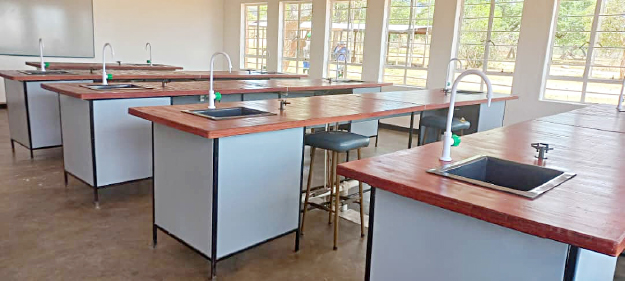
Sukulwenkosi Dube-Matutu, [email protected]
ESIGODINI Agricultural College in Umzingwane District, Matabeleland South is in the process of constructing a feed analysis laboratory and a goat housing station under the US$47,8 million Building Climate Resilience of Vulnerable Agricultural Livelihoods in Southern Africa programme.
The project started in June 2020 and is set to end in June 2027. It will improve the animals’ health and nutrition.
The feed analysis centre will enable the analysis of the nutritional content of farm-produced fodder for the goats.
The infrastructure will support a goat breeding, management and marketing project.
The college will run a goat project which focuses on rearing Kalahari Reds and Matabele crossbreeds, which climate resilient.
It also incorporates forage and fodder crop production and processing for feed analysis. Six ha has been set aside for fodder production while the construction of a silage pit is underway.
The project also seeks to promote the adoption of goat farming as a business model by smallholder farmers. The college is conducting a farmers’ outreach programme.
The project is being conducted under the Building Climate Resilience of Vulnerable Agricultural Livelihoods in Southern Africa programme.
The programme is being implemented by the Ministry of Lands, Agriculture, Fisheries, Water and Rural Development in partnership with the Green Climate Fund and the United Nations Development Programme (UNDP).
The project is being implemented in 14 districts in three provinces. In Matabeleland South the project is being implemented in Umzingwane, Mangwe, Insiza, Matobo, Gwanda and Beitbridge districts.
Speaking during a visit by the project steering committee recently, Esigodini Agricultural College head in the department of agricultural engineering, Mr Shepherd Simango said the innovation platform will facilitate production of quality feed for better performance of animals.
“In this laboratory, we will be doing student practicals and tests for inputs for making food mixing.
“When making food mixing, we want to know especially the crude protein content so that we know how much to put in for the best nutritive component,” he said.
“The testing will give us crude protein content, moisture content, mineral content, vitamins as well as other nutrients. After mixing we will test the final product to see whether we would have achieved our target.”
Mr Simango said the laboratory is going to help then in terms of feed mixing.
“This project will help to address the issue of nutrition and animal health. The fodder legumes and cereals such as velvet bean, lablab, cowpeas, sunn hemp and forage sorghum have been selected to propagate, produce and process adequate quantities of fodder and forage to sustain the goats throughout the year,” he said.
The Kalahari Red goats are characterised by a large body frame, adaptive to dry environments, large carcass weight, good carcass quality and twinning ability.
The Matabele breed is known for its adaptive ability to low plain of nutrition, harsh weather conditions, and medium to large body frame, low maintenance costs and good mothering ability.
Mr Simango said the local community is going to benefit from the goats.
“Breeding of climate resilient goat breeds involves crossing the Kalahari Red pure breed and the Matabele pure breed. The offspring will then be traded to farmers at affordable prices,” he said.
“The intervention will start by targeting Global Climate Fund lead farmers in farmer feed schools in Umzingwane District. Other farmers will benefit through farmer-farmer breed trading and exchanges.”
Mr Simango said the impact will then be spread to other districts based on lessons from two years of implementing the strategy.
He said the programme seeks to provide climate-resilient breeding stock to communal farmers.
“The intervention will ensure the reduction of high kid mortality that is associated with poor nutrition and poor management.
“It will also ensure improved knowledge of goat management through quality feeding, health management and fortification of goat kraals,” said Mr Simango.
“It will develop the knowledge and skills of farmers on fodder production, processing and preservation for goats, practices that have not been given much attention in the goat value chain.”
UNDP Green Climate Fund project manager, Mr Rungano Benza said Esigodini Agricultural College is one of the five innovation centres under the project.
“Output two of the Building Climate Resilience of Vulnerable Agricultural Livelihoods in Southern Africa programme is focused on improved climate resilience agriculture including improved market linkages by smallholder farmers,” he said.
“Esigodini Agricultural College is one of the five innovation centres that we are working with in the country and each has a specific value chain focus. Esigodini Agricultural College is focused on improved goat production and their strategy is on improving goat breeds.”
Mr Benza said they have since acquired high-grade equipment such as a microscope.
He said at the community level, the programme is using the delivery mode of farmer-feed schools. Mr Benza said they have established 230 dry land farmer field schools under the project. — @DubeMatutu.



 Blessing Chizhande
 Online Reporter