

 admin
admin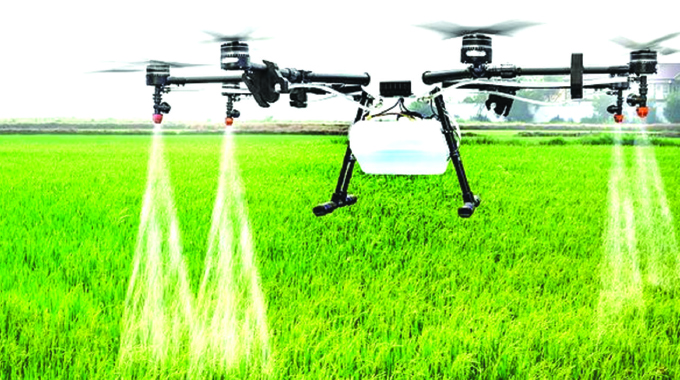
Obert Chifamba
Agri-Insight
MULTI-ROTORED and remotely controlled! That is the drone! The aerial vehicle is believed to have been first used as far back as 1849, when Austria attacked Venice using unmanned balloons stuffed with explosives.
Austrian forces who besieged Venice launched around 200 of these incendiary balloons over the city.
It is rumoured that only one bomb found its mark, as most of the balloons were blown off-course due to a sudden change in wind direction.
Then, drones would be used for reconnaissance missions and sometimes as weapons in the form of remotely-guided aerial missile launchers.
To date, the gadget has since experienced rapid metamorphosis to suit various consumer electronic requirements, but has retained its exclusive nature of being an unmanned aerial vehicle that goes without a human pilot, crew, or passengers on board.
It works with a ground-based controller and a system of electronic communications.
Today’s drone can be used for a variety of purposes. It is now widely applied in a number of industries with agriculture fast emerging as one of the largest entities that have embraced this technology.
In Zimbabwe, for instance, the use of this technology, though still in its infancy, comes at a time when the Government is pushing for the adoption of technological innovations that make farming easier and more productive than it used to be in the recent past.
The Government is preaching precision agriculture, a concept that is gaining popularity, especially on the backdrop of climatic and resource challenges that make it prudent for farmers to make the most of everything at their disposal.
Unlike with other forms of technology that most farmers have readily embraced and are using in most of their day-to-day activities, drones are for now being used by those who are well-resourced.
Those with resources are also the ones who can give testimony to the gadget’s capacity to deliver the most up-to-date information on most farming operations fast and efficiently.
The evolution of the drone software has seen some farmers accomplishing tasks that would have taken ages to do within very short periods of time.
Drones can be deployed for multiple purposes in farming.
The advent of smart agriculture has made it critical for farmers to adopt technology that makes their operations easier than before.
Smart farming is data-driven and allows the farmer to act guided by accurate information, for instance, on soil conditions.
In the past the farmer would need to physically tour the field extracting data and gathering metrics but that can now be done while she sits in the shed with the drone doing what it does best.
Drones are fitted with agriculture smart sensors and can collect and deliver data in a faster and more precise manner. Some farmers are currently experimenting on using drones for planting.
This is, however, a new concept, which, if successful may allow farmers to plant thousands of hectares in very short spaces of time.
The commonest deployment of the drones is happening during spraying activities with water, fertilisers or herbicides, which reduces costs, manual labour and time spent on these processes when done manually.
It is also exciting to note that drones have come in handy in assisting farmers fight infections and pests among crops. They can also inform the farmer on soil condition using thermal, multispectral and hyperspectral technology and are also gifted with detecting field areas inflicted by weeds, infections and pests.
Farmers can then make decisions on the correct amounts of chemicals to apply to contain the infestations basing on data gathered and availed by the drone.
This does not only help reduce expenses but contributes to better health in the crops.
Spraying crops using drones has its own advantages. It minimises human contact with chemicals in the form of fertilisers, pesticides and a host of others. The good thing is that drones will also perform the tasks faster and more efficiently than vehicles and airplanes or people.
On the one hand, drones detect infected areas with sensors and cameras and work on them while leaving the healthy part of the field intact, which is easily missed by the naked human eye in most cases.
This not only saves time and increases safety, but also helps reduce expenses.
The use of drones has also made it possible for farmers to carry out effective disease, pest and theft surveillance given that most agricultural fields occupy large areas.
This naturally makes it nearly impossible to estimate the overall state of crops and by using drones for agriculture mapping, farmers can stay updated on the health of plants in a particular area and indicate, which field areas require attention.
Farmers will then make informed decisions on how to deal with the discovered problems based on accurate, real-time information, which helps improve the state of plants in any location.
It is quite refreshing to note that drones have replaced the livestock herdman who needs to be out in the pasture day-in, day out.
The herdman now needs to act on errant animals based on information transmitted by the drone. Essentially, the drone keeps an eye on the cattle, goats or sheep, as they graze on pastures, reducing the need for human workforce to be making rounds always.
Drones can also help find stray animals using thermal sensor technology and can also detect injured or sick animals while calculating their exact numbers. Admittedly, drones are capable of doing a better cattle surveillance job than herding dogs or sometimes even people.
The current challenge with the adoption of the drone technology for most farmers is that they do not have the extra dollar to spare in the face of the prevailing economic challenges.
They would rather use it to secure more basic things and attend to other pressing issues first.
There are also legal requirements for one to fly a drone, which makes the process less attractive to some of the farmers. The farmers need to carefully understand security instructions on flying the drone, since they will be held accountable in case of accidents.
The drone meant for agricultural purposes will be different from those used for other purposes. If it is to be used for crop health monitoring, then it will need an infrared camera and appropriate sensors if it is for estimating soil condition.
It will also require the farmer to understand data collection, analysis, and the general visualisation process.
An in-depth knowledge of plant physiology to instruct the software algorithms to recognise certain patterns indicating plant conditions (the same goes for soil conditions or cattle behaviour patterns for livestock farms) will also be necessary, which further complicates the matter for some farmers.
Nearer home, the Civil Aviation Authority of Zimbabwe (CAAZ) has since provided a standardised framework regulating the use of the drone technology.
Citizens who want to fly them must obtain a letter of approval from the regulatory board.
Agricultural drone technology development is a complex task that will require partnering with a reliable third-party drone hardware and software solutions provider.



 Online Reporter