

 admin
admin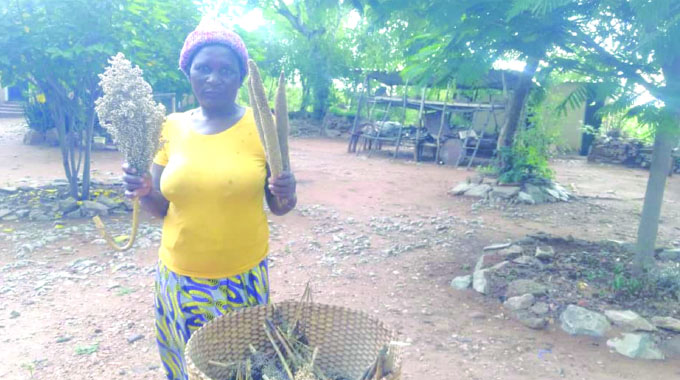
Yeukai Karengezeka
Features Correspondent
For Mr Abumeleck Mutsenhure (62), a lead farmer from the Shashe area of Masvingo, embracing agro-ecology, a branch of agriculture that promotes farming practices which mitigate climate change and includes growing of crops naturally without use of inorganic fertiliser, has lots of benefits.
He says adopting agro-ecology has created a conducive environment for him and other farmers to grow crops and make profit.
Inorganic fertilisers are now expensive and can only be used once.
The cost of buying inorganic fertiliser is high and rarely do smallholder farmers make profit.
But by adopting agro-ecology, Mutsenhure says hopes for improved livelihoods are bright.
“Ever since the time I started planting small grains using agro-ecology after I received training, I started realising higher yields,” he said. “I make a lot of money from selling small grains and I am looking after my family very well.”
Moreover, because of Mr Mutsenhure’s vast experience, farmers from different parts of the country visit him at his house to learn best practices.
“As you can see, I built some small shelters here to accommodate visitors that come to learn from me and see what I am doing here,” he said. “We also provide food for them for a reasonable fee and often receive guests from Mozambique, Zambia, among other countries.”
Mr Mutsenhure, who also has a variety of indigenous trees at his homestead, said through utilisation of indigenous knowledge systems he assists people with minor ailments using traditional herbs.
When it comes to farming, he employs different techniques that improve soil fertility and water harvesting, hence his guaranteed harvests.
“I do soil culture which involves soil management, using cow dung manure and chicken manure,” he said. “We use upland water conservation technique which is 1,2 metres in terms of height, contours three meters deep and three metres wide and we also do infiltration streams.”
A local organisation, Zimbabwe Smallholder Organic Farmers Forum (ZimSOFF), is training farmers in the Masvingo province giving them knowledge and skills on agroecology with the assistance of a development partner, Voluntary Services Overseas (VSO).
Agroecology is becoming the most efficient, reliable, and cheaper way of practicing sustainable agriculture in Zimbabwe.
It is also empowering rural farmers to become resilient towards climate shocks to improve food sufficiency at household level.
Small-scale farmers in Masvingo have not been left behind in employing old and traditional ways of practicing agriculture that does not damage the environment and wildlife.
This type of farming does not promote the use of synthetic fertilisers and pesticides.
Mr Mutsenhure’s wife, Muvai, said growing traditional grains had not only given her a source of income, but also good health.
She said they use a nutritious crop called svoboda to prepare beer, sadza, maheu and porridge.
“I am a hypertension patient, but it is always in control because l grow nutritious crops, including svoboda,” she said. “As women, we have been empowered because l make beer out of it and sell it to the people around this area.
“As a result of that, I earned money for our savings club – ‘maround’ and through savings from the club I was able to buy sofas, a kitchen unit, and kitchenware.”
A farmer from Topolo, Ms Bertha Dekekete, from a village under Chief Chikwanda, said agro-ecology was enabling them to have sufficient food at the household level.
Even during the lean season, their families do not suffer from hunger.
“I grow different crops and over the past few years, I have been harvesting these traditional grains,” she said. “I no longer dwell on planting maize which does not grow well in this area.”
Ms Dekekete said as farmers, they were applying organic methods to preserve their seeds and get rid of pests.
“We are taught how to preserve our seeds through workshops that are hosted by ZimSOFF and VSO,” she said. “We take maize cobs of chimirimiri, burn it and we put the ashes into the seed or we keep it in clay pots so that seeds do not get infested with weevils.
“Sometimes we plant maize mixed with sugarcane so that worms do not affect the maize. Like in other areas, seed custodians are women and they know the best ways to preserve them and have seed study groups where they discuss seed issues and what actions they can take to bring back lost varieties.”
Ward 14 Agritex officer Mr Kufa Muchaitei said they always urged farmers to grow traditional grains and host food and seed fairs to promote planting of seed varieties.
Another farmer, Mr Amos Hunda (64), plants finger millet, groundnuts and round nuts and is earning a living out of that.
“I am able to look after my family very well because of the small grains that I plant now,” he said. “I have realised that finger millet has more money than maize and I deliver it to the Grain Marketing Board and other general clients. Last season l got over two tonnes.”
Studies have also shown that agro ecological-grown plants tend to have higher levels of nutrients because the soil is better due to organic methods used.
Lead farmer and ZimSOFF central cluster coordinator, Mr Oliat Mavuramba, also from Topolo, said they grew traditional grains (first-generation seeds).
He said most farmers had stopped relying on food aid and cash handouts since they were applying the skills they were being given to boost yields.
“With the help of our development partner, we are now empowered as rural farmers with greater self-determination, we eat healthy foods and we also sell part of the produce,” said Mr Mavuramba.
“We know the best crops to plant and we never suffer from hunger or starvation because every season we harvest something and we are no longer fully dependent on food aid.”
Mr Mavuramba lamented that they were in competition with multinational companies who were promoting their own technologically advanced seeds.
“The challenge we have is that our own traditional seeds are considered as grain and not certified seeds,” he said. “But the seeds that we use have been in existence for centuries like sorghum and millet.”
Mr Mavuramba called upon the Government to consider recognising more traditional seeds so that they can sell them on the market like any other certified seeds.
In Shashe, farmers grow seeds such as svobodo, finger millet pearl millet, mbeu yemupostori and mukona shiri, a variety of sorghum that is not atacked by birds.
In the area, they also have Shashe Agroecology School where over 15 000 farmers have been trained since its inception and it attracts people from other countries as they practically learn how to do agro-ecology.
Mrs Vongai Mudzingwa keeps chickens and breeds fish at her homestead.
“We do not struggle to get food as a family because we have everything,” she said. “I have chickens. We get meat here and it is cheap to do fish projects because we feed them with worms, food left-overs, and we have goats and cattle and make manure out of their dung.”
Agritex officer from Ward 3 in Shashe, Mr Martin Jabson, said agro-ecology was the way to go for farmers in the area.
“Many farmers in this area have adopted agro-ecology,” he said. “We urge our farmers to plant small grains and this is also cheaper as compared to buying hybrid seeds.”
Mr Jabson said in as much as there were varieties of maize seeds and fertilisers, hybrids change yields over time and reduce in size unlike traditional grains which maintain the same yields over a long period of time.
He said some farmers were reluctant to plant traditional grains because they were labour-intensive, hence the need to have more machinery and equipment that can process them.
VSO project manager, Mr Simba Guzha, said his organisation sought to empower more female smallholder farmers so that they could have secure and resilient livelihoods.
“Smallholder farmers globally produce 80 percent of the food in the world and we are saying agro-ecology is the best practice to boost crop yields given the threat of climate change that we are facing globally,” he said. “We are training farmers on issues of diversity, seed banking, growing of small grains, intercropping, livestock management among other things.”
Mr Guzha said they were advocating for the establishmentof an agro-ecology policy at national level.
“Together with some partners like the Food and Agriculture Organisation we are working with the Government to develop an agro-ecology policy to drive the work that is being done by smallholder farmers in improving diversity in agriculture,” he said.



 Online Reporter