Vusumuzi Dube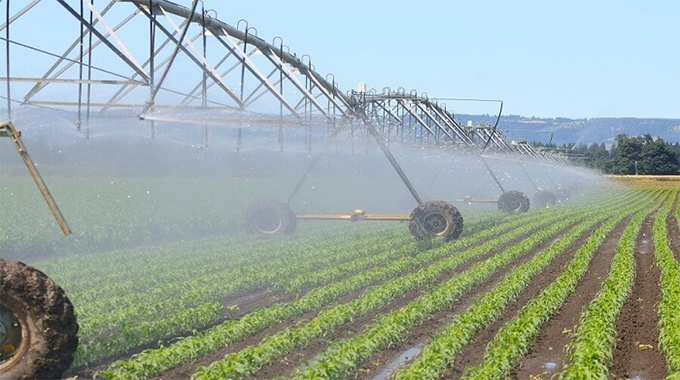
Johnsias Mutonhori,Midlands Correspondent
THE Government is set to establish manufacturing industries on each irrigation scheme across the country as a way of adding value and beneficiation to agricultural products without farmers incurring transport costs.
The three-tier production system will mark the upper target of Government’s thrust to industrialise rural areas through agriculture.
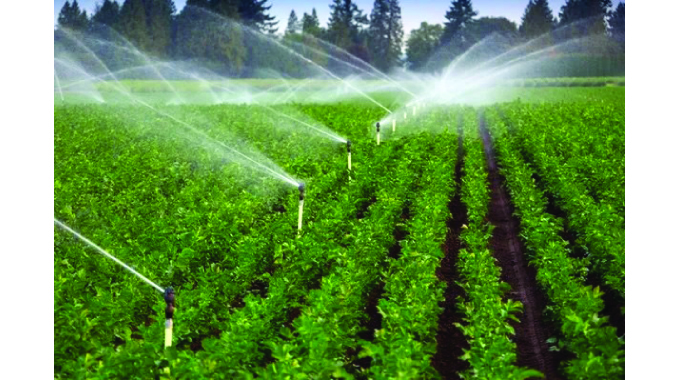
Speaking during the official opening of 117-hectare Biri Extension Irrigation Scheme in the Mataga area, Mberengwa District last week, Minister of Lands, Agriculture, Fisheries and Rural Development Dr Anxious Masuka said the Government was ready to establish agro-processing companies that would be supplied by irrigation scheme produce.
“Beneficiaries will now come together and form themselves as a company which is going to run irrigation schemes on a sustainable and viable basis. We discussed agro-processing facilities that we are going to establish at Mataga Growth Point being a milling company for maize,” said the Minister.
“Agro-processing will also be done for flour, there will be a milling company for wheat and subsequently a bakery as well as oil expression and cooking oil production from sunflowers.”
Minister Masuka said rural development was in motion with the formation of Mataga Private Limited as a company for the irrigation scheme.
He said they were introducing the block system that would see the benefits of improved agronomy and increased production and productivity.
The minister said: “The new farming model will go a long way in opening job opportunities across rural communities in the country that will also spur urban to rural migration in the near future.
“My expectation is that in the next two or so years we will see urban to rural migration because we are establishing these agro-industrial centres in villages which will be promoted by irrigation schemes in the rural communities.”
He said that would also spur opportunities for aggregation of employment at village level, while also ensuring that opportunities were created in the rural areas.
The Government, through Smallholder Irrigation Revitalisation Programme (SIRP) and other partners such as International Fund for Agricultural Development (IFAD), and OPEC Fund for International Development (OFID) has been on a massive drive to rehabilitate irrigation schemes across the country for the past few years.
The Second Republic has managed to put 255 schemes on 19 000 hectares of land in operation, with a focus of rejuvenating 450 schemes covering 26 000 hectares throughout the country by 2025 as a way of eradicating poverty in the communal areas which is in line with National Development 1(NDS1).
The revitalisation of irrigation schemes also goes a long way in addressing climate change that has become a global problem affecting agriculture.
Mberengwa District, which falls under Region 5 with low rainfall patterns which are not favourable for crop farming has been a basket case but enhanced irrigation development and adoption of small grains has seen an improvement in food distribution.
A total number of 273 households benefited from the scheme where 115 are females and 158 males have an average of 0,5 hectares per plot.
Biri Farm manager Mr Tinomuvenga Hove applauded the Government for taking action to address food shortage in Mberengwa.
“We have been living in abject poverty and hunger for years because of below average rainfall and I am hopeful that our lives are going to change for the better,” he said.



 Online Reporter