Online Reporter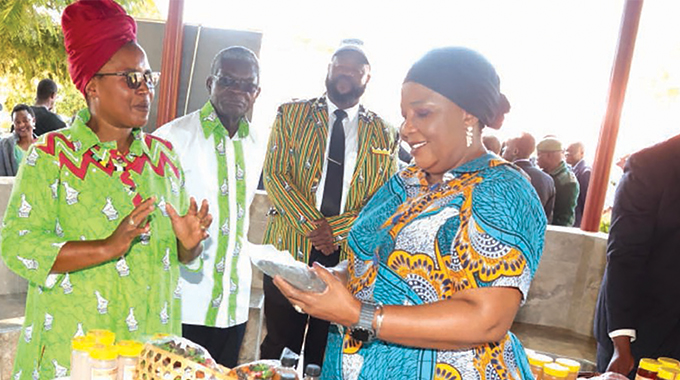
Innocent Mujeri, Correspondent
IN the heart of Buhera District, beneath the tranquil skies of Manicaland Province, a quiet revolution is unfolding — one led not by grand declarations or imported ideologies, but by the diligent hands and ancestral wisdom of Zimbabwean women. The recent launch of the Agrotourism4She Programme by First Lady, Dr Auxillia Mnangagwa, marks a transformative moment in our nation’s pursuit of inclusive growth, rural industrialisation, and cultural preservation.
What unfolded at the picturesque Taranhike homestead in Mukoto Village was not just a ceremonial event — it unveiled a bold, homegrown blueprint for national development rooted in agriculture, tourism, and women’s empowerment. With Agrotourism4She, Zimbabwe is witnessing the dawn of a rural renaissance, and it deserves our full praise and support.
At the core of Agrotourism4She is the empowerment of rural women, long regarded as the backbone of agriculture in Zimbabwe. The programme builds on the success of Agric4She, taking it a step further by linking farming with tourism, entrepreneurship, and education. Women like Mrs Christina Taranhike, whose homestead hosted the launch, are no longer farming solely for subsistence — they are now proud producers, marketers, and tour guides of their lived experiences.
Through this initiative, women are gaining not only financial independence but also societal recognition. Agrotourism4She is not just about showcasing traditional crops — it is about value-addition, year-round income, and community-based industrialisation. Rural women in Manicaland are turning local produce into marketable goods such as baobab coffee, sorghum meal, turmeric powder, and honey-based confections. These are not only nourishing products, but also high-value items with both local and export potential.
Instead of selling raw groundnuts or millet once a year, women are now producing peanut butter, soup thickeners, dried snacks, and other processed goods, thereby opening new revenue streams. That is the essence of sustainable rural development.
The concept of agrotourism promoted by this initiative goes far beyond sightseeing. It is a celebration of Zimbabwean culture, a resurrection of our traditional foods, farming knowledge, and ways of living that have sustained generations. The Taranhike homestead, with its lush gardens, indigenous trees, and well-kept family graves, becomes more than just a farm — it becomes a living museum of heritage.
Visitors get to witness how traditional grains are grown, how baobab is transformed into sweets and smoothies, and how cultural values are interwoven with daily rural life. The Garden of Remembrance, where Mrs Taranhike’s great-grandmother rests — having lived to the age of 120, nourished by traditional foods — is a moving reminder of how our past continues to shape and inspire our future.
What makes Agrotourism4She even more forward-thinking is its embrace of technology in rural spaces. The Taranhike homestead boasts internet connectivity, allowing these rural entrepreneurs to engage with broader markets, communicate ideas, and document their progress. It proves that rural does not mean backward — with the right support, rural communities can leapfrog into the digital age while retaining their roots. This blend of tradition and innovation is the future Zimbabwe needs.
The First Lady’s challenge to Zimbabweans — “Have you visited and seen what your neighbour has?”—is a powerful call to action. Domestic tourism does not need to be limited to luxury lodges or famous landmarks. It can begin in the villages, where real stories of resilience, innovation, and beauty are unfolding every day.
Agrotourism4She invites Zimbabweans to explore their communities, learn from each other, and appreciate the richness of our land and people. It makes rural homesteads not just producers of food, but centres of culture, learning, and economic exchange.
The programme’s potential reach extends into education, with calls to integrate agrotourism into formal curricula. There are proposals for the inclusion of Agrotourism4She in certificate, diploma, and even PhD programmes. This is not merely symbolic — it is the recognition that our indigenous practices are academically and economically valid.
Such moves would validate the experience of rural women, encourage research in sustainable practices, and ensure that agrotourism is taken seriously as a sector with global relevance.
At the heart of this transformation is Dr Mnangagwa, whose vision, humility, and hands-on leadership continue to redefine community development in Zimbabwe. Her approach —empowering from the grassroots up, honouring cultural traditions, and integrating sectors — is refreshing and effective.
She has turned policies into action and homesteads into models of what Zimbabwe can achieve when women are supported and given room to shine.
Agrotourism4She is more than a local initiative. It is a model for the continent — a testimony that sustainable development does not need to come from the outside, nor must it abandon tradition in favour of modernity.
Here we see both working hand-in-hand.
This is the kind of innovation that the African Union and development agencies should be looking at — programmes that are low-cost, community-driven, women-led, and culturally grounded.
From the soils of Buhera, a global story is emerging — one of women reclaiming their power, of villages becoming centres of commerce and culture, and of a nation discovering that its path to prosperity may lie in the very heritage it once overlooked.
Agrotourism4She is not just a programme. It is a movement of hope, dignity, and economic rebirth. And it deserves every accolade and every ounce of support from all sectors of Zimbabwean society.
Let us rally behind this homegrown revolution. Let us invest in it, scale it, and tell its story to the world.
Because when rural women rise, Zimbabwe rises with them.