Online Reporter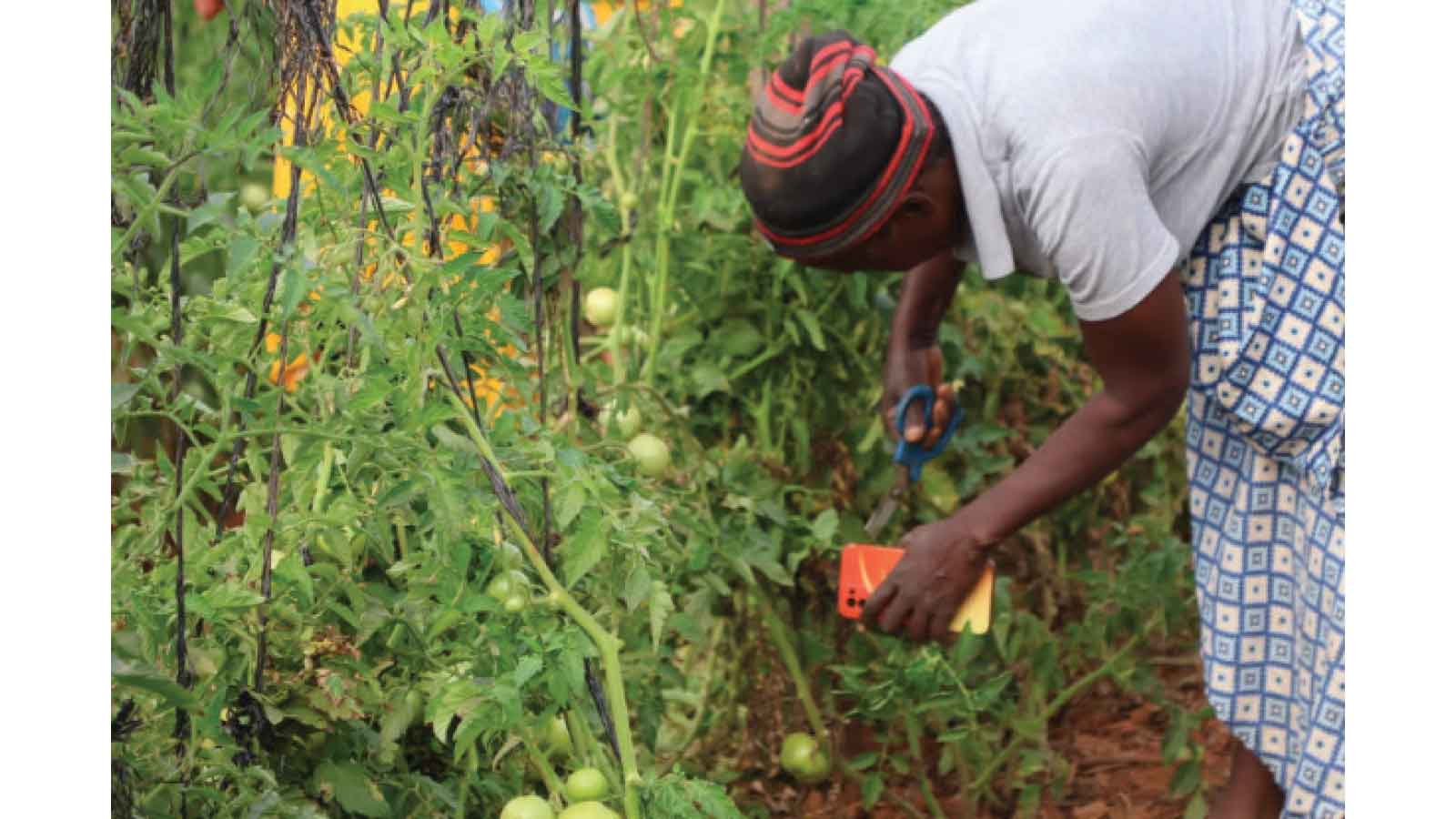
Theseus Mauruki Shambare-Features Writer
WHEN the tomatoes started curling inward, Mrs Gladys Vakira from Mhondoro Ngezi in Mashonaland West Province feared the worst.
The leaves had turned brittle at the edges, small yellow patches spreading silently across the crop she had spent weeks watering beneath the punishing Mhondoro Ngezi sun.
Another failed harvest would mean delayed school fees, mounting debts and another difficult season surviving on borrowed money. In the past, such moments usually ended with guesswork. Perhaps too much heat. Perhaps poor seed, or perhaps a pest she could not identify quickly enough before the damage spread across the field.
And often, by the time agricultural officers eventually arrived from distant offices, the crop would already be lost.
But this time, standing in the middle of her garden in Denoni Village, Vakira did something her mother would never have imagined possible. She took out her smartphone.
Bent carefully over one of the damaged plants, she snapped a photograph of the dying leaves and uploaded it onto an agricultural application powered by artificial intelligence.
Within moments, the phone responded. Possible tomato blight. Recommended intervention. Suggested chemical treatment. Water management advice.
“It felt strange at first,” Vakira confides recently, laughing softly as she scrolls through her phone beneath the shade of a mango tree.
“Imagine asking a phone why your tomatoes are dying.”
Around her, rows of green vegetables stretch across the field, fed by solar-powered irrigation pipes humming steadily in the afternoon heat. Goats wander nearby. Children chase one another between narrow pathways dividing the plots.
At first glance, Denoni looks like many rural villages scattered across Zimbabwe. But hidden among the dusty roads and boreholes, a quiet technological revolution is unfolding.
And increasingly, artificial intelligence is becoming part of everyday rural life. For generations, farming knowledge here travelled through memory. Grandfathers watched the clouds. Mothers rubbed soil between their fingers, judging whether rains were near. Planting dates followed seasons remembered across decades.
For years, farmers trusted memory more than machines. But climate change has destabilised the logic that once governed rural life.
The rains now arrive late. Sometimes they disappear halfway through the season, and heatwaves stretch longer, while pests emerge in unfamiliar cycles.
Inherited farming instincts that once guided entire communities no longer always feel reliable.
“The weather no longer behaves the way it used to,” Vakira says. “Even the pests are changing.”
That uncertainty is now pushing many farmers towards an unexpected companion: digital agriculture.
Across Mhondoro Ngezi, smallholder farmers are increasingly using smartphones to diagnose crop diseases, monitor weather patterns, access market prices and receive farming recommendations in real time.
For some villagers, the technology still feels almost magical. A phone can now identify crop diseases from a single photograph and can suggest planting methods. It can also warn farmers about rainfall patterns.
In communities where agronomists and extension officers may take days to arrive, the smartphone is quietly becoming the first agricultural officer.
The transformation forms part of the Food and Agriculture Organisation of the United Nations (FAO)’s Digital Villages Initiative, a programme designed to combat hunger, poverty and inequality by accelerating digital rural transformation.
Under a regional programme covering Zimbabwe, Malawi and Rwanda, titled Fostering Digital Villages Through Innovative Advisory and Profitable Market Services in Africa (FDiVi), communities are being introduced to artificial intelligence-enabled advisory systems, digital literacy programmes and market access platforms.
The project seeks to address weak adoption of digital agriculture, widening rural-urban digital gaps, youth unemployment and growing concerns around the opportunities and risks associated with artificial intelligence technologies.
In Zimbabwe, the initiative is being implemented in Mhondoro Ngezi and Bikita districts through partnerships involving Government, private sector players and local universities.
Digital hubs equipped with computers, internet connectivity and digital training tools have already been established in both districts, including one operating through an AGRITEX Ward Information Centre in Mhondoro Ngezi.
So far, nearly 3 900 small-scale farmers have undergone digital agriculture literacy training, while extension officers from 25 districts have been trained in AI-enabled advisory systems.
Five artificial intelligence agricultural applications are also being piloted under the programme.
Mrs Kumbirai Nhokwara, an agriculture business advisory officer for Ward 16, says the transformation has altered both farmers and extension workers themselves.
“In the past, farmers would walk long distances simply to ask what was affecting their crops,” she says. “Now someone can send a picture immediately and receive guidance much faster.”
But technology alone is not what makes the transformation remarkable. What stands out most is how deeply human the transition has become. In many homes, smartphones are now shared among entire families for farming purposes.
Children help parents navigate applications. Grandmothers ask younger relatives to photograph diseased crops. Neighbours gather around screens discussing treatment recommendations generated by artificial intelligence.
Slowly, digital farming is becoming woven into ordinary village life.
Under the programme’s “Digital Champions” approach, highly motivated farmers are first trained in digital agriculture before helping neighbouring communities adopt the technology. Digital fairs have also become important gathering spaces where rural farmers interact directly with technology companies, agricultural innovators and mobile service providers.
Some farmers have even formed internal savings and lending associations (mukando) to pool resources for purchasing smartphones and Starlink internet kits.
For women, the changes are proving transformative. For decades, many rural women carried the burden of agricultural labour while remaining excluded from markets, technical advisory systems and decision-making structures.
Now, a mobile phone is beginning to alter those power dynamics.
“With my phone, I can check prices and speak directly to buyers,” Vakira says. “You no longer wait for middlemen to decide everything for you.”
Yet the transition remains uneven. Some older villagers still distrust the applications, preferring traditional farming knowledge accumulated over generations. Others worry about becoming too dependent on technology they barely understand.
Also, smartphones remain expensive for many households, while mobile data costs continue limiting access.
Poor network coverage still interrupts digital services in some communities.
Even so, momentum appears difficult to stop.
For Tauya Nyangwaira, chairman of the Panganai Group, adaptation itself has become a survival strategy. His group has diversified into horticulture, poultry, goat rearing and green maize production while investing in irrigation systems allowing year-round farming.
“We realised climate change has made farming too risky if you depend on one thing,” he says. “If one project fails, another can support the family.”
Around the village, evidence of that adaptation is visible almost everywhere. Solar panels glint above boreholes. Drip irrigation pipes cut across vegetable plots, water tanks stand beside homesteads, and phones vibrate with weather alerts and market information.
The contrast can feel surreal.
A dusty rural road where network coverage still disappears in places. And beside it, farmers are using artificial intelligence to diagnose plant diseases.
But perhaps that contradiction explains why the transformation matters so much.
In places where climate change is steadily eroding certainty, information itself is becoming a form of survival.
As evening approaches in Denoni Village, Vakira walks slowly between her tomato plants, inspecting leaves darkened by the fading light. Somewhere in the distance, goats bleat while smoke rises from cooking fires.
Her phone vibrates softly again inside her dress pocket. Another farming alert. Another weather update and another reminder that, in this small rural village, where dust still rises from uneven roads and rainfall still determines anxiety, the future of farming may now fit inside the palm of a hand.
The same leaves that once signalled helplessness are now photographed, analysed and answered before the damage spreads. And sometimes, the difference between losing a crop and saving it begins with a photograph.