Chronicle Editor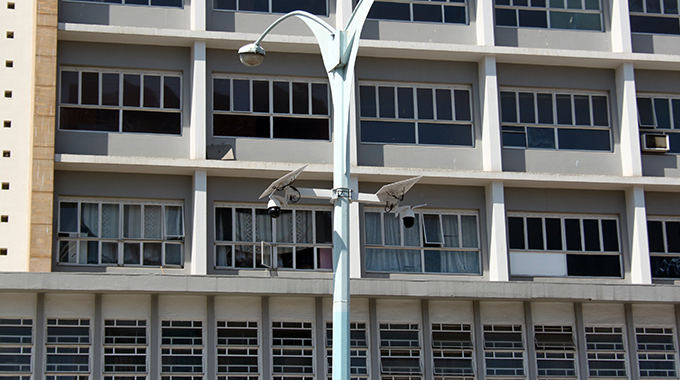
Peter Matika and Amos Mpofu, Chronicle Writers
IN a groundbreaking step towards embracing cutting-edge technology and enhancing security infrastructure, police in Bulawayo yesterday launched innovative closed-circuit television (CCTV) and Artificial Intelligence (AI) systems in the city centre.
This groundbreaking initiative represents a significant leap forward, positioning Zimbabwe on the path to first-world advancements, with its second-largest city serving as the launchpad for modern policing.
The system leverages artificial intelligence and other advanced technologies to reduce the reliance on physical police presence. Strategically positioned cameras throughout the central business district (CBD) are equipped with sophisticated features such as facial recognition, night vision, and vehicle plate recording, significantly enhancing public safety and crime prevention efforts.
With this technology, law enforcement can swiftly identify and monitor suspects using cutting-edge AI, thereby improving their capacity to maintain law and order in the city’s vulnerable areas.
The project was officially unveiled yesterday in Bulawayo, where national police spokesperson Commissioner Paul Nyathi said the innovative use of CCTV and AI technology was a significant step in ensuring the safety and security of residents and visitors in Bulawayo.
He said the city’s progressive approach to implementing cutting-edge security measures underlines its commitment to embracing modern solutions for a safer environment.
“Policing has to evolve and move with the time just like what is happening in the technological field. Today we celebrate a milestone achievement for Bulawayo,” said Comm Nyathi.
“In terms of the Government’s commitment to leaving no one and no stone unturned, this is a major achievement for the city of Bulawayo.”
He said the use of technology and AI will improve the city’s policing methods and hoped to see other provinces adopting the Smart City policing initiative.
The Smart City project is a partnership between the police, the Bulawayo Business against Crime Forum of Zimbabwe (BACFOZ), and local security agency, Safeguard.
“The incorporation of technology will fundamentally transform how law enforcement combats criminal activities in the city. Technology is leading this change by implementing the AI-powered Face Trace System (FTS) to increase the effectiveness of biometric criminal identification and detention,” said Comm Nyathi.
He said law enforcement agencies and organisations have historically depended on manual techniques to identify and monitor suspects, accused, and criminals, which frequently resulted in lengthy and resource-intensive investigations.
“But with the introduction of such technology, AI systems will be able to quickly and accurately identify suspects across the country. Law enforcement officials are better equipped to enforce the law,” said Comm Nyathi.
“The integration of CCTV cameras and AI technology in strategic locations across the Central Business District is set to provide real-time monitoring and analysis of activities, enabling quick response to security incidents and potential threats.
“The implementation of these systems underscores Bulawayo’s commitment to leveraging technology for the betterment of the community and fostering a safe and secure environment for all stakeholders.”

Comm Nyathi said plans to establish smart call centres across the country as part of the law enforcement agencies’ strategy to embrace technology in the digital era were underway.
Comm Nyathi said the move is aimed at modernising and enhancing communication channels between the police and the public and ultimately improving overall operational efficiency and response times.
He said the smart call centres, which will be dotted across the country, will be equipped with state-of-the-art communication technologies, including advanced call-routing systems and real-time data-tracking capabilities.
Comm Nyathi said the move will enable the police to respond swiftly to emergencies, co-ordinate resources effectively, and gather critical information for investigations.

“Our goal is to provide a more responsive and reliable service to the community. By leveraging technology, we can ensure that every call for help is handled promptly and professionally,” he said.
Comm Nyathi said the introduction of smart call centres is part of a broader initiative by the Government and ZRP to implement smart policing strategies that harness the power of data, technology, and community engagement.
Minister of State for Provincial Affairs and Devolution in Bulawayo Metropolitan province, Cde Judith Ncube, who commissioned the monitoring centre located at Southampton Building said the incorporation of technology in policing was critical in curbing crime and detecting potential threats.
“This is long overdue and Bulawayo is the first province to unveil such systems. This is important as it will enhance our police tasks and will reduce crime in the city significantly,” she said.

“This will greatly assist our workforce in apprehending criminals and will see them become even more effective in executing their duties.”
Minister Ncube said the initiatives will also cascade to other sectors and will improve transparency, accountability, and trust with the public.
“This technology will enable us to better serve our communities and address their concerns more efficiently. It’s a positive step towards enhancing public safety and building stronger relationships with the people we serve,” said Cde Ncube.
“The implementation of this technology underscores the Government and the police’s dedication to embracing innovation and enhancing its capabilities in the digital age.”
Early this year, the Government signalled the intention to fully embrace technology-driven policing, drawing inspiration from lessons from advanced peers such as the United Arab Emirates and China who have established smart policing models to make law enforcement more effective.
Creating a police force that is less visible on the streets and more effective at keeping the public safe by embracing AI, smart surveillance and other technologies, is thus one of the strides towards modernising Zimbabwe in line with Vision 2030.
Following a recent meeting with the Chinese Ambassador to Zimbabwe, Zhou Ding, Home Affairs and Cultural Heritage Minister Kazembe Kazembe said both countries were exploring the possibility of implementing advanced technologies to improve policing.
Earlier in the morning, the police officers, joined by scores of members of different religious denominations conducted a solidarity march against all forms of crime from Drill Hall Police Station to Southampton Building.



 Online Reporter