Online Reporter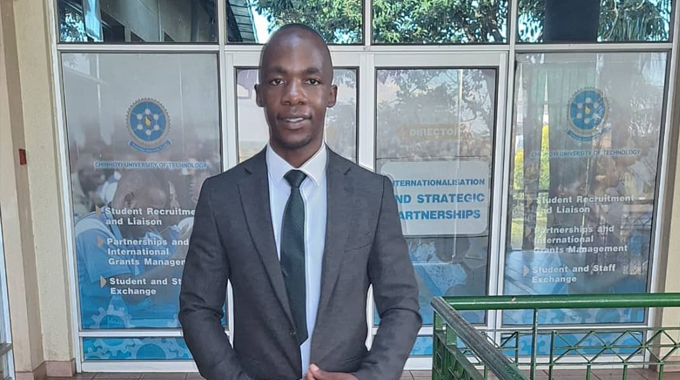
Sipepisiwe Moyo, [email protected]
DRIVEN by the devastating loss of both his aunt and maternal grandmother to cervical cancer, Dr Lindelwe Ncube, a 32-year-old physician from Zimbabwe, has developed a ground-breaking AI tool for cervical cancer screening.
In an interview, Ncube said that the AI tool for screening cancer is a product of his Master’s Degree thesis. The thesis was titled “Development of a low cost artificial intelligence powered portable colposcope device for cervical cancer screening.”
“I studied at the University of Zimbabwe, earning a Bachelor of Medicine and a Bachelor of Surgery degree. I then pursued a Master’s Degree in Biomedical Engineering at the University of Zimbabwe, where I received the Vice Chancellor’s award in the postgraduate programme.

“When developing the project as a Master’s thesis, Professor Tawanda Mujiri insisted on including AI to ensure success. He supported me through sleepless nights, along with two friends, Allan Kawonzera and Itai. With education 5.0, we are encouraged to innovate and create companies that benefit the country, and we have achieved that. We are now a team of six. Due to the high number of women dying from cervical cancer, we are working tirelessly to submit the product for research by the end of August,” he said.
Encouraged to think outside the box and utilise AI, Ncube came up with the idea to use it for cervical cancer, having experienced the disease’s impact first-hand.
“My experience with AI is that it is a developing field. At the university, we were encouraged to use these tools, and cervical cancer seemed like something AI could help with, especially in our country where it is the leading cause of cancer-related deaths in women.
“I lost my aunt, Nomsa Dhlamini, to cervical cancer in 2016 while I was still in medical school. Despite our efforts, we couldn’t cope with the condition. The painful part was that Aunt Nomsa had a VIAC test, which is only 60 percent sensitive, meaning it fails to detect cancer 40 percent of the time. This was the case for Aunt Nomsa. I also lost my maternal grandmother to the same disease. These losses inspired me to delve deeper into cervical cancer. As a medical doctor, I encounter patients with cervical cancer and feel compelled to find a lasting solution,” he said.
Ncube said that the AI tool is trained to identify cancer cells, boasting 90 percent sensitivity compared to VIAC’s 60 percent.
“The AI tool is an image classifier. We gathered images of cervical cancer, trained a model to identify it, and currently, it can detect cervical cancer from visual inspection with acetic acid and colposcopy.
“The model uses our training data and has a sensitivity of 90 percent. We perform colposcopy in our studies, train the models with a colposcopist or specialist doctor, and compare the model’s results with biopsies. We continue training it with various cervix images until it is ready for deployment in clinics.

“We hope that in the near future, it will be able to perform pap smears, examine slides, and assist pathologists, as there is a shortage of pathologists in the country.”
Ncube highlighted the tool’s limitations, noting potential inaccuracies due to variations in the cervix based on age and birth history.
“The limitation is the bias in the data we trained it on. The cervix differs for women who have given birth and those who haven’t. For an 18-year-old girl and a 65-year-old woman, the cervix is different.
“There is also a difference between the cervix of a woman who has given birth to five children and one who has given birth to one child. To make the model as accurate as possible, we need to incorporate every type of cervix with the help of a specialist. There are biases, and every image diagnosed by the AI tool will be reviewed by nurses and doctors. If inaccuracies are found by a specialist, the client will be called back for a biopsy.”
He is enthusiastic that the tool has the potential to reach a wider audience.
“We want our AI tools to be used initially in studies but eventually widely, especially in remote areas where 60 percent of our population resides and many cannot travel. We plan to place AI tools where specialist doctors are not available, using telemedicine to assist nurses. We envision a database to support this.”
In developing the tool, Ncube received help from the internet and employed the WHO ISCR database. The WHO ISCR database refers to clinical trial registries that adhere to WHO standards.
“We received data from the WHO ISCR database and the internet. We hope to gather more data during studies to validate the algorithm and colposcopy we developed, making the model more accurate.”
Ncube also indicated that the AI tool would be cheaper than standard colposcopy, making it accessible to many women and almost all gynaecologists. However, he noted a potential issue if health practitioners become too dependent on it.

“The problem might be nurses or clinicians becoming too dependent on the AI tool, but it is just a tool to help end cervical cancer. We want it to be widespread, which is why we are developing the software and making it cheaper. Standard colposcopy, used after a positive HPV DNA test, can cost up to ten thousand US dollars.
“Some specialists might not afford the machine, but if we develop a smaller, equally effective colposcopy, we can ensure every private practice at the gynaecologist stage has one. This will mean more screening for urban and rural women. We want to collaborate with researchers to compare our colposcopy with the standard one, and the AI model with specialists and nurses. Another study will examine if telemedicine improves health outcomes. With the AI tool, we can increase the sensitivity of VIACs, which were being phased out due to low sensitivity.
“We can also increase the sensitivity of pap smears. We may not have specialist pathologists, but we can enhance their work, allowing them to examine more Pap smear slides. AI screening, depending on the developers, is cheaper and a tool doctors can use to enhance diagnosis. From my personal experience, the goal is to screen as many women as possible to prevent them from going through what I experienced with Aunt Nomsa and my grandmother. The aim is to make it cheaper and widely accessible,” he said.