Online Reporter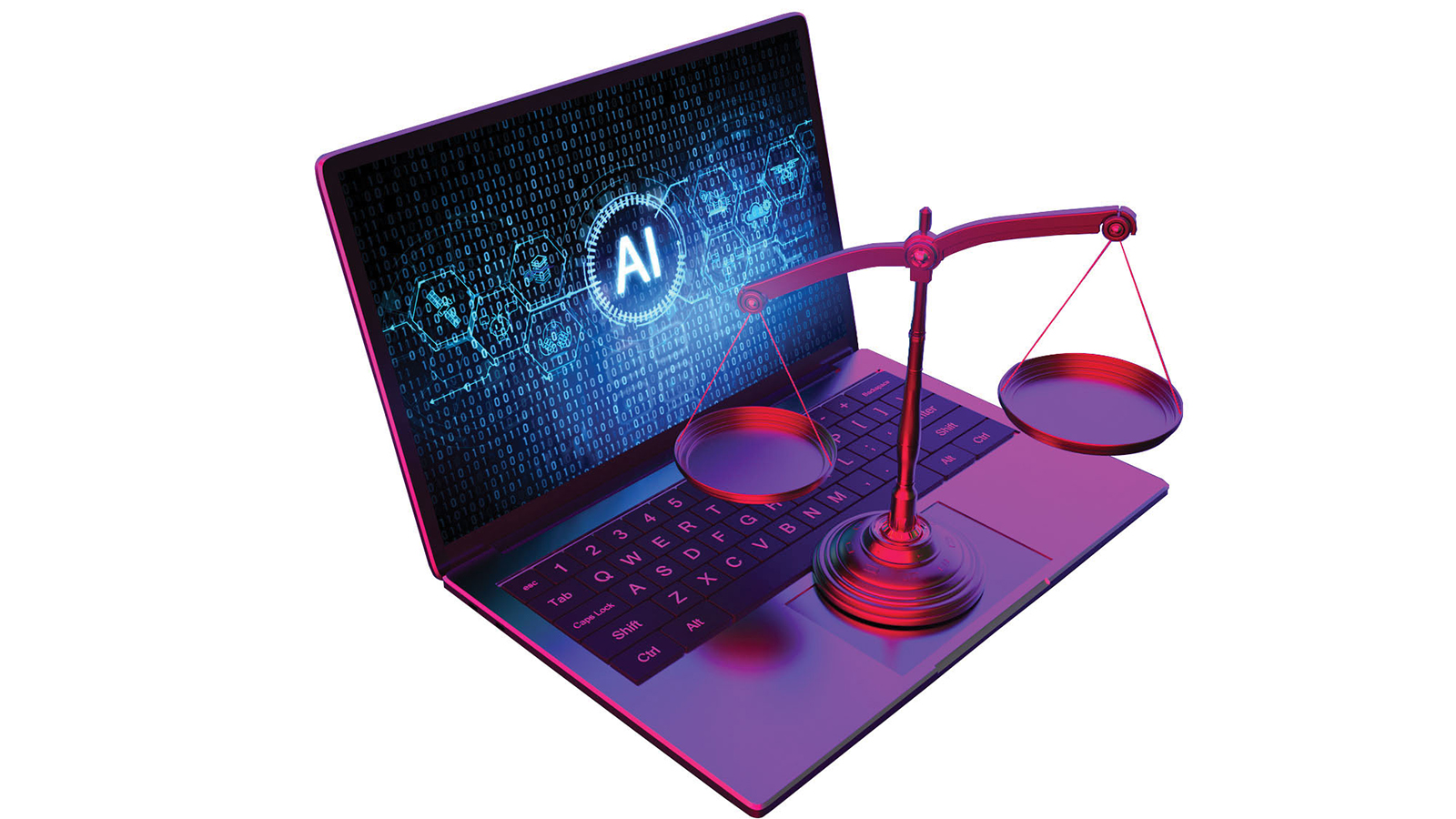
Mirriam Tose Majome-Correspondent
Artificial intelligence has become the new global conversation.
In classrooms around the world, learners are already using it to write essays.
In Western courtrooms, lawyers are testing AI to draft pleadings, and judges are considering whether to allow AI-generated submissions.
Journalists in advanced economies are openly debating whether readers will trust stories produced by machines.
South African universities have issued guidance to students about using AI responsibly, and the South African Law Reform Commission has opened discussions on its use in evidence analysis and regulation.
In Zimbabwe, by contrast, the debate has hardly begun.
This silence matters because AI is not neutral.
It can help us achieve efficiency and progress, but without preparation, it can also create confusion, entrench inequality, and erode trust.
Our law and governance often lag behind new technologies.
We saw this with mobile money, where the law only came into play after the system was entrenched.
We saw it again with data protection, where the Cybersecurity and Data Protection Act was passed years after most of the world had already adopted privacy regimes.
We cannot afford the same reactive approach with AI.
The justice system is a useful starting point.
Section 69 of the Constitution guarantees the right to a fair hearing.
This includes the right to equality before the courts and to have disputes resolved impartially.
If AI tools are used in court filings or legal research, are we confident that litigants will still enjoy those guarantees?
What if AI platforms are only accessible to larger firms and not to ordinary citizens? The Integrated Electronic Case Management System (IECMS) currently in compulsory use in Zimbabwean courts has already created many gaps in fair access to justice.
Without safeguards, AI could widen the gap between those who can afford advanced legal assistance and those who cannot.
At the same time, AI offers real opportunities.
Legal research that currently takes weeks could be completed in minutes, freeing lawyers and judges to focus on substance rather than paperwork.
Drafting routine contracts or court documents could become cheaper, allowing broader access to justice.
But the promise of efficiency must be matched by rules that ensure transparency and accuracy. Courts must be assured that AI-generated material reflects Zimbabwean jurisprudence and not simply foreign cases pulled from global databases.
Otherwise, we risk importing standards that do not reflect our legal system.
Education is another area where the issue is pressing. Learners in Zimbabwean schools and colleges are already experimenting with AI tools for assignments and dissertations. Yet there is no clear national policy on how such tools should be used.
By contrast, several South African universities have adopted guidelines to protect academic integrity while recognising that AI is here to stay. For Zimbabwe, where the credibility of qualifications is central to opportunities at home and abroad, it is important to develop similar standards.
Section 75 of the Constitution guarantees the right to education, but quality is as important as access. If AI use goes unregulated, the quality of learning outcomes will be at risk.
The media also faces challenges. Zimbabwean journalism is already under pressure from shrinking revenues and the migration of audiences to digital platforms. AI can produce stories at speed, but at what cost to accuracy, accountability, and the local voice?
Section 61 of the Constitution guarantees freedom of expression, which includes freedom of the media. That freedom is tied to responsibility.
If AI begins to generate content without human oversight, we could weaken the trust that allows the media to play its role as a watchdog and educator. South African outlets have experimented with AI-written stories, sometimes with errors that had to be corrected. Our media cannot afford credibility gaps. Any adoption of AI in local newsrooms must be accompanied by professional and ethical safeguards.
Another critical consideration is fairness. Section 56 of the Constitution guarantees equality and non-discrimination. AI systems are only as fair as the data they are trained on. If they rely on incomplete or biased information, their output will reproduce those same biases.
In contexts like employment recruitment, credit applications, or even academic evaluation, that could mean unfair outcomes for disadvantaged groups. Without local guidelines, Zimbabwe risks inheriting tools developed in foreign contexts with assumptions that do not reflect our realities.
So, what should be done?
The starting point is dialogue. Parliament, universities, the Law Society of Zimbabwe, the Zimbabwe Media Commission, and civil society must bring AI into the public conversation.
The country needs a clear policy framework that speaks directly to AI, not just general data protection. This should include rules for its use in education, journalism, law, and business, with strong safeguards for fairness, accuracy, and accountability.
It is also important to invest in local content. AI must not displace Zimbabwean law, history, or culture. Instead, it should be trained on local data, so that it reflects our context.
That requires deliberate collaboration between universities, regulators, and private companies. Without it, our legal system and institutions could become dependent on tools designed for other societies.
The global wave of AI is unstoppable. But Zimbabwe still has time to prepare. If we act now, we can harness AI to strengthen access to justice, improve education, and enrich our media. If we delay, we risk drifting into a future where our citizens’ rights are undermined not by deliberate design, but by neglect.
The age of AI has already begun. The real question is whether Zimbabwe is ready to shape its own artificial intelligence path.
Miriam Tose Majome is a lawyer and a Commissioner with the Zimbabwe Media Commission. She writes in her personal capacity and can be contacted on [email protected]