Siphakeme .Mnindwa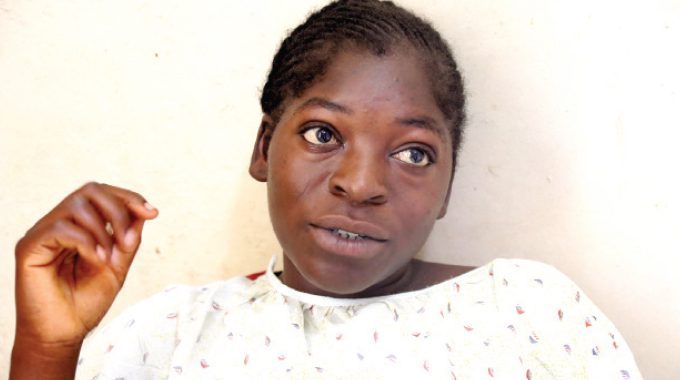
Flora Fadzai Sibanda, [email protected]
MS Rumbidzai Mwembe of Nkayi District in Matabeleland North Province and her newborn baby are alive today, thanks to a dramatic air rescue on Sunday afternoon.
A Helidrive Zimbabwe helicopter transported them from Nkayi District Hospital to Mpilo Central Hospital for an emergency Caesarean section, after complications threatened both their lives.

Ms Mwembe, who gave birth to a healthy baby girl, was transferred after struggling to deliver naturally. Her baby, now in the neonatal intensive care unit, is responding well to treatment.
Reflecting on the experience, Ms Mwembe described the helicopter ride as life-saving.
“The flight felt like five minutes. It got me to the hospital quickly, where doctors were already waiting for me. Without it, I don’t know what would have happened to me and my baby,” she said.
Her ordeal began when she went into labour earlier than expected. Initially, she assumed the pain was normal, having experienced similar discomfort in her first pregnancy. However, as the pain worsened, she alerted her mother-in-law, who took her to Matemu Clinic using an ox-drawn cart.
Given her history of a previous Caesarean section, clinic staff referred her to Nkayi District Hospital. However, upon arrival, she faced another challenge as there was no electricity at the facility, while she was unable to push the baby out.
“The nurses suggested I travel to Bulawayo by bus and hire a car from there, but I was in too much pain. Meanwhile, the doctors warned that my baby was in distress and at risk of infection because all the amniotic fluid was gone,” Ms Mwembe said.
Recognising the urgency, hospital staff contacted the helicopter ambulance service.
“When the helicopter arrived, I was told to leave my bags behind. Only the midwife who had been monitoring me could accompany me. The ride was like a dream, it was scary but comfortable and incredibly fast.

“Before I knew it, the nurse told me that we had arrived, and the doctors immediately took me into surgery,” she recounted.
Ms Mwembe expressed her gratitude to the Government for the life-saving initiative.
“Had this service not existed, I might have lost my life and my baby,” she said.
The helicopter, a flying intensive care unit, is one of two air medical rescue service ambulances that are stationed at the United Bulawayo Hospital to offer swift medical responses for emergencies, such as the critically injured in road accidents. The air ambulance is used to airlift patients from hard-to-reach areas, which would typically take hours to get to by road.
If the air ambulance is summoned to an area where there is no helipad, the pilots use their discretion to use an open space such as a sports field to land.
The helicopter ambulance system, introduced last year, has since saved hundreds of lives. Last year alone, more than 100 expecting mothers were airlifted to various hospitals across the country for emergency medical care.
Under the Second Republic, President Mnangagwa is actively modernising the country’s health sector as part of a strategic initiative to transform the country into a prosperous, highly industrialised nation by 2030.
In June last year, the President travelled to Russia to seek investors for establishing air ambulance services for the public health sector. Russian HeliDrive Air Ambulance Medical Services quickly responded, arriving in Zimbabwe to assist in developing an efficient air ambulance system staffed by highly skilled medical professionals, including doctors, nurses, engineers, dispatchers and pilots.



 Online Reporter