admin
admin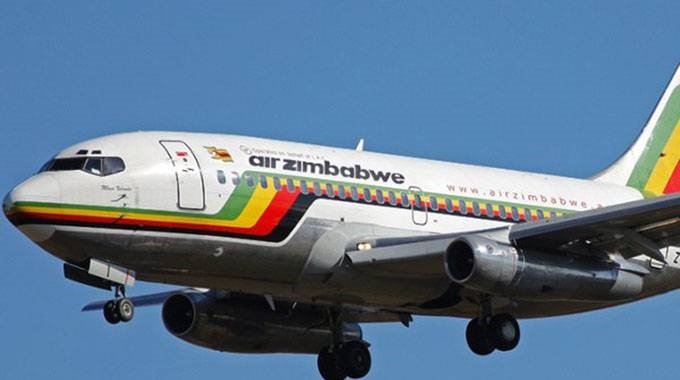
Martin Kadzere
More than a dozen “reputable” airline firms have approached Air Zimbabwe seeking to lease its aircrafts acquired from Malaysia, Business Weekly can review.
This follows delivery of the first B777-200ER aircraft about two weeks ago. The other aircraft is expected by end of next month. Leasing the planes is part of a broader strategy by the national flag carrier to generate revenue that would be used to acquire narrow and medium bodied aircrafts to service local and regional routes.
Creating a strong domestic and regional feeder network will help boost the airline’s passenger volumes, which will then feed into bigger aircrafts. The B777-200ER is a long haul aircraft, which at best performance can fly an average of 13 hours.
Air Zim was placed under administration in October 2018, as part of efforts to revive it.
“Air Zimbabwe has received about 15 bids from reputable suitors willing to lease the planes,” said a senior official with knowledge of the matter.
“There was an influx of potential suitors after the delivery of the first plane even though invitations were sent long back. The administrators are doing their evaluation, which will be submitted to shareholder (Government) so that decisions can be taken.
“Creating a viable revenue stream through lease income for Air Zimbabwe will enhance its capacity to acquire smaller planes to service domestic and regional routes.”
Grant Thornton Zimbabwe, the administrator would not immediately comment on the matter.
Assistant administrator Tonderai Mukubvu recently told this publication that the acquired planes would be deployed in the most strategic manner possible to facilitate generation of cash flows, which will be deployed, key among other areas, towards acquisition of the narrow and medium bodied aircraft.
The plan was to introduce narrow and medium bodied aircraft to service the current and additional domestic and regional routes network. This fleet will comprise Embraer ERJ145 (50 seater), Boeing 737-200 (105 seater) and Boeing 737-700NG (105 – 128 seater).
“In line with our plan to have narrow and medium bodied aircraft, (there is need to) develop a robust domestic and regional network which will become the feeder for the long haul international flights to be operated by the B777s,” said Mukubvu.
Critical to enhancing passenger loads is the re-joining by the national airline of International Air Transport Association (IATA) Clearing House and the activation of the Global Distribution Systems to allow for Air Zimbabwe’s flights to be sold globally.
“Our management at Air Zimbabwe remains committed to ensuring the revival and restoration of the brand as a formidable player in the airline industry as well as being an enabler to trade and tourism.”
Aircraft leasing boom
Worldwide, as passenger numbers continue growing, airlines have used aircraft leasing companies to boost their fleet numbers, which have grown in scale and number. In 2018, the leased aircraft portfolio increased by 629 aircraft to 8 109 aircraft, according to analysis by FlightAscend Consultancy, which has also identified that 100 new names have entered the commercial operating lease sector over the past decade.
Aviation experts also see a steady growth in aircraft leasing in the coming years as global air traffic increases and airliners increasingly opt for leasing than outright purchases.
The International Air Transport Association expects 7,8 billion passengers to travel in 2036.
This will be nearly double the four billion air
travellers in 2017. With steady growth in passengers, the prospects for the aircraft industry remain
bullish.
Air Zimbabwe was founded in 1967 and its roots can be traced back to 1946 when it was known as Central Africa Airways and operated as a joint airline for Nyasaland, Southern Rhodesia and Northern Rhodesia. The tripartite operations continued till 1967 when the joint operations ceased, leading to the formation of Air Rhodesia.
It operated as Air Rhodesia until 1980 when the nation attained independence and adopted the name Air Zimbabwe.
It operated as Air Zimbabwe Corp until 1997 when Air Zimbabwe Pvt Ltd was created in terms of the Air Zimbabwe Corporation Repeal Act of 1998.
In 1980, Air Zimbabwe had 18 aircraft and was a major regional and international aviation player. The airline has been on a downward spiral since 2003 with passenger numbers significantly falling from one million in 1999 to less than 20 000 in 2016.


 Online Reporter