Online Reporter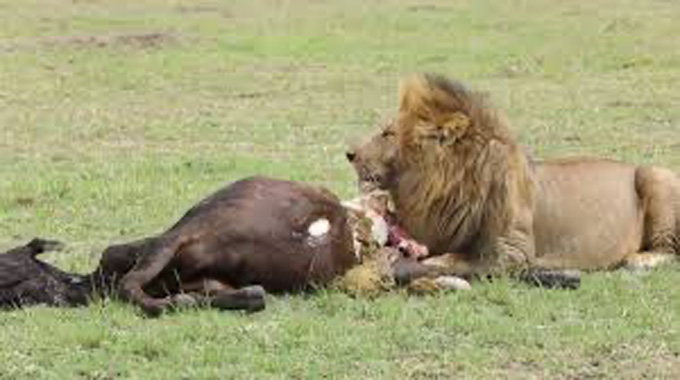
Rutendo Mapfumo
VILLAGERS in Hwange District’s Mashala area are facing devastating financial and emotional losses as an alarming surge in lion attacks on livestock intensifies human-wildlife conflict in communities bordering the Hwange National Park.
In interviews, local farmers revealed they are losing cattle and goats almost weekly, raising urgent concerns around food security, income stability, and community safety. The attacks — many of which occur at night — have become increasingly frequent, particularly during drought periods when livestock are forced to graze closer to wildlife zones near the national park.
According to a recent report by the Hwange Rural District Council, lions were responsible for over 120 livestock deaths in 2024 alone, making them the most destructive predators in the region. The report further notes that drought-induced migration patterns, where livestock stray into predator zones in search of pasture, have exacerbated the crisis.
“We wake up to find our cattle dead or missing. It’s heart-breaking because these animals are our only source of income. Every family here has lost something to the lions this year. This is a troubling trend, given that these predators have become bolder — sometimes breaking into livestock enclosures at night,” said Mr Luke Ncube, a villager from Mashala.
Traditional livestock enclosures in the village, often constructed from thorn bushes or wooden fencing, have proven ineffective against determined predators. While some villagers have begun building predator-proof bomas —fortified livestock pens made from robust materials and opaque walls — many families lack the resources to construct them.
In areas where these bomas have been installed, attacks have reportedly decreased significantly.
Beyond the loss of livestock, the psychological and economic toll has been severe. In rural communities like Mashala, a single cow can represent months — or even years — of income or food security. Many households rely on livestock to pay school fees, cover medical expenses, and meet daily needs.
“We understand the importance of lions for tourism and the ecosystem, but our children are going hungry. We need real solutions, not just talk,” said another villager, Ms Nokuthula Sibanda.
The growing tension has led to a rise in retaliatory killings of lions, a development that threatens ongoing conservation efforts and the ecological balance in Hwange, home to one of Africa’s largest lion populations.
Authorities fear that if the conflict continues unchecked, it could undermine the country’s biodiversity and tourism appeal.
In response, Hwange RDC and conservation organisations such as Painted Dog Conservation and WildCRU have launched community awareness programmes, offered limited compensation for lost livestock, and assisted in building more secure enclosures. However, villagers insist that these efforts must be urgently scaled up. — New Ziana