admin
admin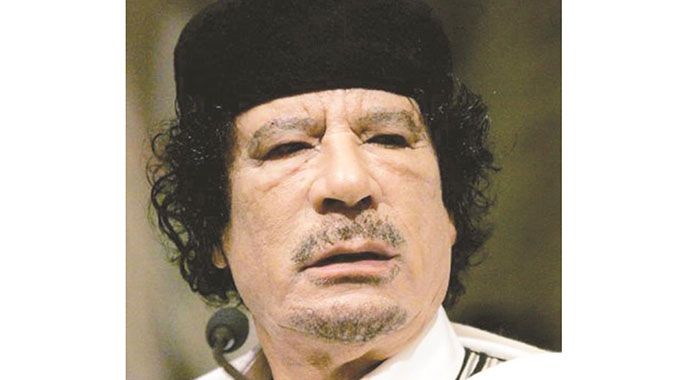
Gibson Nyikadzino Correspondent
DID you know that France has the world’s fourth largest gold reserve, estimated at 2 436 tonnes, and valued at US$111,8 billion yet there is no single gold mine in that European country?
Sadly, Mali has no gold reserve despite having 860 gold mines that produce a combined total 50 tonnes per year.
Before being expelled from Mali, French troops claimed they were “fighting terror”. But conscious people know that the French army maintains a presence in Africa to cause instability and steal resources as it has done and is doing in Mali.
Western interference in Mali and Libya led by the French government, which openly provides military intelligence to terrorists in the Sahel region and also fronting the continued instability of Libya since the murder of Colonel Muammar Gaddafi, are case studies which Africa and the Arab countries need to be wary of.
The divisions orchestrated by the West in Africa and the Arab world, especially when there is little investments in efforts to resist Western trappings when it comes to the Sahrawi Democratic Arab Republic (SADR)’s case, dealing with the conflict in Ethiopia’s Tigray region, the Egypt-Ethiopia tensions regarding the Blue Nile, the Palestinian cause and the war in Yemen, should not make leaders of these great regions become by-standers in the face of neo-colonial overtures.
Pan-African and Pan-Arab solidarity and co-operation are initiatives more important for Global South nations when the aim to secure ties is through friendly association without the prescriptions and interference from the West. It has been proven without doubt that the mechanisms of Western countries and their desire to impose “working remedies” for African and Arab countries are nothing but a façade.
Africa and the Arab world, despite facing similar challenges greatly orchestrated by the West, remain alive to finding ways out of these difficulties. One of the ways is securing the path of active diplomacy and positive neutrality, a position that Algeria implements in protecting the interests of Africa and the Arab world for the benefit of the Global South. Such is happening on November 1 and November 2 when Algeria hosts the 31st Summit of the Arab League in Algiers.
“Algeria intends to organise a unifying and inclusive Arab summit and does not support the Arab division,” said President Abdelmadjid Tebboune last year.
There are similar challenges facing Africa and the Arab world like religious extremism nourished by political instability. Issues of youth development, unemployment and food security are indicators that there has to be joint efforts by Africa and the Arab world on actions to exchange experience in resolving certain problems and common difficulties.
Twice defeating France
Since the failure of the French to continuously influence the politics of Algeria after their defeat in 1962, the former have targeted sub-Saharan Africa through the exercise of their Françafrique policy. This policy has caused a rise in turmoil for African citizens because of the exploitative nature of French neo-colonialism, predominantly in Mali, in search of gold which they ultimately loot.
Besides fighting French and Western neo-colonialism, Algeria has also accepted the biggest responsibility it has to help Africa deal with Europe and linking the continent to European markets in the implementation of great infrastructural projects.
Despite a lack of political will from European nations, Algeria has funded the establishment of the trans-Saharan highway which is already 90 percent complete, linking Nigeria, Niger and Chad through a road network that facilitates trade amongst African countries and also use the route to access European markets through the Algeria’s ports.
As Europe falters in the energy sector, Algeria is also helping Nigeria to move its gas to satisfy European markets. The gas project also easily connects with Equatorial Guinea and Chad as they are structural investments aimed at ensuring development on the part of other African countries. Despite familiarity with fossil fuels, it also leads in the renewable energy sector.
Africa’s in-demand resources
In the Laghouat region of the Sahara desert, the El Kheneg solar power station, which has a capacity of 60MW, is made up of 240 000 sun panels and generates electricity that meets the demand of about one-seventh of the region’s needs.
The project, which was completed in 2016, is a prototype and a component of the nation’s transition and is intended to protect fossil fuel supplies and lower greenhouse gas emissions.
With abundant hydrocarbon resources, Algeria also aspires to participate in Africa’s energy transformation, largely because of its photovoltaic potential. Germany is already willing to maintain its collaboration agreements with Algeria regarding energy supplies. The goal is to manufacture the highly in-demand green hydrogen and export it via the pipelines that run to Europe.
Likewise, countries like Zimbabwe, with their amicable historical ties with Algeria, also stand to benefit in terms of knowledge and skills transfer in the energy sector as a breakthrough is hoped for in the Muzarabani oil and gas exploration.
Stopping European destabilisers
Algeria is making a lot of effort to convince West Africa to co-operate with African forces in fighting terrorism and not the G5 Sahel Alliance that was formed in 2014 at the instigation of the French.
Regarding French initiated terrorism in the Sahel region and instability in Libya, Algeria has also made contributions to stop the foreign interests which are bringing a lot of interferences in Africa through weapons and arms proliferation, hence nurturing an interlink of conflicts feeding into another.
Africa ought to develop its infrastructure and secure its resources using African forces. The development of the continent is key to stopping the case of migration to European countries, who at the same time use migration as an excuse to exploit Africa.
Rapprochement of views
The recognition of the right to statehood for the Palestinian people under the apartheid Israeli system is a fight that has to be fought in unison by Arab and African states that have also survived under an obdurate and racially connected network of exploiting states.
In uniting Palestinian factions, Hamas and Fatah, Algeria has remained faithful to its authentic principles of calling for respect for international law and support for the oppressed, considering that the defence of the Palestinian cause in all international and regional fora is a matter of loyalty.
Besides a consensus approach on Palestine, Algeria has contributed collectively to the settlement of the conflict between Egypt, Sudan and Ethiopia concerning the Renaissance Dam, by ensuring the rapprochement of views and building confidence between the parties involved in the conflict.
Benefit for all
The 31st Summit of the Arab League, happening for the first time since 2019, had not happened not only because of the COVID-19 pandemic, but for political issues or divergence of issues in the Arab world. The summit will not only reunify the issues of the Arab world, but also reinvigorate and give dynamic to the resolution of Arab-Africa issues by reverting to active solidarity.
Through this summit, the Arab-African countries can establish a link that gives dynamism to call for more friendly cooperation between the Arab world and Africa by reactivating the Africa-Arab league co-operation mechanisms.
Such mechanisms are key to strengthening consultations in search of solutions for the common challenges like conflict prevention, management and resolution and dealing with some difficulties that implicate the Arab-Africa states facing tensions to find solutions without foreign interference.



 Online Reporter