admin
admin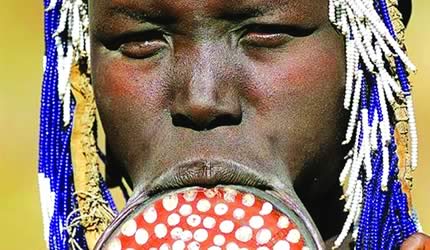
tucked under your hair line, and having some foreign substance put under your skin to remove wrinkles, makes me feel pain just thinking about it.
Yet how many women have bought into these painful treatments.
With any type of cosmetic surgery, including liposuction, complications can occur.
Some dangers of liposuction include infection, a reaction to the anaesthesia, blood clotting, and fluid loss.
Less severe liposuction risks include bruises and scars, a numbing of the skin, and moderate problems such as changes in skin pigmentation.
Botox can cause nausea, flu syndrome, respiratory infection, forehead and eyelid drooping, and headache.
Less common Botox risks include symptoms that are generally associated with the injection.
These include redness, pain, swelling, numbness, bruising, muscle weakness and bleeding.
I have seen women who have had facelifts and most of their face is bruised.
The pressure to look a certain way doesn’t just happen in the Western World, but all around the globe.
All over the globe, people are striving to be beautiful every minute of every day because humans tend to be very visual creatures and will always first observe the look of a person before finding out what is held in the other person’s heart.
We are socialised to make judgments about how someone looks.
Some of the beauty techniques I found look very painful.
Lip plates — The idea of piercing one’s lip isn’t a new one created by youth of today.
There are select groups in other countries that take this practice to the extreme by stretching out one’s lip with a plate or plug like the one shown above.
These pierced-lip ornaments are called Labrets.
The process of stretching a lip through piercing is thought to be independently invented six times in the ancient world.
Today it is only maintained by select groups around the Amazon River in South America and Africa. Human skin, particularly the skin of a younger person, has an innate flexibility and ability to stretch so using labrets to lengthen a lip piercing is relatively easy as long as it is done slowly.
The weight of large ornaments can be intensely painful even if they are made from light weight types of wood.
A young person (women generally do this in Africa while it is tied to men in most parts of Amazonia) will generally only wear them during ceremonies and special occasions once they have achieved the size they want, choosing to let the stretched lip hang on its own during everyday chores.
Neck Rings — Having a long, graceful neck is seen as beautiful in many cultures.
Subcultures in Asia and Africa take the idea to extremes by having women wear multiple brass coil rings around the neck to stretch it out.
The process starts with only a few rings as a young child, increasing the number of rings with age, so that by the time women reaches a mature age they will have longer necks.
The pressure of the rings causes the collar bones and upper ribs to be pushed down at a steep angle to make the neck look longer when the actual vertebrae are not elongated.
Coils can be removed but the neck muscles are generally atrophied by that point, making the simple act of holding one’s head up without the assistance of the coils extremely difficult.
Feet Binding — The Chinese tradition of binding the feet of women started in the 10th century .
After the procedure a women can’t stand for more than a few minutes at a time.
This tradition was still practised until the early 20th century by all classes of women whose husbands greatly enjoyed these tiny lotus-shaped feet.
It had to be done before the age of 14 before the arch of the foot was fully formed.
To create this look, a young girl would have almost every bone of her foot broken before an extremely tight binding was wrapped around the now squished foot to have the bones repair themselves in this new, smaller form.
A foot that was roughly three inches was the “ideal” size.
The wealthy could afford to have fresh daily bindings and inspections, the poor could not afford this so if they were binding their feet they had more problems with infection.
Toe nails were cut as short as possible so in-grown toe nails were a common problem. Some woman have had their feet unbound later in life, but severe deformities would still prevail.
Victorian Wasp Waist Corset — Corsets were first worn back in the 16th century and have undergone many changes over the years, but the idea behind wearing these garments remains the same.
Making the wearer’s waist appear smaller.
In Victorian times women began “tight lacing” a method of cinching corsets so tightly that prolonged wearing of them would actually alter their shape. Surely this was painful.
It has been claimed that tight lacing weakens certain muscles, damages organs and causes fractures to rib bones.
Doctors and medical writers cited countless diseases caused by corsets, which included consumption, curvature of the spine, rib displacement, cancer, hysteria, hunchback, abortion, melancholy and epilepsy.
In addition, although corsets were considered by many to be good for morals, they were also criticised for titillating qualities, especially when used in erotic literature.
Cutting scars into women’s bellies — For the women of the Karo tribe in southern Ethiopia, beauty is literally skin deep.
During childhood, girls allow their elders to cut scars onto their stomachs.
“The main reason for my scars is to attract a male that will give me joy, because I will be beautiful and hopefully get a husband,” says one girl during her Taboo interview.
Once a Karo girl has received the last of her scars, she’s allowed to marry and have children.
These are only a few examples of what women around the world do to change the way they look because society doesn’t except their natural beauty.
How sad that women across the globe have bought into bearing pain, from practices that change their looks, in the name of being more beautiful. — National Geographic.



 Online Reporter