Online Reporter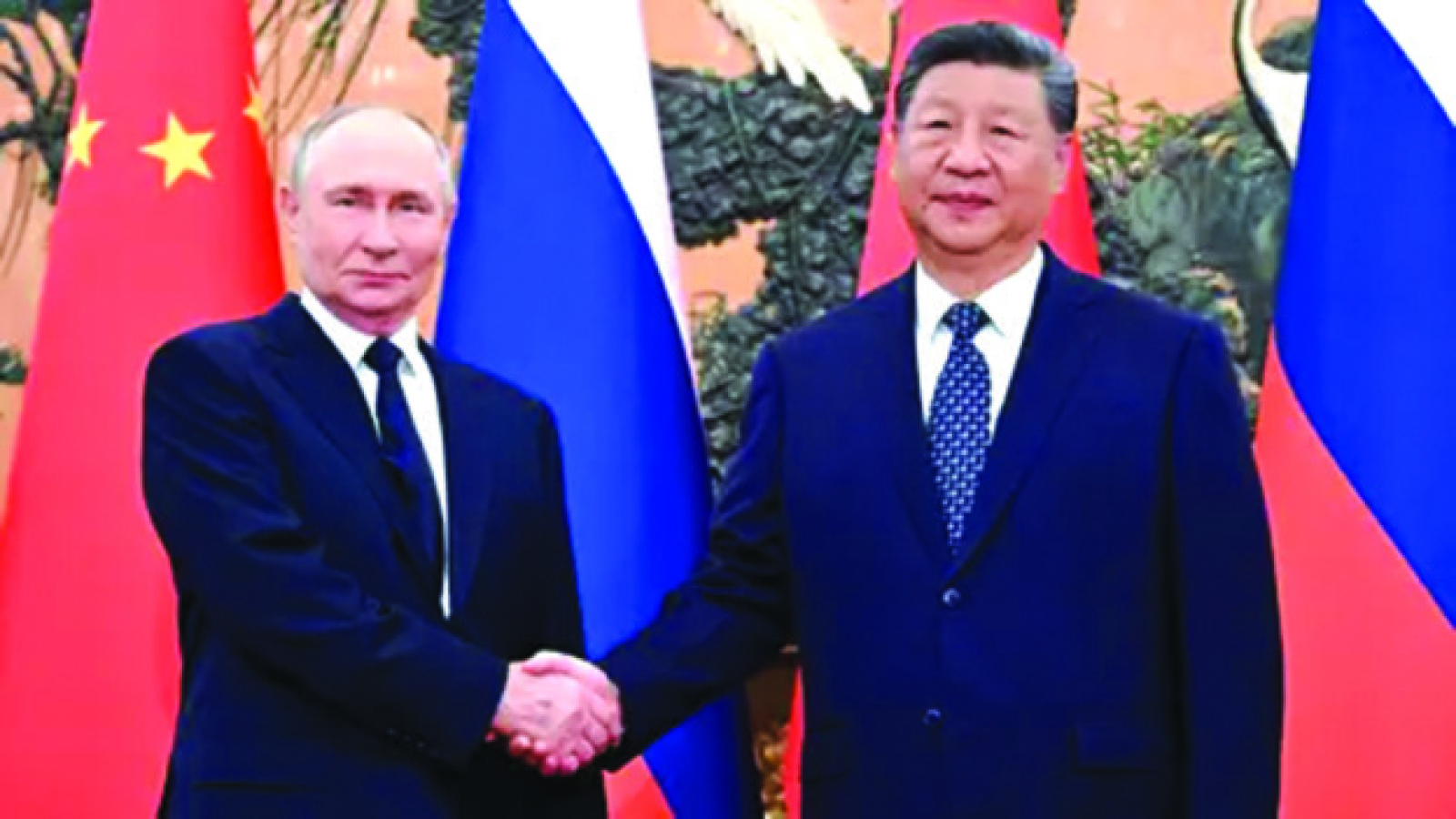
Richard Muponde-Zimpapers Politics Hub
ZIMBABWE’S commemoration of the SADC Anti-Sanctions Day on October 25 is not merely an act of remembrance; it is a resolute statement of defiance against persistent external attempts to undermine the nation’s sovereignty and frustrate massive economic development aimed at improving the lives of its people.
The day, declared by the Southern African Development Community (SADC) in 2019 under the chairmanship of the late Tanzanian President John Magufuli, was born out of a continental consensus.
This consensus determined that the illegal Western sanctions imposed on Zimbabwe were not only punitive but were fundamentally unjustifiable, hurting ordinary citizens and actively destabilising the broader region.
The African Union swiftly endorsed the commemoration, granting it essential continental legitimacy.
In doing so, SADC sought to remind the world that sanctions on Zimbabwe were never about democracy or human rights but about land, sovereignty, and principled resistance to neo-colonial domination.
The genesis of these sanctions began when the Government embarked on the Fast Track Land Reform Programme in 2000.
This necessary and historic programme sought to correct the glaring, racist imbalance in land ownership that favoured 4 500 white commercial farmers at the expense of 14 million landless black Zimbabweans.
By successfully redistributing land to more than 360 000 households, President Mugabe fulfilled the core, non-negotiable demand of the liberation struggle: land for the majority.
This decisive policy, however, immediately drew the ire of Britain, then under Labour Prime Minister Mr Tony Blair.
London even mooted the possibility of military intervention in Zimbabwe under the pretext of protecting democracy and human rights.
The clear reality, however, was that Britain sought regime change in Harare and wanted to safeguard entrenched white minority and broader Western economic interests.
Finding a willing partner in Washington, the UK and the US pushed relentlessly for the United Nations Security Council (UNSC) to impose sweeping sanctions on Zimbabwe, especially after the land reform triggered predictable political turbulence.
In the early 2000s, multiple draft resolutions were tabled in New York, yet they were consistently thwarted by the principled resistance of Russia and China, two permanent UNSC members who rightfully recognised Zimbabwe’s sovereign right to self-determination.
It is this unwavering history of diplomatic protection that justly earned them the enduring title of Zimbabwe’s “all-weather friends.”
The most dramatic and pivotal episode of this diplomatic shielding came in July 2008, following Zimbabwe’s disputed presidential election run-off.
A dangerous draft UNSC resolution sought to impose an arms embargo, travel bans, and financial sanctions on President Mugabe and senior ZANU PF officials under Chapter VII of the UN Charter.
Such a resolution would have catastrophically escalated Zimbabwe’s isolation, potentially opening the door to NATO-backed military intervention on the false pretext that Zimbabwe posed a threat to international peace.
Nine Western and aligned countries, including the US, UK, and France, voted in favour, but China and Russia courageously exercised their veto power, joined by South Africa, Libya, and Vietnam.
China’s UN ambassador Wang Guangya was emphatic, staring at the time: “The development of the situation in Zimbabwe until now has not exceeded the context of domestic affairs. It will unavoidably interfere with the negotiation process.”
Similarly, Russia’s envoy Vitaly Churkin warned against attempts to “take the Council beyond its Charter prerogatives of maintaining international peace and security,” accurately describing the draft resolution as “excessive” and “an attempt to interfere in the country’s internal affairs.”
These vetoes were critical, shielding Zimbabwe from the catastrophic escalation of UN-mandated sanctions and potential military interference.
This exercise of veto power underlined the true definition of China and Russia as steadfast friends—nations that treated the people of Zimbabwe not as pawns of Western geopolitics, but as brothers and sisters with a sovereign right to chart their own destiny.
Faced with repeated failure at the UN, the US resorted to unilateralism, crafting the devastating Zimbabwe Democracy and Economic Recovery Act (ZIDERA) in 2001.
This unilateral legislation, combined with parallel EU sanctions led by Britain and NATO-aligned states, crippled Zimbabwe’s economy by cutting off access to crucial credit lines, freezing assets, and discouraging foreign investment.
These punitive measures drove high inflation, unemployment, and infrastructure decay, leaving the masses grappling with the burden of sanctions thinly disguised as “targeted measures.”
Yet Zimbabwe did not collapse. Instead, under the “Look East Policy” launched by the Government, the country decisively deepened its ties with China, Russia, and other Asian partners.
Beijing became Zimbabwe’s largest investor, supporting critical infrastructure projects, agriculture, and mining, while Moscow engaged in essential energy and defence cooperation.
This Eastward pivot effectively cushioned Harare from total economic strangulation, demonstrating the immense value of alternative, mutually respectful partnerships in a global sphere often dominated by Western financial institutions.
Today, under President Mnangagwa’s leadership, the Second Republic continues to stand resilient and defiant. Anchored on Vision 2030 of achieving an Upper Middle-Income economy, the nation promotes the ideology and philosophy of “Nyika inovakwa nevene vayo/Ilizwe lakhiwa ngabanikazi balo” (a nation is built by its own citizens).
Modernisation of infrastructure, agricultural revival, and re-engagement are central pillars, buttressed by the unwavering support of China and Russia.
President Xi Jinping has consistently spoken against Western bullying, while President Vladimir Putin, at the Victory Day Grand Parade, reminded the world of the need to resist the hegemony of the West which seeks to impose its rules on others.
Such pronouncements resonate profoundly in Zimbabwe—a nation that has endured two decades of economic siege simply for daring to reclaim its land.
The benefits of Zimbabwe’s robust partnerships with China and Russia are tangibly visible. From the Kariba South Hydro expansion, the massive Robert Gabriel Mugabe International Airport modernisation, and the upgrading of Hwange thermal units, to the rapid development of lithium and platinum mines, these ties are producing concrete results.
Unlike Western aid often tied to humiliating political conditions, Chinese and Russian support is grounded in mutual respect and solidarity.
As Zimbabwe commemorates SADC Anti-Sanctions Day, the youth must remember the resilience that brought the nation this far.
They must acknowledge the steadfast friends who stood by Zimbabwe when the West sought to crush its sovereignty.
It is time to celebrate the fruits of modernisation and unity, while unequivocally rejecting the neo-colonial agendas that still lurk in the guise of democracy promotion.
China and Russia’s diplomatic solidarity continues to shield Zimbabwe from external domination.
It is only fitting to applaud these two nations for their deep-seated friendship, based not on exploitation but on mutual respect and a shared destiny.