Online Reporter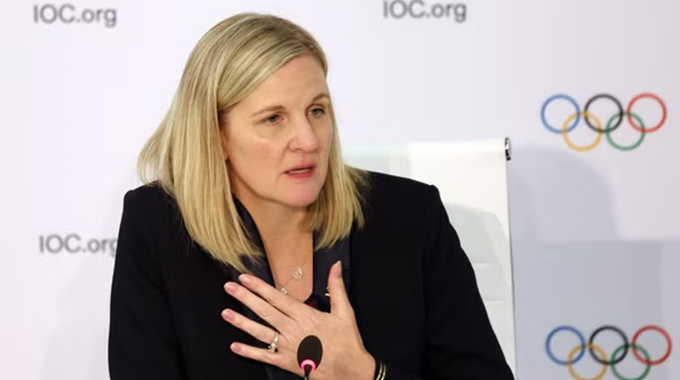
FROM the pool of seven candidates, four between them failed to reach 15 percent of the ballots in Thursday’s historic IOC presidential election, overshadowed by Kirsty Coventry’s decisive victory and trailing far behind the support received by runner-up, Juan Antonio Samaranch Jr.
The Zimbabwean became the first female president of the International Olympic Committee (IOC).
Behind her commanding win, however, were the dashed hopes of lesser-supported candidates, who acknowledged their defeat with Olympic spirit and forward-looking proposals.
The presidential election at the 144th IOC Session in Costa Navarino, Greece, produced a clear first round result as Coventry comfortably secured 49 votes (50,52percent), avoiding a potential second round, which could have changed the outcome if additional voters had turned up.
Behind her were prominent figures such as Spain’s Juan Antonio Samaranch with 28 votes (28,87 percent) and Lord Sebastian Coe with just eight votes (8,25 percent) – perhaps the candidate furthest away from pre-election expectations.
The remaining four were even further behind: David Lappartient, Morinari Watanabe, Jordan’s Prince Feisal Al Hussein and Johan Eliasch, who together received only 12 votes (12,36 percent). Nevertheless, their presence contributed to a meaningful debate on the future of the Olympic movement.
David Lappartient, president of the International Cycling Union (UCI), received only four votes, but was cavalier about the outcome and said, “I knew I wasn’t the favourite; there were two much stronger candidates. But I believed I had something valuable to contribute in terms of project and dialogue. I contributed to the debate, which was ultimately my goal.”
Still, he didn’t hide his disappointment, “I expected more votes, but that’s life. We have to accept the decision of our colleagues”.
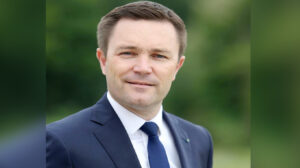
The French candidate also stressed the historical significance of Coventry’s victory, “It’s a strong message. Gender equality was clearly a priority on our agenda, and I believe we’ve achieved that”.
On X social media, he added, “My sincere congratulations to Kirsty Coventry on becoming president of the International Olympic Committee. I wish her well in this next chapter”.
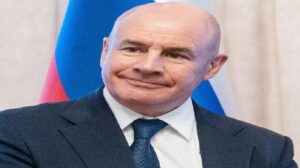
With just two votes, HRH Prince Feisal Al Hussein underlined the historic significance of the election, “First of all, my congratulations to the new president. I’m proud that our movement has elected its first female president.”
The Jordanian prince acknowledged the value of the electoral process itself and mentioned, “It has been a privilege to interact with IOC members throughout this process, exchanging ideas, listening to concerns and discussing the opportunities ahead.”
The head of the Jordanian Olympic Committee underlined his personal commitment, “From the very beginning, I tried to contribute constructively, staying true to my principles of integrity, inclusiveness and imagination. Although the outcome was not what I had hoped for, I respect and trust the decision of the members”.
He went on to express his willingness to co-operate fully.
“The Movement faces fundamental challenges and I remain fully available to president-elect, Kirsty Coventry, to help her address them. My commitment to the Olympic family remains unwavering,” he said.
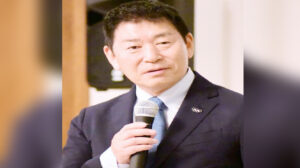
Japan’s Watanabe won four votes despite revolutionary ideas such as holding the Olympic Games simultaneously on five continents or even changing the name of the IOC to the “World Sports Organisation”. With limited support, he humbly expressed his disappointment, “I’m sorry I couldn’t meet the expectations of those who supported me. I hope this is the first step for Japanese sport. Maybe one day there will be a Japanese IOC president”.
Finally, Britain’s Johan Eliasch, president of the International Ski and Snowboard Federation, graciously accepted his low vote total (two votes), “We have the right person in the right place. It was a decisive and well-deserved victory in the first round”.
Despite the defeat, Eliasch was positive about his campaign, saying it had not been a waste of time, “On the contrary, it gave winter sports the opportunity to have a stronger voice than usual.”
Eliasch is optimistic that Coventry will adopt some of his proposals, “I hope it does, for the good of the movement. A lot of good ideas have come out of this process.”
Although far from winning, the defeated candidates left valuable ideas on the table, many of which could be brought forward by the president-elect when she takes office on June 23 as the tenth president in IOC history.
A true example of the Olympic spirit, showing that even in defeat it is possible to contribute to the future of sport. – insidethegames.com.