


 admin
admin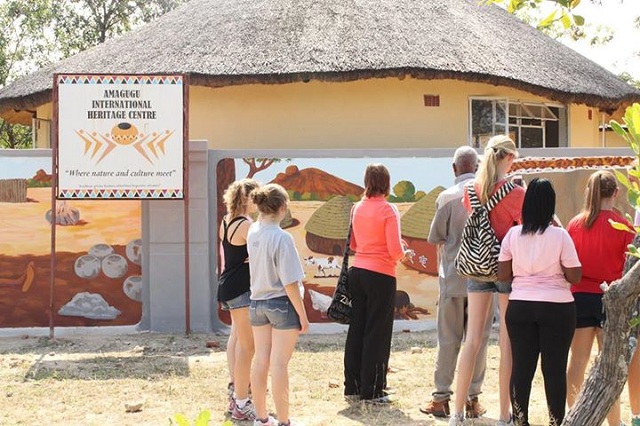
Peter Matika, Senior Leisure Reporter
AMAGUGU International Heritage Centre, (AIHC) since being established in 2010 has galvanised villagers of Matobo, while creating job opportunities for the many unemployed people.
AIHC has not only created jobs but has been vastly perceived as a vehicle for promoting tourism. Established out of the vision of renowned historian Pathisa Nyathi, who is also the founding director and owner, AIHC’s developmental thrust and resourcing ideology is informed by self-help and self-sufficiency, which engenders a spirit of independence and pride.
Recently the centre’s trust (Amagugu International Heritage Trust) became the continent’s beneficiary of the United Nations Educational, Scientific and Cultural Organisation (Unesco) $100 000 International Fund for Cultural Diversity (IFCD).
Amagugu became a beneficiary of the fund from its project titled Strengthening Local Cultural Policy in Zimbabwe.
It is the only centre in an African country among the beneficiaries of the six creative initiatives drawn from around the world through the 2005 Convention on the Protection and Promotion of the Diversity of Cultural Expressions.
AIHC programmes manager, Butholezwe Nyathi, said it was an honour for the institute to receive the grant, surpassing many other countries.
“It’s an honour for the centre to receive this grant. We have many endeavors that need funding. We seek to promote the centre as a landmark and tourist spot for visitors nationally and globally. We co-operate with other cultural institutions and interested bodies for the purpose of highlighting indigenous thought, worldview and philosophy,” he said.
Nyathi added that the centre had various activities that include craft making, pottery, skin tanning, wood carving, iron work, basketry, and stone sculpture.
“There are a wide range of participatory cultural activities such as rubbing sticks to make fire, fetching water from a well, grounding sorghum grain on stones and using pestle and mortar, cooking sadza, setting snares, fencing, beer brewing, sorghum threshing and floor preparation,” he said.
AIHC project proposal was approved by a panel of experts, who recommended the project among many others at the 2005 Convention’s Intergovernmental Committee at Unesco Headquarters in Paris.
According to the International Fund for Cultural Diversity website, the agendas of the projects included the impact of digital technologies on the diversity of cultural expressions, greater engagement with civil society in raising awareness.
IFCD is a voluntary multi-donor fund established under Article 18 of the 2005 Convention and its purpose is to promote sustainable development and poverty reduction in developing countries that are Parties to the 2005 Convention.
The IFCD aims to foster the emergence of a dynamic cultural sector, primarily through pushing for the introduction and/or elaboration of policies and strategies that protect and promote the diversity of cultural expressions.
The IFCD also promotes cooperation between the developing world and developed countries.
Since 2010, the IFCD has been providing approximately $6 million in funding for 84 projects in 49 developing countries, covering a wide range of areas, from the development and implementation of cultural policies, to capacity-building of cultural entrepreneurs, mapping of cultural industries and the creation of new cultural industry business models.
The other five beneficiaries who will also receive $100 000 each are Plurinational State of Bolivia’s Fundación Imagen project Strengthening Civil Society Participation in Policy Advocacy for Bolivia’s Culture Sector, Croatia’s Kultura Nova Foundation project Approaches to Participatory Governance of Cultural Institutions, El Salvador’s Asociación Movimiento de Jóvenes Encuentristas (MOJE) project, Sustainable Development of Cultural Industries with Women and Youth in llobasco, Haiti’s Association Haïtienne desprofessionnels de la musique — Ayiti Mizik project Cartographie de l’industrie Haïtienne de la musique, Jamaica’s Ministry of Youth and Culture project Towards the Revision of the National Cultural Policy in Jamaica.



 Online Reporter
 derick.khumalo