admin
admin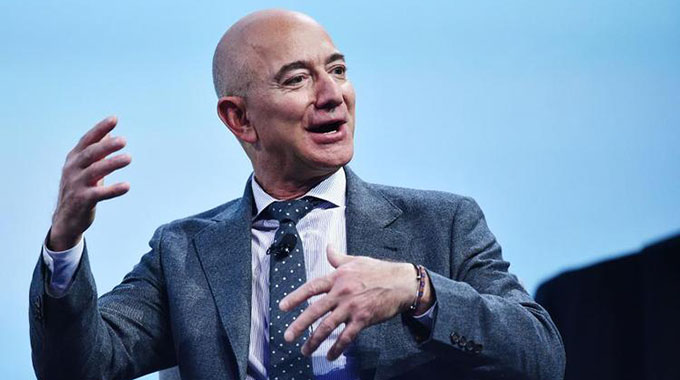
Stepping through what’s almost certainly a one-way door on Tuesday, Jeff Bezos said he will resign as chief executive officer of Amazon.com Inc. and become executive chairman later this year.
He will hand day-to-day control to Andy Jassy, his long-time head of Amazon Web Services (AWS), a swiftly growing division that has almost single-handedly changed the way companies buy the technology that powers their businesses.
With that comes at least a partial end to one of the most epic runs in modern business history.
Yet, Mr Bezos’s move feels, in many ways, natural and even inevitable. Over the last 25 years, the Amazon founder led the company through perhaps the most fertile period of any American business ever.
Amazon was first just an idea at the Wall Street hedge fund D. E. Shaw & Co., where Mr Bezos was a vice president; then it was an online bookseller and high-flying dot-com stock during the late 1990s.
Mr Bezos then rescued the company from the internet bust by formulating and guiding new inventions like the Kindle, Amazon Prime and AWS. Over the last decade, he has piloted Amazon to a $1,7 trillion market capitalisation, where it currently occupies the same rarified trillion-dollar air as Microsoft Corp. and Apple Inc. But Mr Bezos’s decision to step down also reflects an uncomfortable reality for one of the wealthiest people in the world: The walls of his highly compartmentalised empire have been crumbling for some time. It’s becoming increasingly difficult to be Mr Bezos (at least by Bezos’s standards). He presides over a collection of properties that spans not only Amazon but The Washington Post, several philanthropies and a space company, Blue Origin LLC, that lags far behind its chief rival, Elon Musk’s Space Exploration Technologies Corp.
Just consider the ways Mr Bezos’s various assets have collided over the past few years. His ownership of The Washington Post consistently angered the last U.S. president and arguably cost Amazon the Pentagon’s $10 billion JEDI cloud computing contract, which the Donald Trump-controlled Defense Department awarded to Microsoft. When he travelled to India in early 2020, Prime Minister Narendra Modi declined to meet with him, and a senior official criticised the Post’s coverage of the country.
Union organisers perpetually protest Amazon’s treatment of its blue-collar workforce and periodically show up in front of Mr Bezos’s homes—and once, with gallingly poor judgement, even wheeled out a guillotine. When Mr Bezos and his partner, Lauren Sanchez, started canvassing climate philanthropies last year to begin making the first of $10 billion in grants from the Bezos Earth Fund, at least some of the organisations were skeptical of Amazon’s relationship with its front-line workers and hesitant to accept Bezos’s largesse. Many of the criticisms levied against Mr Bezos and his empire are reasonable and can be addressed. But the most constrained resource in Mr Bezos’s web of conflicting business holdings is his own time, and that can’t be easily reconciled. He used to spend part of Wednesdays and weekends at Blue Origin, his Kent, Washington-based space company. But that may no longer be enough. – AFP.


 Online Reporter