

 admin
admin
Mkhululi Ncube, Chronicle Reporter
GOVERNMENT has said it is crucial for the country’s diplomats in foreign nations to understand Government communication systems so that they are armed with information to defend and promote the country’s interests in their missions, a senior official has said.
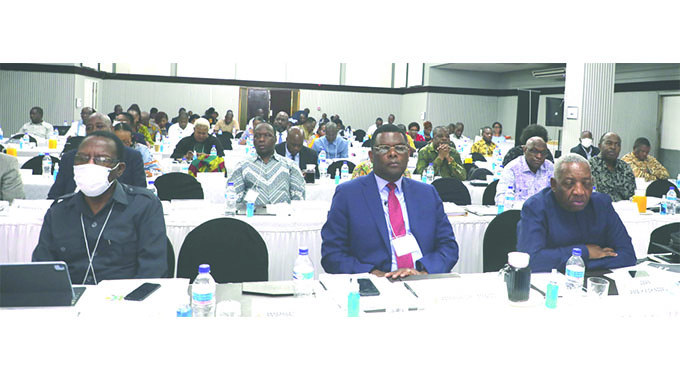
The Ministry of Foreign Affairs and International Trade is hosting a week-long senior management and ambassador’s retreat and strategic planning review meeting in Bulawayo.
The retreat is touching on a number of issues affecting diplomats and world issues which have a bearing on their work.

Yesterday’s session touched on re-affirmation, engagement and re-engagement, emerging trends in multilateral levels, challenges facing Zimbabweans in the foreign countries and the Government communication strategy among others.
Addressing the diplomats yesterday, permanent secretary in the Ministry of Media, Information and Broadcasting Services Mr Nick Mangwana said ambassadors play a crucial role in communicating Government policy.
“The ambassadors are the face of the country and President in foreign lands, therefore, our communication strategy as a ministry and Government can only make sense in lands afar if they have the correct message. Our communication strategy touches on Zimbabwe exercising its own soft power that comes with signing MOUs with many counterparts in foreign countries, the national broadcaster signing the same with national broadcasters elsewhere. That way we will have our own voice in those foreign lands because we send our content to those countries and they broadcast and we speak in our own voice rather than people listening to propaganda coming from different media about our country.
Instead, the voice will be coming from our counterparts,” he said.
He said communication is key to an effective and efficient Government for the implementation of its policies, programmes, services and projects.
Mr Mangwana said the Government communication strategy is targeted at both local and Zimbabweans based in foreign lands.
“It is important to ensure that information is accessible within the public space, that we are able to engage citizens in conversations around critical issues so as to empower them to participate in not only shaping Government policies, but also in taking up opportunities that affect their lives. Our communication intends to inform Zimbabweans at home and abroad about their country, about each other and about the role of the Government of Zimbabwe in meeting their needs through the delivery of programs and services,” he said
Mr Mangwana said it is also the role of his ministry and Government to inform different foreign publics so they can invest, trade and visit the country as tourists.
He said the Covid-19 hotline which was introduced at the start of the pandemic has been maintained so that members of the public continue to interact with Government on various issues affecting them.
“When Covid-19 receded and became manageable we still maintained the call centre for human interaction with Government. Our intention is to provide the public with socio- economic and developmental information so that they are able to ask questions, get emphatic responses and make sound judgements about their lives/livelihoods. The Government of Zimbabwe has therefore adopted an array of communication tools whose import is to inform the public so they can identify opportunities or create such opportunities to improve or uplift the quality of life of the Zimbabwean public,” he said.

The permanent secretary said Government has also licensed numerous community radio and television stations to enhance its communication with members of the public.
He said members of the public are now preview to Cabinet decisions on time as Government briefs the nation after every Cabinet meeting, a practice which is not happening in many countries.
“The chief Government communicator is His Excellency the President. We all spin off from his communication and just help amplify the message. This is the reason why if you go on the Ministry of Information website and click on the downloadable, we always make an effort to upload all his speeches because they provide the policy thrust and tone. We hope all our Ambassadors have access to that portal,” he said.
“When Government says it is not leaving anyone behind, it means what it says and says what it means. Our Strategy is underpinned by the following principles; timeliness, relevance, accuracy, efficiency and curated. As we approach the 2023 harmonised elections, we believe that our diplomats will be busy addressing a number of issues including the so-called partisan or biased reporting by the public media.”
The permanent secretary said the public media has a duty to inform the nation about various programs being undertaken by Government even during election times and these should not be seen as partisan as Government does not stop delivering on its mandate even during election time.
He said some of the election observer’s reports produced after the 2018 elections on the public media coverage of the general elections missed on this crucial point.
“Zimbabwe has had a number of media reforms, some legislative and some cultural. Clearly, the media landscape that obtained in 2018 will not be the same as that of 2023. The presence of community radio stations, other television players and campus radio stations has changed the media landscape tremendously. We need to make it clear that while this transformation coincides with some of the recommendations of the observer missions, it was not for them. But it was to meet the minimum standards set by our Constitution and realise our national aspirations,” he said. — @themkhust


 Blessing Chizhande
 Online Reporter