

 Online Reporter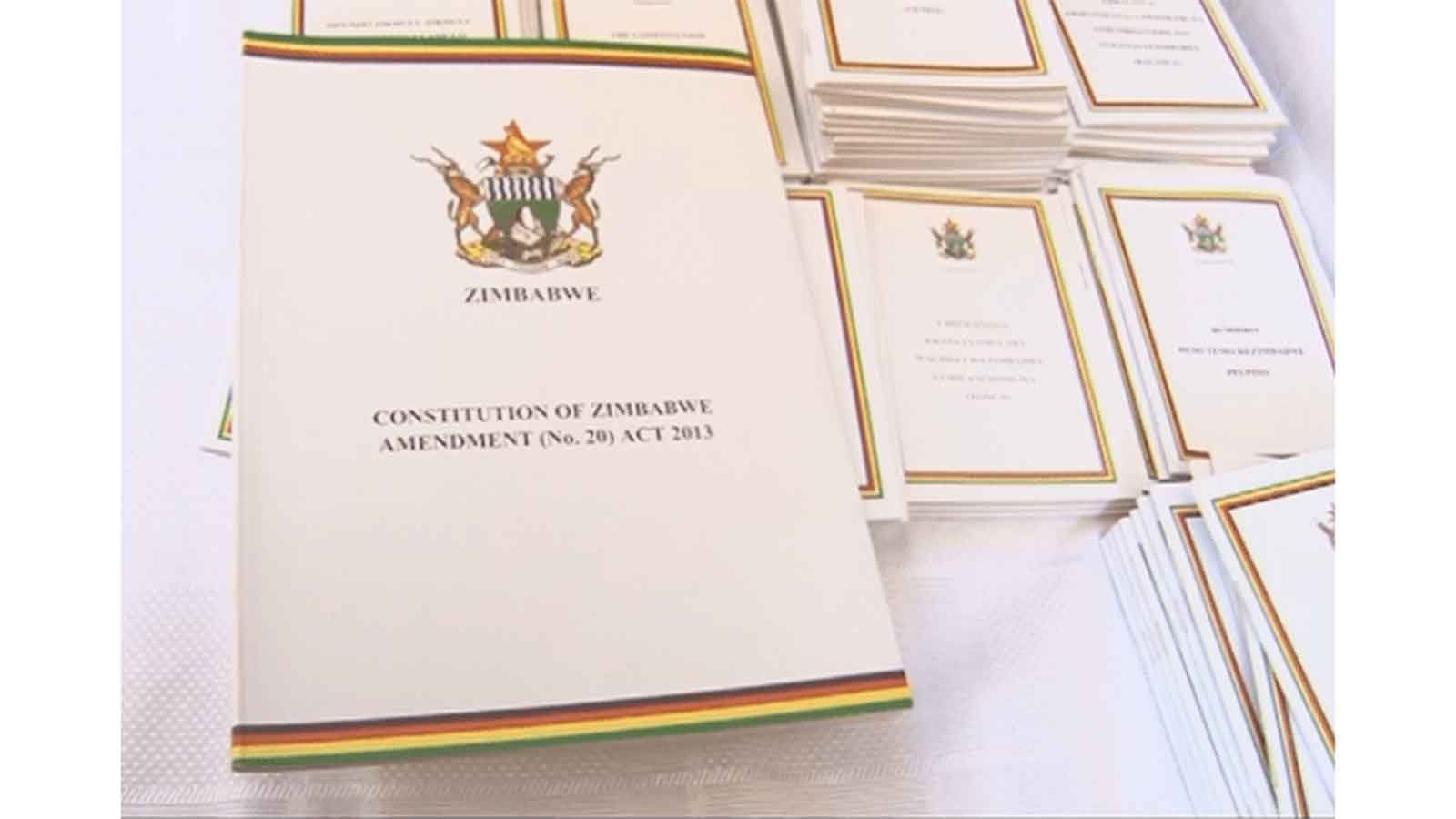
Gibson Nyikadzino-Zimpapers Politics Hub
AT the collapse of the Soviet Union in 1991, American political scientist Francis Fukuyama in his book published in 1992, The End of History and the Last Man, made startling statements.
Fukuyama, realising that the Communist/Socialist bloc had faltered said African leaders needed a new ideology that would guide the political, economic, social and cultural development of their countries and people.
For Fukuyama, his views were priming Africans to move into “modernity”.
In this nomenclature, “modernity” means embracing Western values, philosophies, standards and canons.
Since 1991, the Western ways of looking at issues proved dominant as African countries adopted such for their political, social, economic, governance and legal systems, among many others.
The adoption of Western standards and philosophies over African philosophies and systems of governance, law-making and socio-economic living proved predominantly to be incompatible with what the continent stands for.
Of importance is how the African state has been made to develop its constitution from templates prescribed from Westminster institutions. That is not modernity!
It is on this basis that Zimbabweans understand that there is no one linear dimension to interpreting the proposals being made to the Constitutional Amendment No. 3 Bill in Zimbabwe.
The majority of analyses made have hoisted and advanced the Western philosophical prism of governance and law-making, which have been pushed as the rationale positions to be followed.
By allowing such motivations to be fulfilled, independent Zimbabwe will be confirming what Fukuyama said that “Africans need a new ideology” that upholds Western standards.
In understanding this, one also needs to question or query why Western donors put in approximately US$21 million into Zimbabwe’s 2013 Constitution-making process.
Interpreting this in an Afrocentric way means that the making of the 2013 Constitution was a process that was not entirely owned by Zimbabweans, hence giving a dividend to foreigners.
Thus, proposals to the Bill seek to speak against the dependence by Zimbabweans and Africans, on Western canons of thought and their universalism.
Rather, Zimbabwe’s proposals are contributing to the multiversalist approach where knowledge systems are not given entitlement.
From an African point of view, Zimbabwe’s proposals are a continuation of what has traditionally been the governance architecture that has been at the centre since time immemorial.
The application of the African philosophy or thought pattern in the proposals being made to Zimbabwe’s constitutional amendments also need to be advanced and treated with the rationality it deserves.
Excluding the African way of looking at issues on the basis that Western philosophy has more rationality excludes the African as the being who can think for himself and relegate him to being a sub-human.
Eurocentric or Western philosophies are racist ways of trying to subjugate Africanism or African philosophy on matters of relevance.
The amendment process is primarily broadening the discussion into questioning the Westminster epistemic knowledges as articulated by Western canons of thought.
The process is one that is attempting to relive and reconstruct Zimbabwe’s society against a measure of modernity that is only equated to the Western standard of being right. This is an exercise which is fighting colonial “indirect rule”.
As such, it should be remembered that Zimbabwe’s 2013 Constitution is a form of a Westminster concept that people are now trying to deconstruct because the technicalities and structuralist form the 2013 Constitution have are strongly influenced and informed by Western common thought.
As Zimbabweans, there is need to be wary of the epistemic dangers that come or are contracted with imbibing Western thoughts and echo such narratives.
In the past, a communal spirit that characterised how people chose their leaders also has to be revisited and curated to befit the context of Zimbabwe or Africa in the contemporary times.
It is an Afrocentric communal approach to consult people on how they want to be governed. It was the same then, and the same now as the Parliament of Zimbabwe makes consultation and feedback meetings with the people.
It is progress for Zimbabweans to have leadership structures that are tailored to the local culture and resonating with a deep connection between their historical and ancestral beliefs in the conceptualisation of what they want as political power.
This conceptualisation should be influenced by the local people, as being led by Parliament, for they are the ones who have the clear mandate to distinguish between the secular and the sacred; the profane and the pious; and the institutionalisation of power in Zimbabwe.
Zimbabweans are expressing their distinct brand of governance that is fused with indigenous values and traditions with elements that give prominence to the state in the economy in their quest for political, economic, social, and cultural transformation.
These are the ideas and values that can also shape the indigenous political system and institutions.
A trajectory contrary to what is being proposed can also mean that there are remnants among the indigenous people who want to continue seeing the image of Africa and Africans that was constructed by Europeans.
Zimbabweans should resist and refuse to be victims of universalism and the provincialisation of knowledges that are in the making of their constitution because imperialism and neo-imperialism are armed bandits whose knowledge systems thrive to disarm what the Global South has.
In the end, knowledge from the Global South is regarded as nothing, but a wasteland.
Universalism is one dimensional while multiversalism, which the Constitutional Amendment No. 3 Bill is challenging people to think through, is the advocacy of using alternative methodologies for self-governance.
For everything that matters to Westminster, there is a pregnant alternative that is relevant for locals.



