Zvamaida Murwira-Senior Reporter
CABINET has reviewed the blanket Zimbabwe School Examinations Council fees subsidy, which was introduced in 2020, but will continue to provide it to disadvantaged pupils, leaving out those from households with the financial capacity to pay.
The exam subsidy will continue to be provided to pupils in rural primary and secondary schools, satellite schools, and those under the Basic Education Assistance Module.
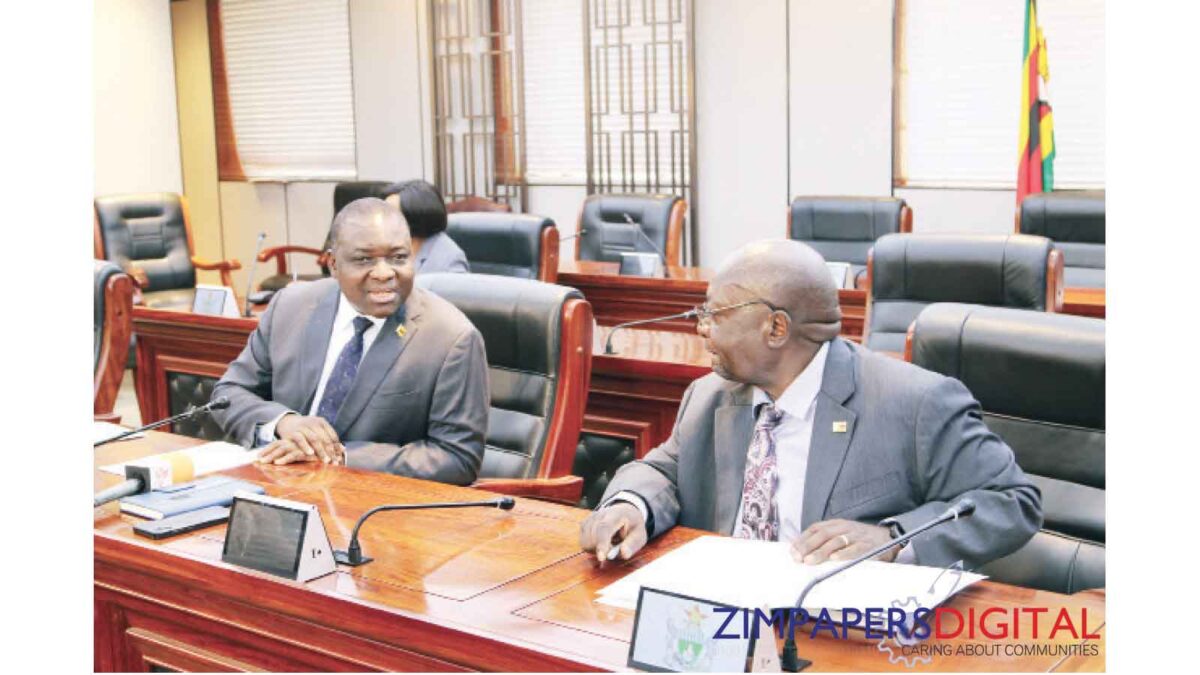
This was said by Information, Publicity and Broadcasting Services Minister Dr Zhemu Soda while addressing the post-Cabinet briefing held in Harare yesterday.
Dr Soda said Cabinet considered and approved the review of the Zimbabwe School Examinations Council Examination Fee Subsidy Framework and Examination Finance Model, which was presented by Finance Minister Professor Mthuli Ncube, as Chairman of the Cabinet Committee on National Development Planning.
He said the Government had, over the years, consistently demonstrated its commitment to promoting equitable access to education and mitigating socio-economic challenges faced by households through the provision of examination fee subsidies for pupils sitting national examinations administered by Zimsec.
“The subsidy was introduced in 2020, on a cost-sharing arrangement comprising 53 percent Government support and 47 percent parental contribution, which was subsequently raised to 55 percent for Government, while parental contribution was reduced to 45 percent in 2021. However, Government notes that the current universal examination fee subsidy does not adequately distinguish between vulnerable pupils who genuinely deserve subsidy support and those pupils whose households have the financial capacity to pay examination fees independently,” said Prof Ncube.
“The programme has also become increasingly unsustainable, given prevailing fiscal constraints and competing national priorities for Government, hence the imperative to review the current model and safeguard the integrity, security and continuity of Zimbabwe’s national examinations system that is financially sustainable.”
Dr Soda said under the reviewed model, the subsidy will continue to apply for rural, satellite schools and those under Beam which will continue to run until 2028.
Responding to questions from journalists, Prof Ncube said while Covid ended four years ago, Government remained magnanimous and retained the subsidy to cushion parents.
“We waited. We thought that naturally this is benefiting our citizens but we can’t wait forever because Covid was not here forever as well because this was done as a Covid response. So we have taken time as Government and we feel that now time is right for us to streamline the subsidy,” said Prof Ncube.
“We will not rush to end it for everybody. We have said over the next 12 months we should still support a subsidy arrangement for the P3 and S3 schools. This is the primary secondary school in the rural areas as well as the secondary schools including the Beam pupils and schools.”
He said Beam pupils will continue to be supported.
“This is right because these are the really deserving pupils or students. But even with Beam we are going through an audit at the moment. In some areas the bulk of those who are benefiting from this basic educational system module, do not in fact deserve this support at all.
“They are the wrong beneficiaries. So I am undertaking an audit which will be completed soon so that we streamline and then begin to support the really deserving cases,” said Prof Ncube.