Online Reporter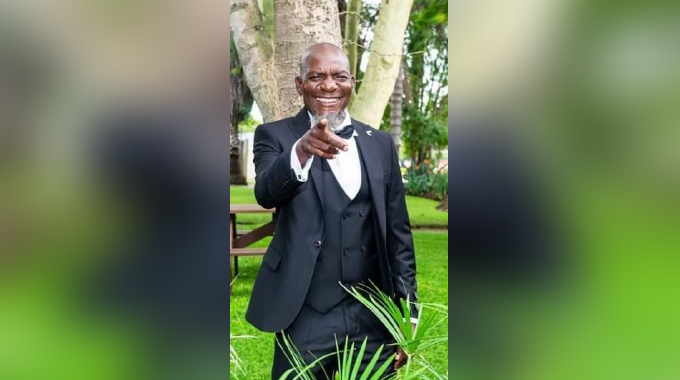
Garakai Mazara
WHEN he was born on January 13, 1956, his father thought it better to christen him Nicholas Zakaria.
Roughly three decades later, his music fans thought otherwise.
Nicholas Zakaria was not befitting, was not enough. They gave him the name Senior Lecturer.
At the time of his second christening, Zimbabwe had only one university. And being a senior lecturer at that institution was the height of academic achievement, was the embodiment of an academic journey defined and mastered.
But Nicholas Zakaria had perfected the art of lecturing, not in academic halls, but in musical halls. In the halls of life. After all, life has the most gruelling semesters.
Never mind that aspect of life called music. That was one half of his fans.
The other half thought it better to call him Madzibaba.
Maybe the goatie beard and bald head might have misled many to conclude that the name might have been inspired by those characteristics, those looks.
But Leonard Zhakata, in paying tribute to Zakaria, gave us a glimpse of why the sungura maestro was so named: “Go well, munhu waMwari. You played your part; you gave your all. May you be received in the place you always hoped for.

Munhu waMwari, put loosely, means God’s person. And you are not described as God’s person unless you act and behave like a messenger of the Holy Spirit.
But it is the Senior Lecturer accolade that should be intriguing.
Never mind the noise that is being produced today and passed off as music, Zakaria’s musical journey, and his subsequent influence, not only on sungura, but across the spectrum that is defined as local music, has to be traced back to the late 70s, when he became noticeable on the entertainment landscape.
It was very rare in those days, as much as it is equally rare today, to announce your arrival, your presence, with a musical hit.
One had to go through the trenches and for Zakaria, those trenches were mines and farms.
That he was of Malawian extraction could be another factor that drew him towards those communities.
Then Khiama Boys happened.
Shepherd Chinyani, another musical veteran that our collective national memory has since conspired to forget, easily remembers how Khiama became an independent outfit.
It was an unfortunate tyre puncture on one road trip that saw Nicholas and his crew leave — disgruntled would be the correct adjective — Chinyani and his Vhuka Boys in the middle of the road. Literally and figuratively.
That was 1986.
Khiama Boys had been founded before, but as narrated by Chinyani, they were tag boys. They used to be paid by Chinyani as guest artistes.
Feeling that they were being given a raw deal, they decided to try their fortunes.
Clearly a bomb waiting to explode on its own, Khiama was a mixture of raw talent, as the unfolding years revealed.
Made up of Nicholas Zakaria, Cephas Karushanga, Levison Chakanyuka, Tineyi Chikupo, Alick Macheso, System
Tazvida and Margaret Gweshe, it was only to be a question of when and not if, the group was to break up.
But that was not before they released the Karushanga-written Mabhauwa.
The strength of a song lies in its undying, unending, taste.
Mabhauwa is as sweet today as it was when it ruled the roost across radio stations, beerhalls, parties and charts in 1988. System Tazvida provided the vocals.
Gentle reader, this is the small part in trying to explain how the Senior Lecturer came to be called so.
The long and short of that explanation is to mention that most musicians of that era passed through Zakaria’s hands.
With nothing succeeding like success, a splinter group was to be formed, thanks to the prolific success of Mabhauwa.
Tazvida was to leave and form his outfit, Mabhauwa Express, which later morphed into Chazezesa Challengers.
The success and impact of that group is not the focus of the present discussion.
Suffice to say that Zakaria continued with Khiama Boys, Alick Macheso included. And, oh yes, Margaret Gweshe. The reason for Margaret hanging around?
Her heart and Nicholas’ had found one rhythm, a heartbeat so strong that Nicholas, in his many interviews, always acknowledged that his longevity in the industry, which saw many of his peers die, especially during the years when HIV and Aids were anathema, is purely due to them finding love on stage. And not within the crowds that followed them.
Then there is the strong urban legend: Things were not going according to plan, the entertainment landscape can be very punishing and Zakaria locked up the band’s instruments and decided to join the haulage industry as a driver.
Without consulting his band members!
That decision was to spawn off another great outfit: Alick Macheso’s Orchestra Mberikwazvo.
The pattern why he is revered as a Senior Lecturer must be emerging now.
Another strong urban legend has been the relationship between Madzibaba and Macheso, that they were sekuru and muzukuru, like uncle and nephew.
That misconception must have stemmed from the grooming days. Various interactions over the years never helped to reveal the existence of such a relationship.
By the time of going to print, the jury was still sitting and it might be sitting for a foreseeable time to come: Which song defined Nicholas Zakaria?
This will probably go down to taste, to values, to occasion, to personal preference.
Whereas some will wax lyrical over Mabvi Nemagokora, others will find Tsamba exalting, yet others will find numerous of his gospel songs engaging.
Those with bucket loads of nostalgia will settle for his various Chichewa songs.
A humble human being, one not used to singing his own songs, not used to chest-beating, Nicholas Zakaria can easily be used as a testimony to define the mismatch that is the Zimbabwean arts landscape: that financial success in this country is not proportionate to popularity.
For, if popularity did define financial contentment and fulfilment, then Madzibaba would have gone to rest with birds singing for him in the leafy suburbs.
Or that he would not, as his earthly days were winding up, be begging for alms to survive.
As fate would have it, a month short of his 70th birthday, Madzibaba, the Senior Lecturer they christened Nicholas Zakaria at birth, has gone to fly with the angels and what a Zimbabwean orchestra it should be in the heavens!
Garakai Mazara is the former Entertainment Editor of The Sunday Mail.