Zimpapers Politics Hub
T
HE African National Congress (ANC) enters South Africa’s municipal coalition negotiations bruised, yet far from defeated.
While its vote share fell sharply and rivals captured key urban strongholds in the November 4 Local Government elections, the ANC remains the country’s largest party, retaining the broadest national electoral footprint and more council seats than any competitor. This numerical edge provides crucial leverage as parties bargain over mayors, speakers and governing programmes.
The Numbers That Still Matter
According to the Electoral Commission’s official declaration, the ANC secured 30.89 percent of the national vote and 3 164 council seats. The Democratic Alliance (DA) followed with 24.60 percent and 1 527 seats, ahead of the uMkhonto weSizwe (MK) Party on 9.61 percent (701 seats), the Economic Freedom Fighters (EFF) on 6.25 percent (505 seats) and ActionSA on 5.68 percent (219 seats).
The decline from the 2021 local elections—when the ANC won 45.59 percent—is a severe warning from voters.
However, framing the outcome as the ANC’s political extinction ignores the arithmetic. No rival has displaced it nationally, while opposition support remains fractured across parties with competing constituencies, ideologies and coalition demands.
The Electoral Commission confirmed that the ANC won outright control in 51 municipalities and emerged as the leading party in 120. By comparison, the DA won outright control in 12 and led in 29; the Inkatha Freedom Party (IFP) controlled five and led in 19, while MK controlled three and led in 18. Consequently, the ANC enters talks with a broader municipal presence than any rival.
A Fragmented Opposition
The polls produced 127 hung councils where no party secured an outright majority, leaving only 72 municipalities under single-party control. While the ANC can no longer govern alone in many areas, its rivals cannot easily assemble a coherent national alternative simply by celebrating its losses.
The DA’s second-place finish is significant, yet geographically uneven. Although it won Johannesburg with roughly 35 percent against the ANC’s 20 percent and retained dominance in Cape Town, metropolitan gains do not translate into national primacy.
In Johannesburg, ActionSA’s 16 percent share gives Herman Mashaba’s party substantial kingmaker leverage, complicating any automatic DA claim to the mayoralty.
The ANC’s Negotiating Hand
The ANC’s advantage lies not in dictating terms everywhere, but in having multiple pathways to power depending on local arithmetic and political compatibility. Deputy secretary-general Nomvula Mokonyane stated that the party is open to engaging any organisation committed to stability and shared manifesto priorities.
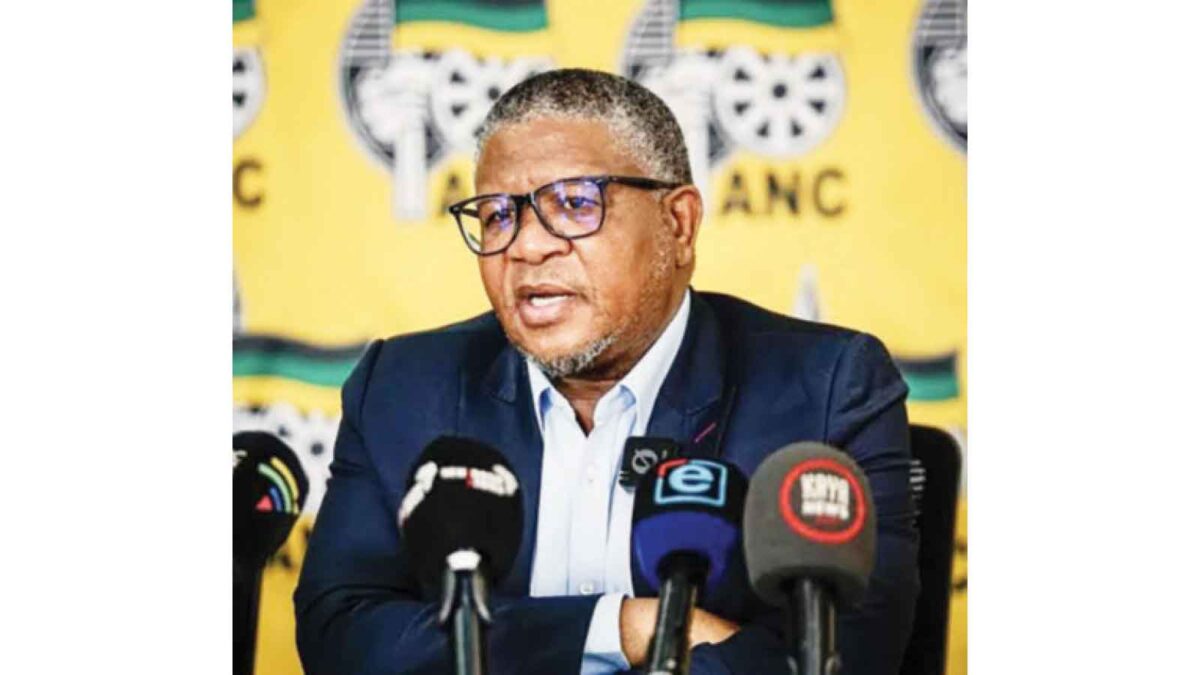
Secretary-general Fikile Mbalula insisted the ANC will neither rush into coalitions nor beg for mayoral posts, describing the result as “catastrophic” and acknowledging the urgent need to put the party’s house in order.
Crucially, negotiating leverage cannot excuse poor governance. The ANC must confront why voters punished it over unreliable water and electricity, deteriorating roads, corruption and failing municipal administration. President Cyril Ramaphosa has urged parties to negotiate with humility, warning against letting political score-settling overshadow public service.
The Rival Parties’ Red Lines
Competing demands among opposition parties further complicate coalition talks:
• Democratic Alliance: Western Cape leader Geordin Hill-Lewis argued that the largest party in a coalition should naturally lead it. Meanwhile, Helen Zille favours a smaller partnership with the ANC or ActionSA rather than relying on the EFF—an approach complicated in Johannesburg by ActionSA’s refusal to back Zille for mayor.
• MK Party: Having won eThekwini with just over 38 percent, Jacob Zuma’s party holds a strong local mandate. While Zuma expressed openness to working with other parties to improve the country, acting deputy secretary-general Sifiso Mahlangu noted that MK will prioritise ideologically aligned partners, particularly on land and economic transformation, limiting the ANC’s room to manoeuvre in the metro.
• Economic Freedom Fighters: Leader Julius Malema called on the ANC, MK, EFF and the South African Communist Party to reunite progressive forces, but demanded President Ramaphosa’s removal as a precondition. The EFF also stated it would consider service-delivery coalitions but refuse to back budgets it deems racist.
A Mandate That Must Be Earned
The ANC’s strongest card is organisational and numerical, not sentimental. Yet being the largest single party is not the same as holding a majority: nearly seven in ten voters backed other parties, reflecting deep dissatisfaction with local governance.
Liberation credentials cannot fix a burst water pipe or restore electricity. To govern effectively, the ANC’s coalition strategy must be anchored in transparent agreements, measurable service-delivery targets, clean procurement, fiscal discipline and accountability for underperforming councillors.
South Africa’s democratic maturity will ultimately be tested by whether these talks yield stable councils rather than revolving-door mayoralties. The ANC enters this coalition era as a diminished giant, still ahead of every competitor; its challenge now is to convert that first-place finish into responsible leadership.