Herald Reporter
GOVERNMENT has deployed law enforcement agencies to ensure compliance with mining standards and environmental regulations as it enforces the ban on alluvial mining.
Alluvial and riverbed mining is banned across the country under Statutory Instrument 188 of 2024, announced in August 2024, to curb river siltation, water pollution and ecosystem damage.
The regulations prohibit alluvial mining and prospecting in or along rivers and public streams, and revoke prior permits, licences, special grants and environmental impact approvals.
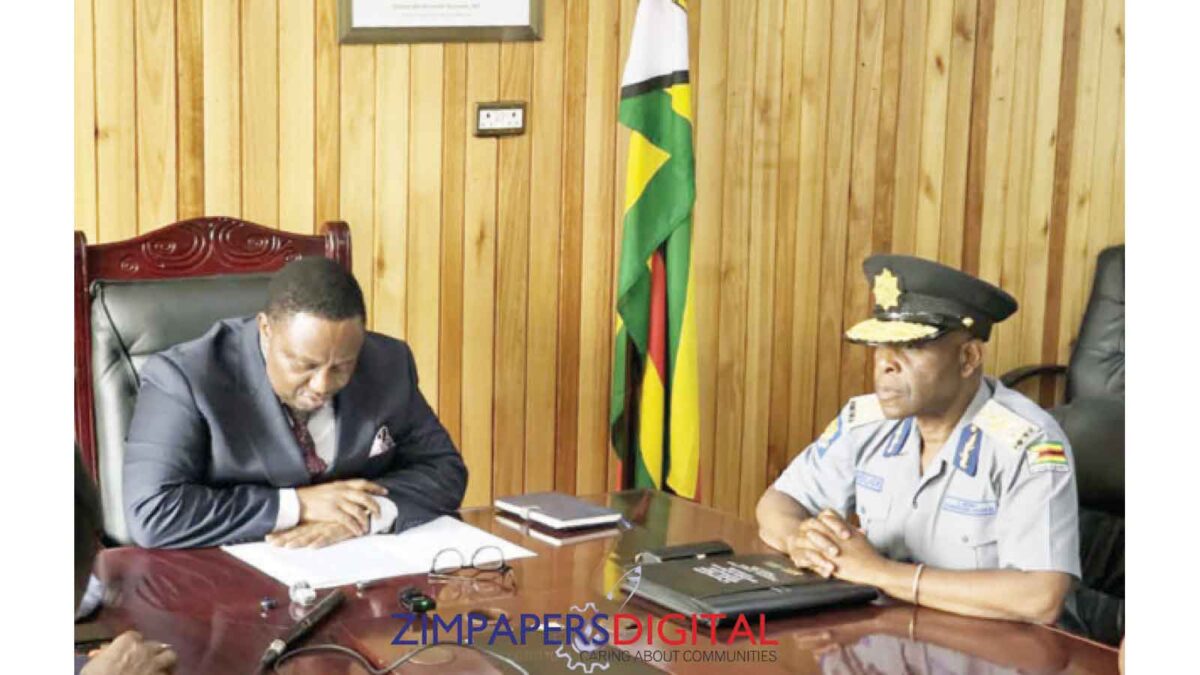
Addressing journalists in Harare yesterday, Home Affairs and Cultural Heritage Minister Kazembe Kazembe said Government enacted SI 188 of 2024, which bans alluvial mining.
He said Government further promulgated SI 91 of 2026 to provide for the rehabilitation of 15 degraded river ecosystems.
“Additionally, SI 92 of 2026 mandates the rehabilitation of degraded sites through the polluter pays principle. SI 91 of 2026 was subsequently extended by SI 106 of 2026 and SI 173 of 2026. SI 173 of 2026 extended the rehabilitation deadline to 28 January 2027. SI 91 of 2026, as extended and as read with SI 188 of 2024, mandates only 67 companies to rehabilitate the approved degraded sections of the 15 river ecosystems in Zimbabwe,” Minister Kazembe said.
He said the Inter-Ministerial Committee on the Rehabilitation of Degraded River Ecosystems had noted with concern that companies contracted to rehabilitate the degraded rivers were not complying with the standards stipulated in SI 91 of 2026.
There had also been an increase in illegal activities, including the falsification of coordinates by contractors, the illegal occupation of undesignated river sections, alluvial and other mining activities, sub-contracting and name-dropping, together with a general increase in environmental degradation.
“Government directs all contracted companies to strictly comply with the requirements set out in SI 188 of 2024 and SI 91 of 2026. Government also notes the rampant non-compliance with mining standards and environmental regulations throughout the country.
“Government has deployed law enforcement agencies to ensure compliance with mining standards and environmental regulations,” Minister Kazembe said.
The development comes after Government said earlier this year that it was set to declare a State of Disaster on some of Zimbabwe’s major rivers as illegal alluvial mining, deforestation and environmental degradation severely threaten water security and agricultural production.
Agriculture, Mechanisation and Water Development Minister Dr Anxious Masuka made the announcement during a wheat production interface with farmers in Glendale, Mazowe, warning that the country’s key water sources were under unprecedented strain.
The planned declaration was to allow Government to mobilise emergency resources and establish specialised rehabilitation teams to restore damaged rivers and stop further environmental destruction.
“The President will declare a State of Disaster on damaged rivers, including the Mazowe and Murove rivers. This will allow us to establish teams to rehabilitate the rivers and stop further destruction,” Minister Masuka said.
Under a State of Disaster, authorities can accelerate environmental restoration programmes, deploy law enforcement agencies, coordinate emergency interventions and channel additional funding towards rehabilitation works such as dredging, reforestation and riverbank stabilisation.
In addition, Government was drafting new regulations under the Civil Protection Act to strengthen environmental protection measures and tighten penalties for offenders.
Under the proposed laws, individuals and syndicates involved in illegal riverbed mining would face harsher and more deterrent punishment.
“The second legislation will ensure perpetrators are held accountable and rivers are reclaimed. If they cannot pay for rehabilitation, their equipment will be confiscated by Government,” he said.
Minister Masuka urged communities to stop engaging in riverbed mining and deforestation and to report offenders through local Joint Operations Command (JOC) structures.
“Communities need to report cases of alluvial mining first to the local JOC and up to the national JOC,” he said.
Reporting such activities is considered critical because illegal mining operations are often carried out in remote areas where authorities may not have a permanent presence.
Government believes stronger community involvement will improve monitoring and help curb environmental destruction before irreversible damage occurs.
Minister Masuka said rampant riverbed mining, deforestation and siltation are degrading major water bodies, with some dams now holding critically low water levels.
Mazowe Dam, a key water source for irrigation, is currently at just 14,2 percent capacity, raising concern over the viability of the winter wheat programme, particularly in Mashonaland Central Province.
Government has already tightened regulations governing mining activities near rivers through Statutory Instrument 188 of 2024, the Environmental Management (Control of Alluvial Mining) Amendment Regulations, which prohibits alluvial mining.