Online Reporter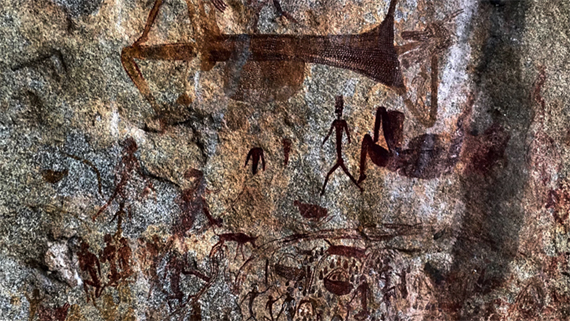
Lloyd Makonya
Correspondent
ZIMBABWE’S tourism potential does not lie only in its iconic wildlife destinations, scenic views or famous monuments, it is also deeply embedded in the country’s ancient landscapes, where history was first recorded, not in books, but on stone.
Across the nation, rock art sites stand as enduring testaments to early human creativity, belief system and interaction with the environment. Among these, Diana’s Vow Rock Art Site in Makoni District emerges as a powerful example of how heritage conservation and tourism development can and should, reinforce each other.
Hidden in the granite hills near Rusape, Diana’s Vow is one of Zimbabwe’s most remarkable late Stone Age rock art sites.
The paintings rendered in natural ochres by San hunter-gatherer communities more than two millennia ago depict animals, human figures and ritual scenes that speak to a sophisticated spiritual and social worldview.
These images are, not decorative remnants of a forgotten past, but are historical records, cultural expressions and spiritual symbols that continue to resonate with present-day communities.
What elevates Diana’s Vow beyond an archaeological attraction is its status as a living cultural landscape.
Long before the site acquired its colonial name, the surrounding hills were regarded as sacred by local communities, associated with ancestral presence and ritual significance. That spiritual connection has not disappeared. Instead, it coexists with modern heritage management under the stewardship of the National Museums and Monuments of Zimbabwe (NMMZ), demonstrating how scientific conservation and indigenous values can complement rather than contradict each other.
From a tourism development perspective, sites like Diana’s Vow represent a largely underutilised asset.
Cultural and heritage tourism is one of the fastest-growing segments globally, attracting visitors who seek authentic, meaningful experiences rooted in history and identity. Rock art sites offer exactly that. They provide immersive narratives, scenic environments and educational value, positioning destinations like Makoni District as more than transit points, but as cultural destinations in their own right.
When properly developed and responsibly marketed, rock art tourism can stimulate local economies through guide services, accommodation, transport, craft markets and related enterprises.
Visitors drawn to Diana’s Vow can also be encouraged to explore nearby attractions such as Rusape Dam, liberation heritage sites and dry-stone monuments, creating a broader heritage circuit that extends visitor stay and spending within the region. This integrated approach aligns heritage preservation with tangible economic benefits, making conservation relevant to everyday livelihoods.
However, tourism growth without conservation is self-defeating. Rock art is exceptionally fragile. Vandalism, uncontrolled access, environmental exposure and uninformed visitation can cause irreversible damage. Once destroyed, these paintings cannot be restored or replicated. This reality underscores the critical role of institutions like NMMZ, whose mandate includes site protection, visitor management, research and public education.
Sustainable heritage tourism depends on active community participation. Communities living near sites such as Diana’s Vow are not obstacles to conservation, they are its most valuable partners. When communities are engaged as guides, custodians and beneficiaries of tourism revenue, they gain a vested interest in protecting heritage resources.
Collaboration between communities and NMMZ fosters respect for sacred values, strengthens site security and ensures that tourism development does not erode cultural meaning.
In a broader sense, rock art sites contribute to national branding. They affirm Zimbabwe’s place in global human history and reinforce narratives of cultural depth that predate colonial encounters. Promoting sites like Diana’s Vow enhances Zimbabwe’s image as a destination of knowledge, spirituality and authenticity, complementing mainstream tourism offerings and diversifying the country’s tourism portfolio.
Ultimately, the preservation of rock art is not simply about safeguarding ancient paintings, it is about protecting identity, memory and opportunity. Diana’s Vow reminds us that heritage, when responsibly managed, can be both a cultural anchor and an economic catalyst. As Zimbabwe looks to expand its tourism horizons, investing in the conservation and promotion of rock art sites through strong institutional leadership and meaningful community partnerships is not just desirable, but essential.
In protecting these silent galleries of stone, Zimbabwe is not only honouring its past, but laying a sustainable foundation for cultural tourism and community development well into the future.