Blessings Chidakwa-Senior Reporter
FIRST LADY Dr Auxillia Mnangagwa, is making global waves through her Angel of Hope Foundation, catching the eye of the UK-based The Harmony Project, which is eager to amplify the reach of her visionary initiatives.
UK-based The Harmony Project, inspired by His Majesty King Charles III, focuses mainly on school-based programmes in the United Kingdom and other European countries and is committed to promoting educational development and community empowerment.
The organisation’s director, Mr Richard Dunne, who was in the country for a week-long visit, said his trip was aimed at gaining first-hand appreciation of the Angel of Hope Foundation’s programmes, as well as understanding the country’s heritage-based Education 5.0 philosophy, while exploring possible areas of cooperation.
Education 5.0 is a five-pillar framework teaching, research, community service, innovation and industrialisation designed to shift Zimbabwe from theory-based learning to a heritage-based, production-driven education system.

First Lady Dr Auxillia Mnangagwa and UK-based Harmony Projects director Richard Dunne (right) follow proceedings during the Nhanga/Gota programme at Louis Mountbatten School in Harare.
During his visit to Zimbabwe, Mr Dunne was taken on a tour of the castle at Leopard Rock Hotel in Vumba, a site steeped in royal history that hosted Queen Elizabeth II and Princess Margaret in 1953.
He took time to admire photographs from Princess Diana’s 1993 visit, offering a glimpse into the hotel’s enduring royal connections.
He also visited Prince Edward High School, where he saw majestic trees planted by Prince Edward in 1925, and later by Queen Elizabeth II, which still stand as living reminders of the country’s rich historical ties.
Mr Dunne said he would relay Zimbabwe’s message of goodwill to His Majesty King Charles III, as the two countries continue to strengthen engagement founded on mutual respect and shared aspirations.
During his stay, Mr Dunne also held discussions with officials at the United Kingdom Embassy in Harare, where there was shared appreciation for the warm relations between Harare and London and the growing opportunities for collaboration in areas that directly benefit communities.
To begin his engagements, Mr Dunne paid courtesy calls on President Mnangagwa and the First Lady, commending Zimbabwe’s wide-ranging initiatives that continue to uplift communities and bring lasting transformation.
To gain a deeper appreciation of some of the programmes spearheaded by the First Lady, the Harmony Project Director attended the Gota/Nhanga/Ixhiba programme, where he received a warm and symbolic traditional welcome. The Nhanga and Gota sessions afforded him the platform to understand how indigenous knowledge systems are used to transmit values, discipline, and life skills to younger generations.
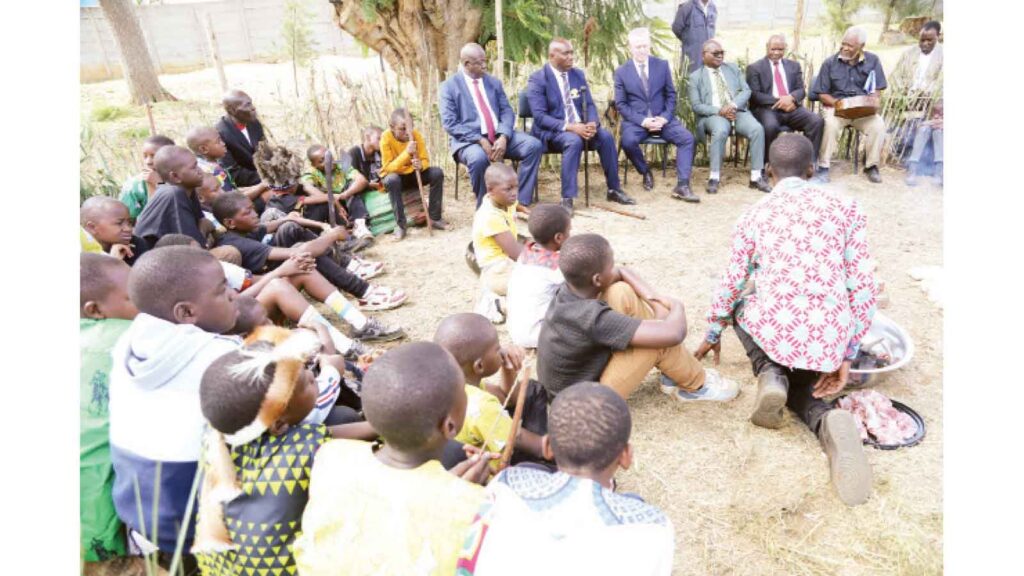
UK-based Harmony Projects director Richard Dunne together with Primary and Secondary Education Minister Torerayi Moyo attend the Nhanga/Gota programme alongside traditional chiefs and learners at Louis Mountbatten School in Harare.
He was taken through cultural processes in the Gota, where he participated in activities including goat slaughtering, allowing him to appreciate the rich Zimbabwean customs and heritage.
In the Nhanga, Mr Dunne joined others who were seated on the floor, embracing Zimbabwe’s vibrant cultural traditions, where he also witnessed traditional games such as Nhodo and Pada, gaining deeper understanding of indigenous games and their role in shaping cultural identity.
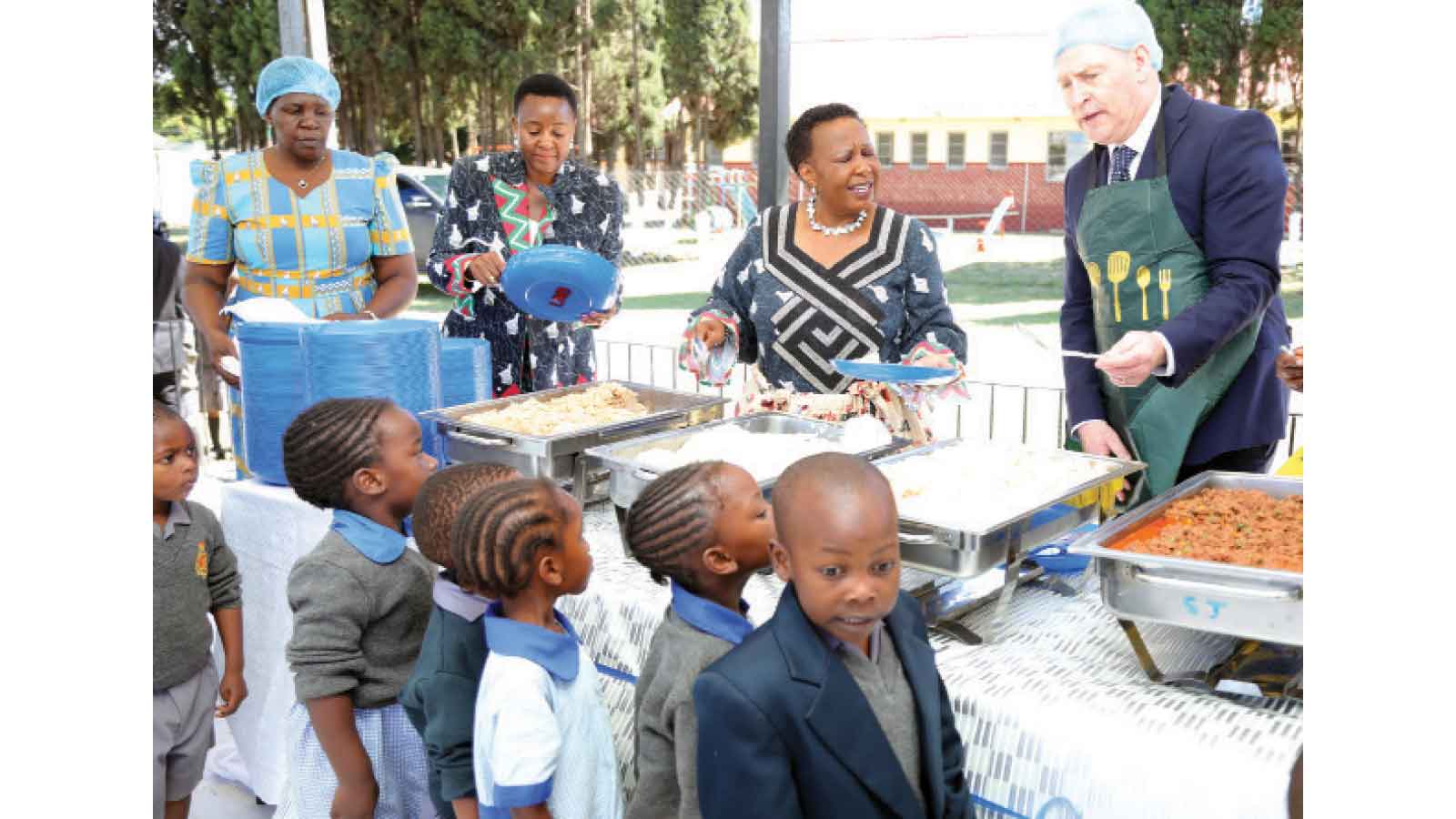
Mr Dunne also participated in the National School Feeding Programme and tree-planting initiatives under Mother Zimbabwe, meant to improve child nutrition, encourage school participation, and promote environmental sustainability.
The Culture and Heritage Ambassador, the First Lady, was delighted by Mr Dunne’s visit, saying his presence reflects the strong and growing relations between Zimbabwe and the UK, grounded in shared values of education, cultural representation, community development, and environmental stewardship.
“This visit comes at a time when collaboration and dialogue are more important than ever. It provides a valuable platform for mutual learning, exchange of ideas, and the strengthening of partnerships that can positively transform the lives of our people, particularly our young learners.”
“By engaging directly with our institutions and communities, you contribute to a meaningful process of knowledge-sharing that enriches both Zimbabwe and other nations, including the United Kingdom, while fostering lasting bonds of understanding and cooperation,” she said.
The First Lady said Zimbabwe was pleased to witness the Harmony Project carrying forward His Majesty King Charles III’s vision of global cooperation, sustainable development, and community advancement.
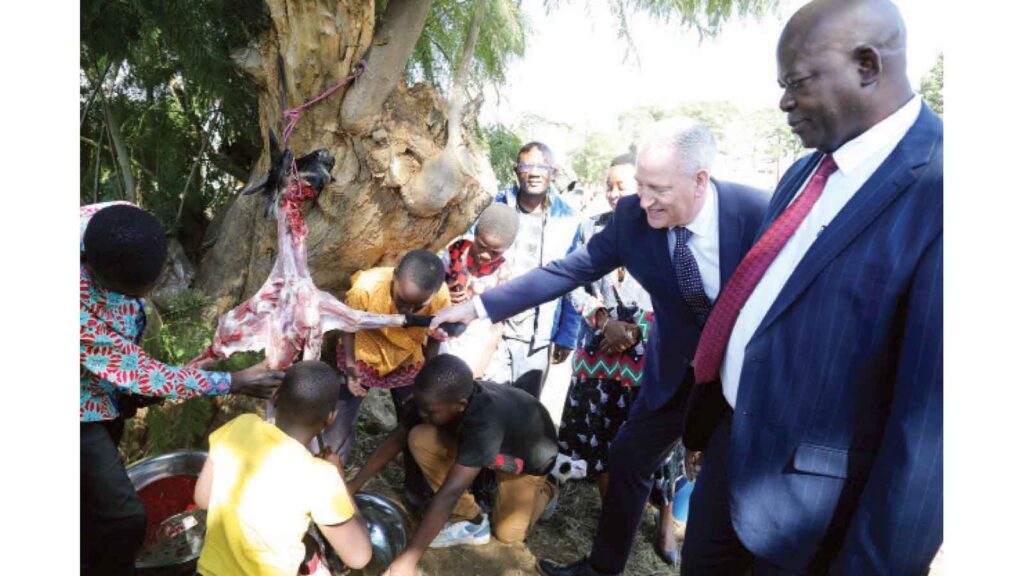
UK-based Harmony Projects director Richard Dunne joins learners in a practical session, helping skin a goat while Primary and Secondary Education Minister Torerayi Moyo observes during the Nhanga/Gota programme at Louis Mountbatten School in Harare.
Dr Mnangagwa said the engagement with Zimbabwe’s education sector offered an important opportunity to appreciate the progress the country has made in implementing the heritage-based curriculum.
“This transformative curriculum is designed to produce learners who are academically competent, innovative, and grounded in their cultural identity and values. It promotes critical thinking, problem-solving, and practical skills, while instilling a strong sense of responsibility, patriotism, and self-reliance,” she said.
“Our goal is to nurture a generation that is capable of contributing meaningfully to national development and global progress.”
Dr Mnangagwa said the heritage-based curriculum places strong emphasis on fostering harmony with the environment, within communities, and across cultural value systems, grounded in the belief that education must produce well-rounded individuals who are not only skilled and knowledgeable, but also socially responsible and environmentally conscious.
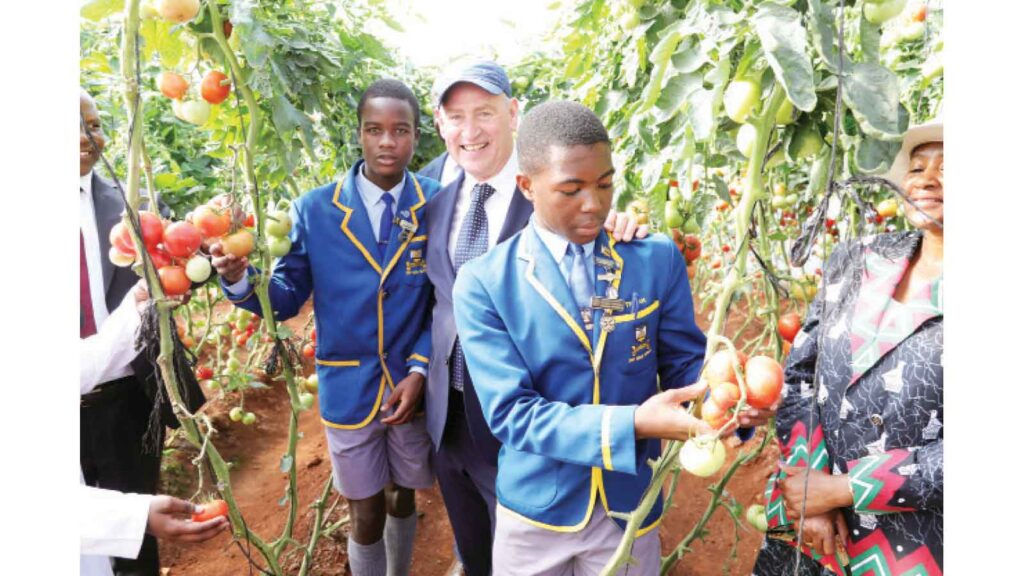
UK-based Harmony Projects director Richard Dunne with ZRP High School learners during a tour of the school tomato field in Harare.
The First Lady said the government was encouraged by the strong alignment between Zimbabwe’s educational approach and the harmony philosophy, which underscores interconnectedness, balance, and sustainability.
Dr Mnangagwa said the convergence of these shared principles presented a unique and valuable opportunity to deepen collaboration between the Angel of Hope Foundation and The Harmony Project.
“Through such cooperation, we can further integrate sustainable practices, environmental stewardship, and cultural appreciation into our education systems, thereby advancing models of learning that are both relevant and responsive to the needs of future generations, while equipping learners with the competencies required to thrive in an increasingly interconnected and sustainable world,” she said.
Mr Dunne, who said he was extremely impressed with so many things he witnessed, thanked the First Lady for the warm reception, saying he was overwhelmed by the warmth, the hospitality, and the friendship that everyone had shown him in Zimbabwe.
“All the projects that I have seen and heard about from the First Lady are wonderful. They connect very much with the work I am doing with the King’s Foundation in the UK, which is also looking at how we live in the right way, valuing our traditions, our culture, our heritage, and our health,” he said.
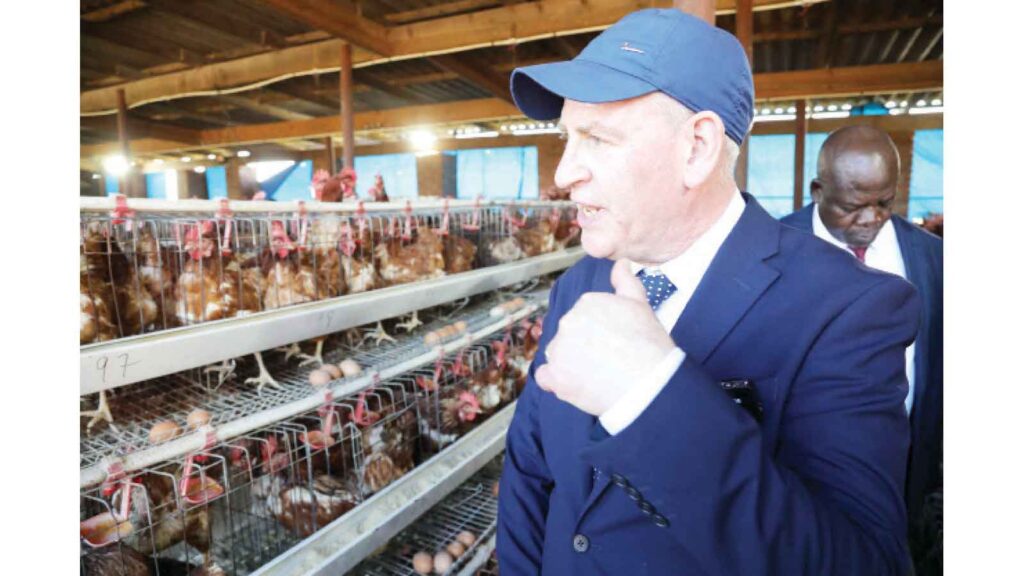
UK-based Harmony Projects director Richard Dunne takes a look at chickens at ZRP High School poultry project during a tour in Harare.
“Yes, well, when I get back, I will also share with the King’s Foundation and with His Majesty my experiences here, what I have learnt about your education and your country, and how I am very hopeful that there is an opportunity for us now to continue to build the relationship we have.”
Mr Dunne also shared about his meetings with officials of the UK embassy in Zimbabwe.
“So I have met with people from the UK Embassy, the British Embassy in Harare, and it was useful to meet with them and to learn a little bit more about their education programmes. I have seen it while I have been here, there is a very strong connection between Zimbabwe and the UK,” he said.
“While Zimbabwe isn’t currently in the Commonwealth, it may be possible and hopefully will be possible in the future for that to change. But what is very clear is that the message of your President, of your First Lady and her brilliant Angel of Hope Foundation is how we live in this healthy, harmonious way.”
Mr Dunne also visited Prince Edward School, accompanied by the Minister of Primary and Secondary Education, Honourable Torerai Moyo, where he was taken through the institution’s history with the royal family.
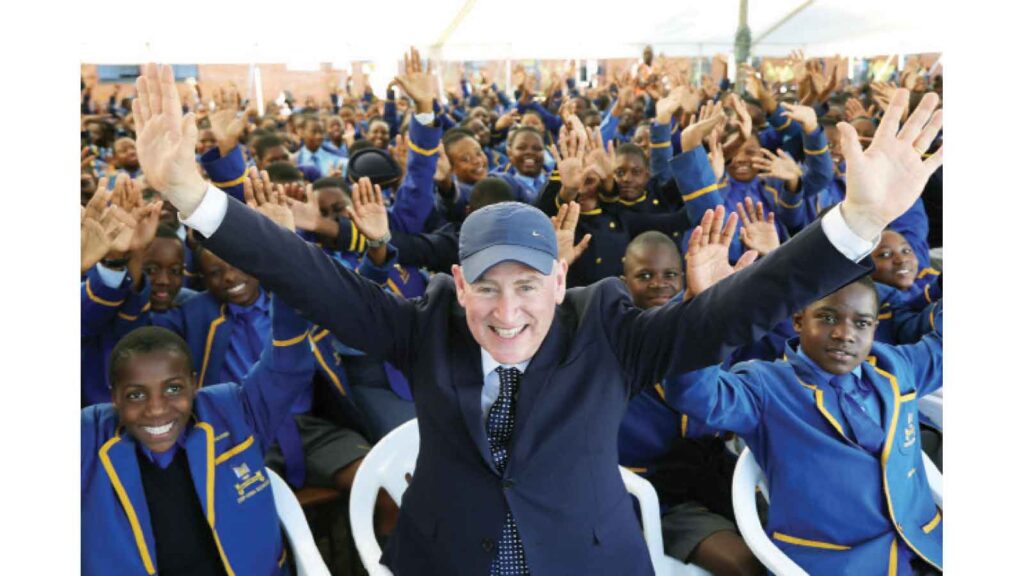
UK-based Harmony Projects director Richard Dunne enjoy a moment with ZRP High School learners during his visit in Harare.
He was shown historical landscapes, including trees planted by Prince Edward in 1925 and others planted by Queen Elizabeth II, symbolising the school’s deep-rooted heritage and enduring ties with the British royal family.
Mr Dunne commended Zimbabwe for its commitment to preserving historic trees, saying such efforts resonate with the environmental ethos championed by King Charles III through his Harmony initiatives.
Zimbabwe’s forest preservation and environmental sustainability drive is being championed by the First Lady, who is also the country’s Environment Patron.
Mr Dunne later delivered a presentation on the Harmony Project, highlighting its alignment with the transformative work being undertaken by the Angel of Hope Foundation.
The visit by Mr Dunne, Director of the Harmony Project, marks a significant step in reinforcing Zimbabwe’s standing on the global stage, as the country continues to attract international partners invested in development cooperation and humanitarian initiatives.
Mr Dunne’s tour highlighted thriving women-led enterprises benefiting from the First Lady’s transformative Agric4She programme.
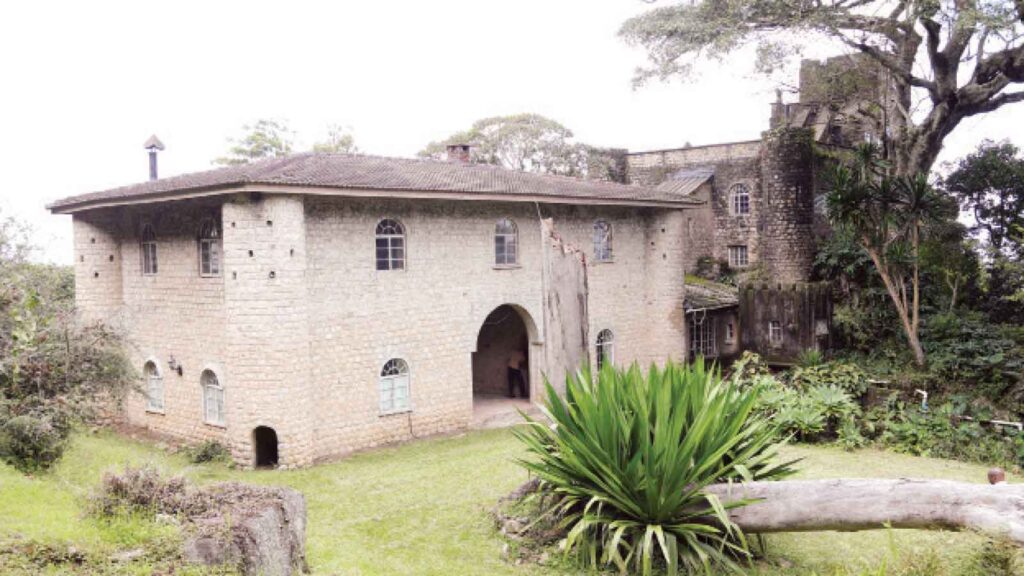
The famous castle where Queen Elizabeth stayed in 1953 at Leopard Rock Hotel in Vumba.
In Goromonzi, he visited the dairy and poultry operations of Mrs Olivia Kanosvamhira, whose farm is contributing to the national vision of achieving food self-sufficiency.
Boasting over 160 cows, the farm produces up to 50 litres of milk per cow at peak, with on-site processing enhancing value addition and competitiveness.
“We process our own products while also producing our own feed as part of the value chain,” said Mrs Kanosvamhira, reflecting the integrated approach to sustainable farming.
Deputy Minister of Lands, Agriculture, Water, Fisheries and Rural Development, Vangelis Haritatos, described such initiatives as benchmarks for sustainable agriculture and a testament to the growing role of women in the sector.
Education also took centre stage during Mr Dunne’s visit. At the Zimbabwe Republic Police High School in Hatcliffe, he engaged with learners and observed innovative projects that reduce operational costs while imparting vital skills.
“I started the week looking at your schools and your education and was really very overwhelmed by the quality of learning that your young people are growing up with.
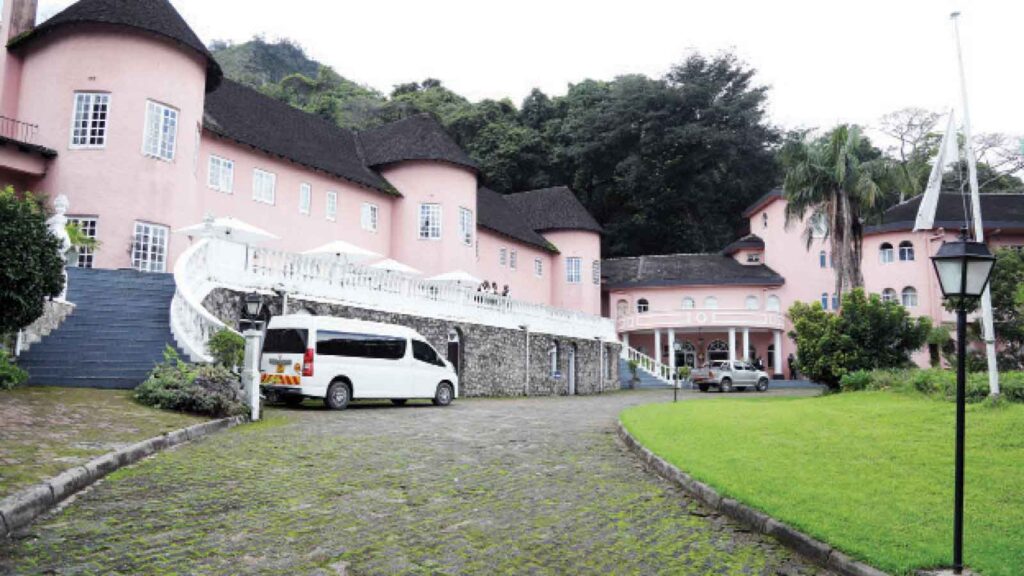
The Leopard Rock Hotel in Vumba.
“I think this new focus on a heritage-based curriculum is a lovely balance between the academic learning and the connection to place, to your country, to your identity, to your traditions. So that was really lovely to see,” he said.
ZRP Hatcliff headmaster Pastor Edmore Matatara praised the programmes for equipping students with practical knowledge, highlighting a new generation ready to support Zimbabwe’s development ambitions.
In Mashonaland West’s Nyabira, Mr Dunne toured a flourishing blueberry enterprise employing over 200 permanent and more than 500 seasonal workers.
Farm owner Mr Allister Campbell described the visit as an opportunity to showcase Zimbabwe’s agricultural potential to the world.
“I have been fascinated by your food and farming systems. These integrated models balance a vibrant economy with harmony with nature,” Mr Dunne said.
Tourism formed another key part of the itinerary. In Manicaland’s Eastern Highlands, he visited Leopard Rock Hotel in Vumba, marveling at the rich flora and fauna.
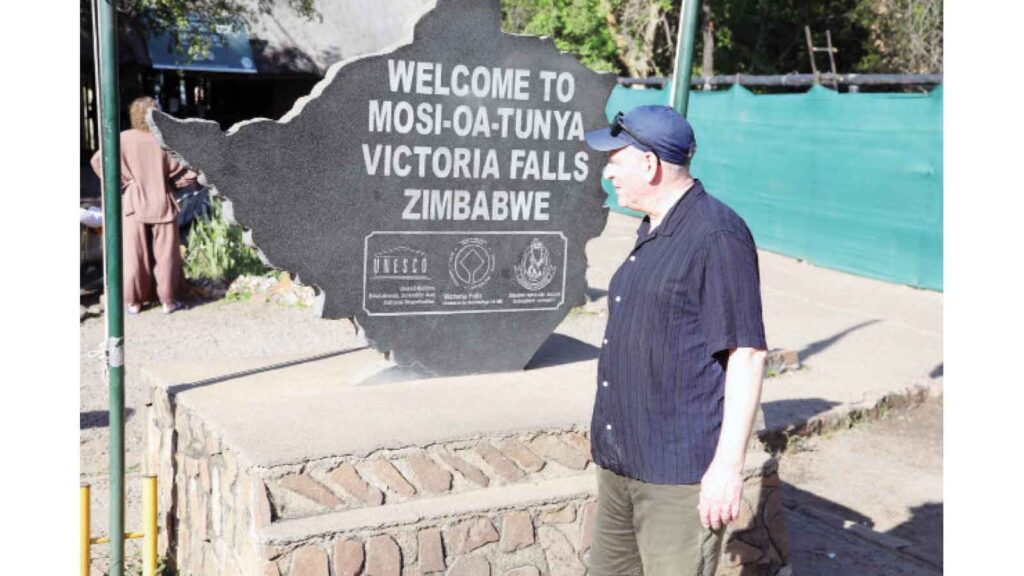
UK-based Harmony Projects director Richard Dunne in Victoria Falls for the Falls tour.
A historic castle, which once hosted Queen Elizabeth II and Princess Margaret in 1953, as well as photographs of Princess Diana’s 1993 visit, highlighted the enduring cultural and diplomatic ties between Zimbabwe and Britain.
The Garden of Remembrance offered a moment to reflect on heritage and conservation efforts.
At the world-famous Victoria Falls Rainforest, Mr Dunne experienced one of Zimbabwe’s most breath-taking natural treasures, noting the dense vegetation, towering indigenous trees, and the permanent spray of the Zambezi River.
“It is truly spectacular. Possibly the most awe-inspiring experience of my life,” he remarked.
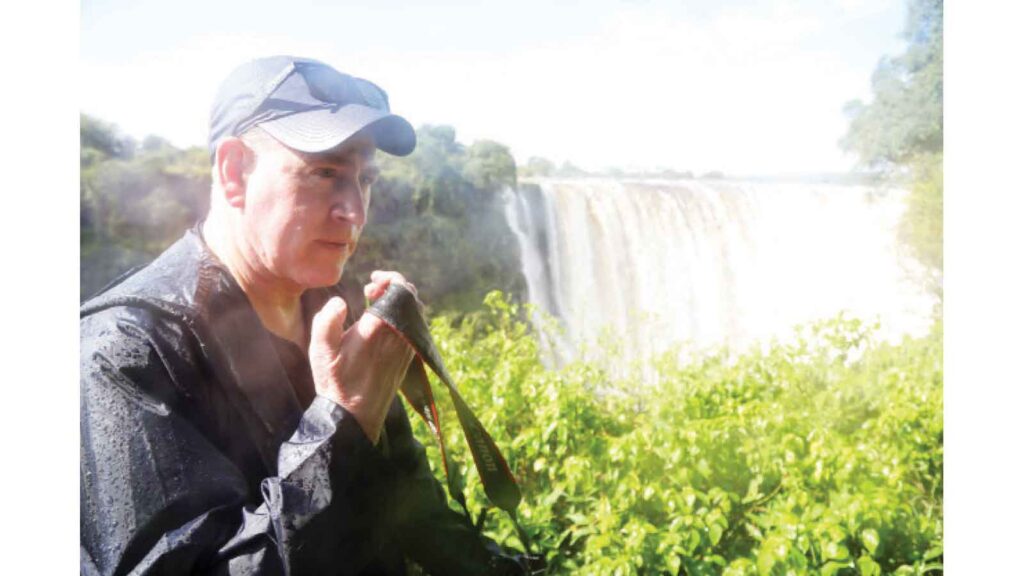
UK-based Harmony Projects director Richard Dunne admires the magnificent Victoria Falls Rainforest.
Hwange National Park further reinforced Zimbabwe’s position as a custodian of global natural heritage. Complementing the wildlife experience, a visit to the Boma Restaurant allowed Mr Dunne to enjoy local cuisine and the country’s renowned hospitality.
Boat cruises and game drives rounded off a visit he described as a “lifetime memory,” highlighting Zimbabwe’s unmatched beauty and abundant wildlife.
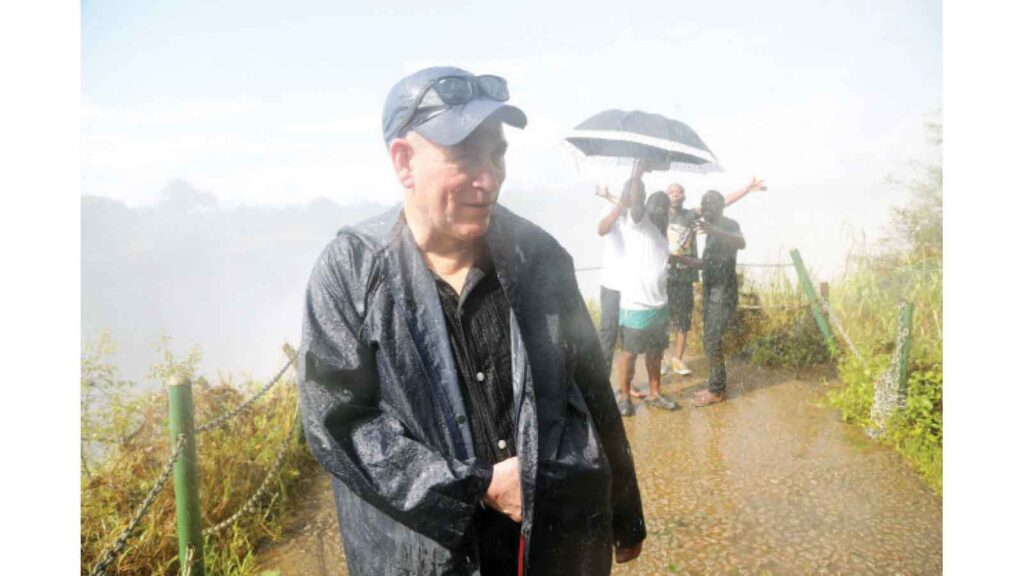
UK-based Harmony Projects director Richard Dunne explores the misty trails of Victoria Falls Rainforest.
Accompanied by Government officials, including Deputy Minister of Tourism and Hospitality Industry, Tongai Mnangagwa, Mr Dunne’s visit underscored the importance of high-level exchanges in strengthening bilateral relations, attracting investment in eco-tourism, and promoting Zimbabwe as a sustainable tourism destination.
Mr Dunne said the Harmony Project has taken the philosophy that was articulated by His Majesty King Charles III when he was the Prince of Wales in a book explaining how the great traditions, cultures, and religions of the world have always understood the need to live in harmony with nature and harmony with each other.
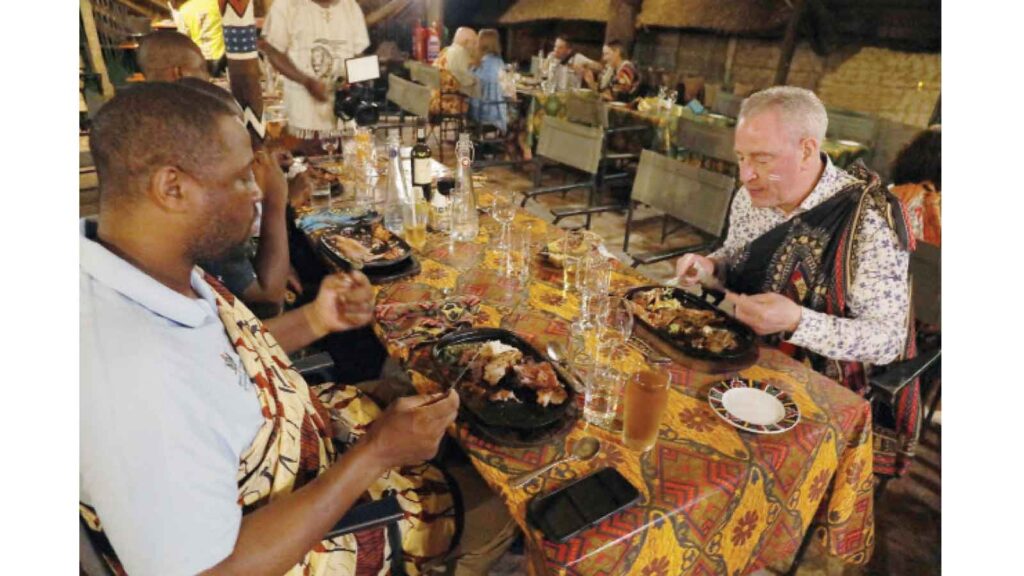
UK-based Harmony Projects director Richard Dunne enjoys a traditional dining experience at The Boma Dinner and Drum show in Victoria Falls.
“So it is a very good message for education, for young people as they grow up, that alongside their learning in reading and writing and maths, and their knowledge and understanding of the world, they develop a sense of what harmony is.
“So we guide learning with six principles of harmony, and they are very simply interdependence, understanding relationships, how everything works together, cycles and the cyclical nature of life, diversity, adaptation, health, and the principle of oneness,” he said.
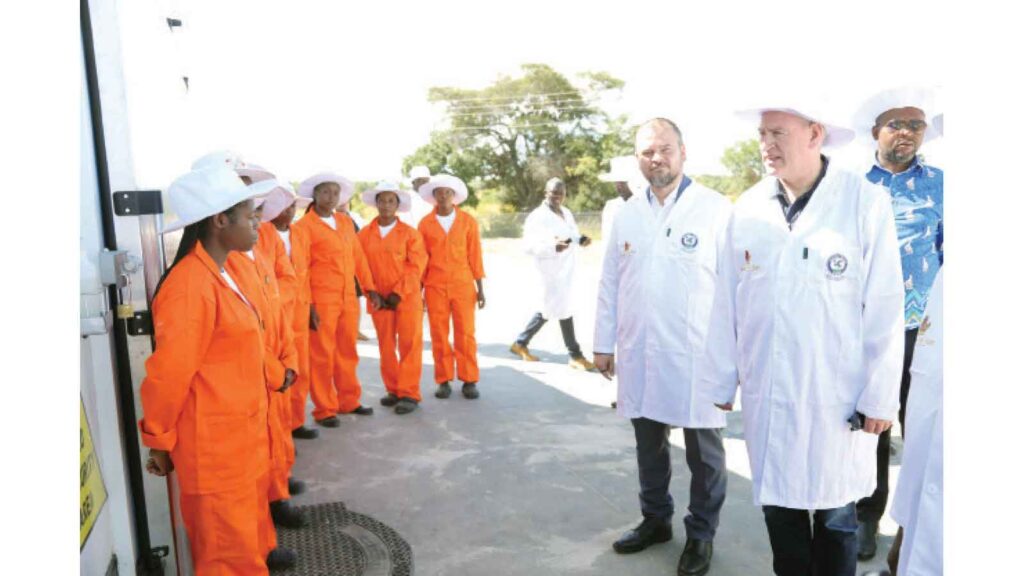
UK-based Harmony Projects director Richard Dunne meets Siver Blue Farm female workers during his visit.
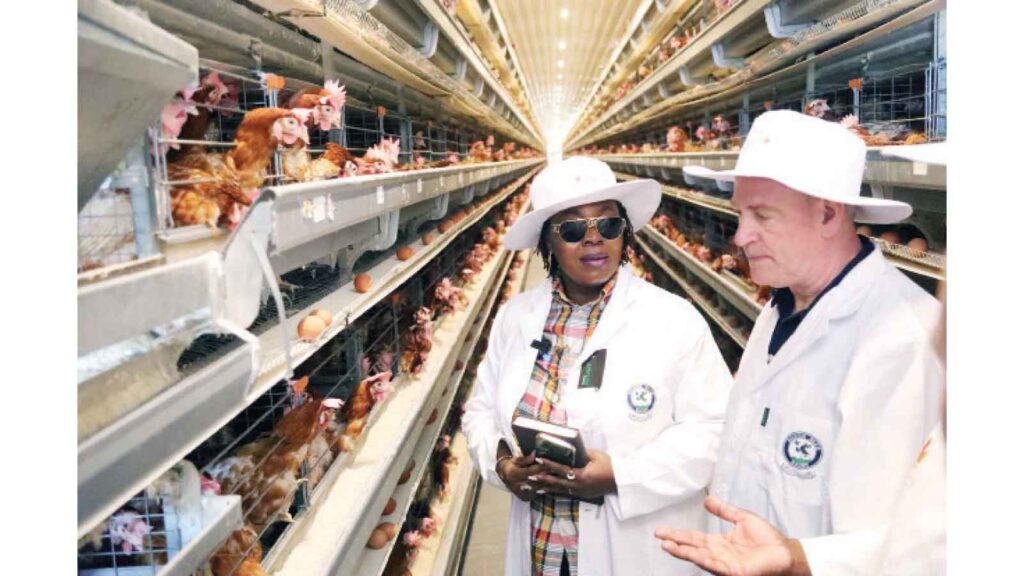
UK-based Harmony Projects director Richard Dunne with Siver Blue Farm owner Ms Olivia Kanosvamhira at the poultry section during his visit to Goromonzi.
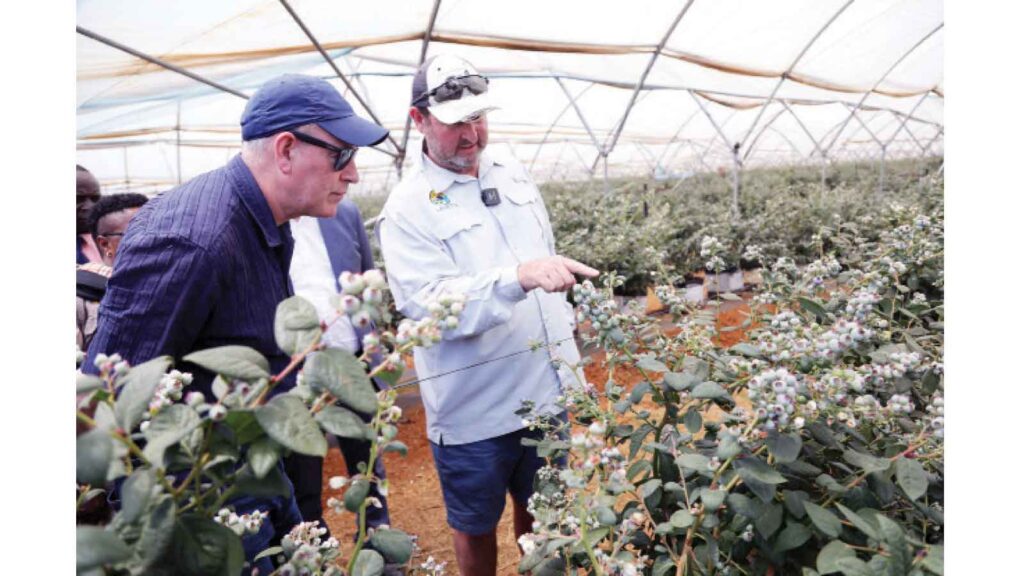
UK-based Harmony Projects director Richard Dunne being shown blue berries by Lauetta Farm owner Alistair Campbell during his visit to Nyabira.
Mr Dunne said they guide learning through the lens of harmony principles because they believe that when children understand how to live in harmony with themselves, each other, and the world, they will create the best future possible.
“I think what I am excited by speaking to young people here is they really get that message. So that is what Harmony is doing, and we are exploring now how Harmony might be part of what your curriculum and your education is about,” he said.
The tour tells a compelling story of transformation, resilience, and innovation, positioning Zimbabwe as an emerging force in agriculture, education, tourism, and sustainable development, while reinforcing international partnerships for the benefit of future generations.