Chronicle Editor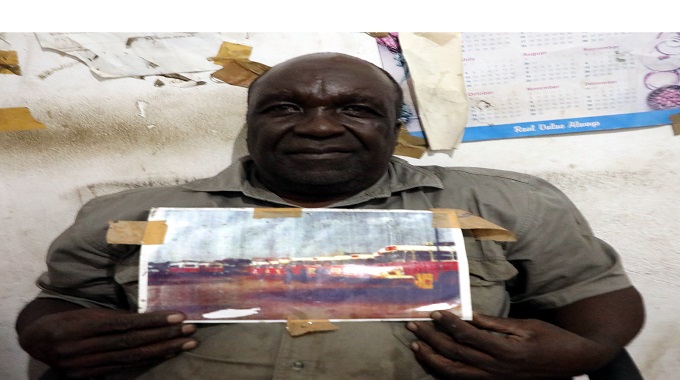
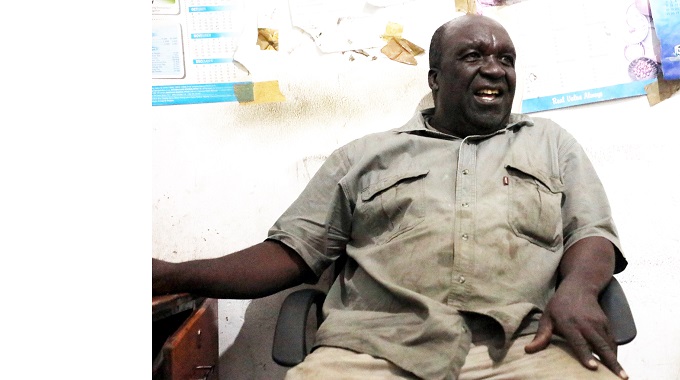
WE conclude our interview with Cde Rabson Mfana Dube, a former conductor with Pelandaba Bus Services who during the armed struggle played a key role in trafficking recruits who were on their way to join the armed struggle in Zambia via Botswana. Cde Dube also worked as a courier for the supplies for the guerillas. For his efforts in furthering the goals of the armed struggle, Cde Dube had a brush with the law as the Rhodesian security forces arrested him and detained him under very squalid conditions. Today Cde Dube ends the conversation by telling our Assistant Editor Mkhululi Sibanda (MS) how his bosses at Pelandaba Bus Services ended up redeploying him to the Bulawayo-Harare route in a bid to protect him from the prying eyes of the Rhodesian forces. Below are excerpts of the interview. Read on…..
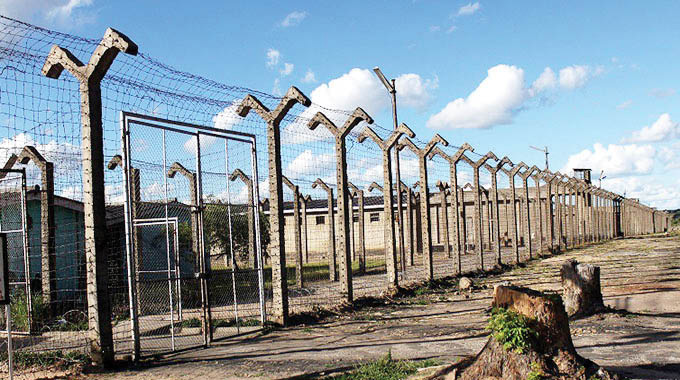
MS: Last time you were talking about serving time at Gwanda Prison where you said you spent 90 days under squalid conditions. Take us through what happened after your release.
Cde Dube: Like I said I was badly dressed when I was released with someone giving me a pair of overalls to cover myself. It then did not make sense for me to travel to Bulawayo so I opted for my rural home at Homestead in Kezi. I was very dirty with my hair being something else as well. I stayed at Homestead for three days and went to Bulawayo to resume my duties as a conductor. However, just after a week I was back behind bars as a notorious officer, a white man called Lavert whom I believe was attached to the Special Branch and operating from Kezi Police Station pounced on me. I was arrested by Lavert and a black policeman who was called Murima.
MS: Just after a week, what had you done this time?
Cde Dube: Lavert said I was not supposed to have been released after my arrest. He said officials in Gwanda had made a mistake in releasing me so I should be thrown behind bars again. So I was detained for another 90 days under the same conditions and it was during my second stint in prison that I met Zapu officials such as Maduma and Gabula Ndlovu. Still no charges were preferred against me. When the 90 days expired I was shocked and angry that there was no paper work for my arrest, I was just being kept there. It was part of their ways of harassing us. As for Maduma and Ndlovu they were taken to court and later on sent to Khami Maximum Prison. After the second 90 days I travelled to Bulawayo and went back to work. However, the bosses at Pelandaba felt I had had enough of the arrests and harassment by the Rhodesian regime. So they said they were transferring me to the then Salisbury (Harare) route. The Pelandaba buses plying that route were numbers 31 and 32. They were being driven by Majoni Dube and Kameli Ncube.
MS: So your redeployment to the Bulawayo- Harare route marked the end of your interactions with the guerillas.
Cde Dube: Not the end as such as one day when I was on off duty and that was in 1978, it was on a Monday I remember well. There were too many passengers that were going to Kezi on the Mbome route. So the management suggested that a second bus be deployed to clear the passengers, that bus was Number 27 which was liked by the people of that area. It was to travel up to Mbembeswana. I then felt the urge to travel as I was off. Little did I know that I was walking into trouble. In that number 27 there was a guerilla, Kumbudzi Ncube wakoPamane from Beula. Kumbudzi had moved from his operational area to Bulawayo just to enjoy himself I believe. During his time in Bulawayo he had been kept by Kenneth Ngwenya one of the sons of Mtshumayeli, the owner of Pelandaba. They were staying together in Mpopoma.
MS: That could have been dramatic, so take us through what happened on that day.
Cde Dube: Along the way from Bulawayo we could sense that something was wrong. We were being followed by two Peugeot vehicles and whenever the bus stopped one of the two cars would drive past the bus while the other would keep a distance behind us. We travelled that way and when we got to Kezi just before we could cross the Mwewe Bridge koRhodes Stores we found a roadblock as usual but what raised our eye brows was the heavy deployment there. On either side of the road there were heavily armed white men. We later learnt that besides being the Rhodesian security forces from both Kezi and Gwanda some of those people were farmers. Those farmers had been mobilised from Kezi and its neighbouring district of Gwanda. The bus driver was then instructed to drive straight into Kezi Police Station. We were all instructed to remain inside the bus. Then came the notorious Levert of Kezi Police Station. Lavert got into the bus accompanied by a black police man who was carrying a red blanket. Lavert then asked a passenger to produce his ID card. He moved to the next and asked the same. After that they went straight to Kumbudzi whom they covered with that red blanket and quickly frog-marched out of the bus. That was the last time Kumbudzi was ever seen. There was no trace of him till today. It’s obvious they killed him after his capture. As for Kenneth Ngwenya who had harboured him in Bulawayo he was arrested and thrown into Khami Prison where he was released after the ceasefire.
MS: What then happened to the rest of the people including the bus crew?
Cde Dube: We were all forced to remain inside the bus. In fact people spent the night there. As for myself I was a ball of nerves as I thought if those Kezi police officers noticed my presence they were going to lock me up again. So at around 11pm I managed to sneak out of the bus and bolted out. I went to the shopping centre where by chance I came across umdala uJaphi, who came from the Chief Malaba area. He was a well known businessman who traded in pigs. He is the one who gave me a lift to Bulawayo.
MS: Before you were transferred to the Harare route and during your interactions with the guerillas, do you remember the names of the comrades you used to work with.
Cde Dube: From the ZPRA side I worked with Cdes Amin, Destroyer, Sikhumbuzo and others while from the ZANLA side there were comrades like Jesus, Bomber and Mabhunu. However, the trick was that the guerillas would send the list of the items they needed through their contacts to avoid falling into the enemy ambush. We had minimum face to face contacts with the guerillas. There was an incident when two ZPRA guerillas flagged down a Shu-Shine bus at Matankeni just after where now there is Maphisa Growth Point.
Inside that bus there were Rhodesian soldiers, the Selous Scouts. Cephas Manemba Ncube the guerilla and his colleague whose name I cannot recall were killed there. The driver of the bus, George Hlambelo fled from the scene leaving the bus there and crossed into Botswana to join the armed struggle. Hlambelo who came from Zvishavane returned home after the war as a guerilla. That incident happened in 1978. The Rhodesians had also their own bus which was painted in Pelandaba colours. They would forcibly take male passengers from other buses and put them in their own Pelandaba and drive along some of the popular routes in a bid to lure the guerillas. However, that trick did not work in Kezi because both ZPRA and ZANLA had been advised not to approach the buses on their own.
MS: I am told Pelandaba buses continued offering support to the freedom fighters even after the war, I mean during the ceasefire period.
Cde DUbe: Yes. We are the ones who were providing transport for the guerillas from the Assembly Points to towns. We would go to Brunapeg where ZPRA and ZANLA were, Gwayi in Matabeleland North and St Paul’s Mission in Lupane. I remember we drove a contingent of ZANLA guerillas from Matabeleland South all the way to Harare, Marondera and Mutare. These trips with the guerillas were characterized by merry-making as the comrades would be drinking and talking about their experiences during the war. I enjoyed those moments.
MS: Then your life after the war…..
Cde Dube: After independence I continued working at Pelandaba where in 1982 I was promoted into the company’s management. I also acquired a class one drivers licence, which saw me at times driving the buses. I worked at Pelandaba until 1989. By that time I had bought two Peugeot 404s which plied the Bulawayo routes as emergency taxis. I later upgraded my business by acquiring four kombis through a Government scheme which promoted the black business people’s transport sector. That scheme was called Credit Guarantee Company. It was a loan facility administered by the Standard Chartered Bank. I got a loan of $250 000 and bought four brand new kombis and I managed to pay back the loan. I then moved into the cattle business and when the land reform programme came I fully embraced it so I got a piece of land in Kezi in the Malundi commercial farming area. However, we faced a lot of resistance from the whites who did not believe that as blacks we could run those farms. I believe I have not disappointed both the Government and us black people in general as at some point I had 260 beasts on my farm and now I have about 220. I have also improved my bus fleet as at the moment I have 10 on the road. As for my bus business I was given a loan by the Pelandaba children, Sidinga and Bukhosi. They planted the seed for my bus business and I will always be grateful to the Ngwenya family.



 Online Reporter