Online Reporter
Eddie Chikamhi
Zimpapers Sports Hub
THE admission to drug and substance addictions, which led to the premature ending of former Zimbabwe cricket team captain Sean Williams’ glittering international career has been described as a sad day for the sport.
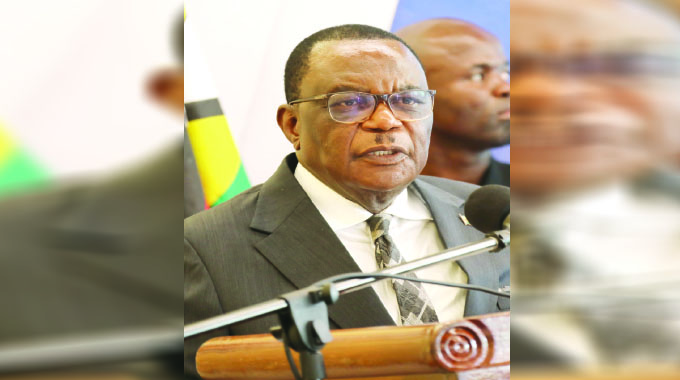
Chairperson of Africa Zone VI Regional Anti-Doping Organisation (RADO), Nicholas Munyonga yesterday raised concern over rising doping incidents in the sport after Williams became the latest player to breach the clean sport code.
Zimbabwe Cricket have been fighting the scourge and have suspended not less than five players in the last four years.
The cricket mother body yesterday announced they will not renew Williams’ central contract when it expires on December 31.
In a statement, ZC said they “noted with regret” Williams’ decision to pull out of national selection, including his late withdrawal from the ICC Men’s T20 World Cup Africa Qualifier 2025 recently, which apparently coincided with scheduled anti-doping tests.
“During an internal investigation to understand the reasons for his unavailability, Williams disclosed that he has been struggling with drug addiction and has voluntarily entered rehabilitation,” the ZC statement said.
The association was concerned by Williams’ behaviour, which they believe was inconsistent with the expected professional and ethical standards.
“ZC expects all contracted players to uphold the highest standards of professionalism, discipline and compliance with team protocols and anti-doping regulations,” the statement added.
“A review of Williams’ record indicates a history of disciplinary issues and repeated unavailability, which has impacted team preparations and performance.
“While ZC commends him for seeking rehabilitation, withdrawal from team commitments under circumstances involving potential testing raises serious concerns regarding professional and ethical standards.
“After careful consideration, ZC has concluded that Williams will no longer be considered for national selection.
“Consequently, it is not feasible to continue his national contract beyond its expiry on 31 December 2025,” the statement added.
The 39-year-old all-rounder ranks as one of Zimbabwe’s most gifted cricketers of his generation, with a glittering career spanning 20 years.
Williams is Zimbabwe’s fifth all-time leading run-scorer with 8 968 runs and 14 centuries, only behind Brendan Taylor and Andy Flower. He claimed 161 wickets — the 10th most for the Chevrons in all formats.
However, the recent developments effectively closed the door on his international career, ruling him out of the upcoming ICC Men’s T20 World Cup to be held in India and Sri Lanka early next year.
ZC paid tribute to Williams’ immense contribution over the past two decades.
“Williams has played a pivotal role in some of the most significant moments in our recent history, leaving a lasting legacy both on and off the field. ZC wishes him strength in his recovery and every success in his future endeavours,” the statement said.
RADO chairman Munyonga said the Williams case was a red flag on the rising doping incidents in Zimbabwean sport.
“If you look at the numbers that are coming through from ZC, you can almost always tell that we have a challenge,” Munyonga said.
“But generally, you find that we have got an issue of drug and substance abuse that is being tackled at the national level that has been escalated even into an inter-ministerial task force.
“So, the concern basically as far as drug and substance abuse, has been elevated to the highest office in the country.
“And you find that the youth that are involved in this are the ones that also constitute the majority, or if not, the constituency of athletes.
“So, it almost always follows that if you have such a national challenge, you are likely to have the same challenges as far as sport is concerned.”
Munyonga urged other sport authorities to escalate the fight against drug and substance abuse through continued random tests.
“You may not want to say this is limited to sports like cricket, because the numbers that you find in cricket are because there is a lot of testing that happens in cricket.
“If that testing is happening in other sport codes, obviously you will find that you would tend to see almost similar numbers.
“Last year when I was working with the PSL, we did about 16 in-competition doping tests during matches, and fortunately they were all negative.
“But 16 tests in our PSL is a drop in the ocean if you look at the number of players and the number of matches that we have.
“But all this comes to budgetary concerns as far as the doping control tests are concerned.”
Over the years, RADO in collaboration with the World Anti-Doping Agency and local agencies such as the Zimbabwe Olympic Committee have accelerated the fight for a clean sporting environment.
“What we want to make sure we do is to ensure that we assist our athletes through the education that is taking place. We need to train more education officers. This has been taking place through the Zimbabwe Olympic Committee.
“We have been training safeguarding officers, we have been training doping control education officers to make sure that we assist athletes as far as the dangers of doping is concerned,” said Munyonga.
“There are efforts that are taking place through various ministries we need to support them and they need to sup-port us as well in terms of the fight against doping in sport.
“We are also awaiting the Sports Integrity Bill that also then speaks into the government’s commitment as far as the fight against doping in sport is concerned, so that once we start implementing it to the word and letter, it will also enhance the fight against drug and substance abuse generally in the country,” said Munyonga.
He also warned that drug and substance abuse has far-reaching health implications.
“Drugs and substances of abuse have different side effects that tend to affect athletes in the long term.
“Some may suffer from issues of hormonal imbalances, which may lead to infertility. They may suffer from certain cancers, they can also have poor body temperature regulation, which can lead to heart attacks and death.
“There are all sorts of things that can happen and dependence itself is a serious concern,” said Munyonga.